Hindu women’s suffering trivialised: Islamic cleric dismisses ‘Love Jihad’ and forced conversions by Muslim men
 Hyderabad, Telangana, India
  18 August, 2026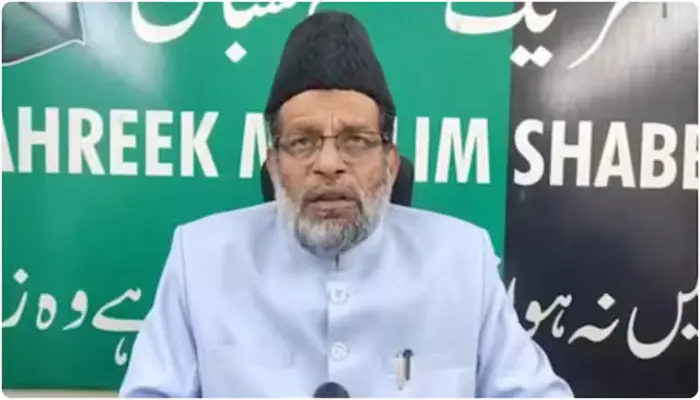
Case Summary
Anti-Hindu rhetoric was propagated by an Islamic cleric, Maulana Mushtaq Malik, president of Tehreek Muslim Shabban, a socio-religious Muslim organisation. Malik dismissed the religiously motivated targeting of Hindu women by Muslim men through relationships and subsequent conversion, a phenomenon commonly referred to as “Love Jihad” or “Grooming Jihad”. He attempted to falsely portray such instances as cases of “voluntary love between adults”. He downplayed concerns surrounding such cases and dismissed incidents of forced conversion of Hindus to Islam, while opposing anti-forced conversion laws in several states of India. Notably, in India, the targeting of Hindu women in predatory relationships by non-Hindu men, mostly Muslim men, is commonly referred to in public discourse as "Love Jihad" or "Grooming Jihad". These terms refer to incidents in which Hindu women and minor girls are lured into relationships through deception with the objective of religious conversion or other forms of exploitation. In such cases, non-Hindu men conceal or misrepresent their religious identity by posing as Hindus before entering into relationships or marriages with Hindu women. Once the relationship is established, the women are coerced into converting to another religion, abandoning their Hindu religious practices, or are subjected to sexual exploitation, blackmail, or other forms of coercion. This resulted in the introduction of anti-forced conversion laws in various states of India, including Arunachal Pradesh, Chhattisgarh, Gujarat, Haryana, Himachal Pradesh, Jharkhand, Karnataka, Madhya Pradesh, Odisha, Rajasthan, Uttar Pradesh and Uttarakhand. At the time of writing this report, the Maharashtra government had enacted the "Maharashtra Freedom of Religion Act, 2026", commonly referred to as the state’s anti-conversion law. The law prohibited religious conversions carried out through force, coercion, fraud, misrepresentation, allurement, undue influence or other unlawful means, including certain conversions linked to marriages. While speaking about the law, Malik attempted to dismiss the concerns surrounding “Love Jihad” and forced religious conversions by portraying such cases primarily as matters of voluntary love and consensual interfaith relationships between adults. He opposed linking interfaith marriages or religious conversions between people of different faiths to “Love Jihad”, stating that “love” and “jihad” were two separate concepts. He argued that an interfaith marriage between two consenting adults should not be labelled “Love Jihad” merely because the partners belonged to different religions. He said that if two adults married of their own free will, their relationship should instead be viewed in the context of their constitutional rights rather than being turned into a political issue. He also stated that politicising sensitive issues such as religious conversion and interfaith marriage was not appropriate. Malik further downplayed forced religious conversion of Hindus by saying that religious conversion was a matter of a person's own thoughts, ideas, beliefs and faith and that there should be no forced interference in such decisions. He said that no person could be forced to accept any religious faith and specifically claimed that Islam did not permit forced conversion either. At the same time, while discussing the Maharashtra anti-conversion law, he expressed concerns that its provisions could be misused. He argued that ambiguity in the law could be used to exert pressure on individuals and maintained that decisions concerning a person's religion and personal choice should not be criminalised merely on the basis of suspicion or social pressure. Malik also opposed the Maharashtra anti-conversion law and noted that similar laws had emerged in various forms in several BJP-ruled states. He specifically objected to provisions concerning the religious identity of children and their inheritance rights following conversion. He stated that if forced conversion was proven and a child was born from such a relationship, there was nothing objectionable about the mother retaining custody of the child. However, he objected to provisions that could make such a child an heir to the property of both sides, arguing that this could conflict with the inheritance provisions of Sharia law. Thus, while he did not oppose custody of the child remaining with the mother in such circumstances, his objection centred on the child's inheritance rights in the property of both families. His comments were made in the broader context of opposing what he described as "excessive intervention in matters of personal faith, conversion and interfaith marriage". Overall, while stating that forced conversion was not permissible, Malik opposed the Maharashtra anti-conversion law, warned about its potential misuse, and dismissed incidents of “Love Jihad”.
Why it is Hate Crime ?
The primary category selected in this case is: Hate Speech against Hindus. The subcategory selected is: Anti-Hindu subversion and prejudice. The tertiary category selected is: Anti-Hindu fake news or downplaying. Hate speech is defined as any speech, gesture, conduct, writing, or display that is prejudicial against a specific individual and/or group of people, which is leading to or may lead to violence, prejudicial action or hate against that individual and/or group. Media plays a specific and overarching reach in perpetuating prejudicial attitudes towards a community owing to unfair, untrue coverage and/or misrepresentation/misinterpretation, selective coverage and/or omission of facts of/pertaining to issues affecting a specific religious group. This type of bias can dehumanise the victim group, making it easier for others to justify harmful actions against them, which aligns with the objectives of hate speech laws aimed at preventing such harm. It is often observed that the media takes a prejudicial stand against the Hindu community driven by their need to shield the aggressor community which happens to be a numeric minority, however, is the one perpetrating violence against Hindus. For example, the media is often quick to contextualise religiously motivated crimes against Hindus, omit or misrepresent facts that point towards religiously motivated hate crimes, justify and/or downplay religiously motivated hate crimes or simply present fake news to stereotype Hindus. Such media bias leads to the denial of persecution and is often used to dehumanise Hindus, leading to justification for violence against them. For example, the media covered several fake allegations of Hindus targeting Muslims and forcing them to chant Jai Shree Ram. Most of these cases were proved false and fabricated after police investigation. These fake news reports were subsequently never retracted or clarified. Such fake news led to the justification of violence and dehumanisation of Hindus based on the argument that since Hindus targeted Muslims and forced them to chant Jai Shree Ram, the dehumanisation of Hindus and violence against them was par for the course and merely a retaliation. Such media bias leads to prejudicial portrayal of Hindus and offers a justification for violence against them and therefore, is considered hate speech under this category. This is a clear example of anti-Hindu rhetoric dismissing the experiences and sufferings of Hindu women who have been victims of deception, coercion, forced conversion, and exploitation in relationships with non-Hindu men, mostly Muslim men. By falsely portraying “Love Jihad” as cases of voluntary love and consensual interfaith relationships between adults of different faiths, Maulana Mushtaq Malik dismissed the ordeal of Hindu women who have been deceived, exploited, pressured to convert, or targeted on the basis of their religious identity. His remarks attempted to present such cases as ordinary relationships between consenting adults rather than crimes involving religious targeting and coercion. He further downplayed concerns surrounding forced conversion by asserting that Islam did not permit forced conversion and that religious conversion was a matter of an individual's own thoughts, ideas, beliefs and faith. This amounted to the dismissal and downplaying of an anti-Hindu hate crime and of a documented pattern of victimisation affecting Hindu women and girls. “Love Jihad”, also known as “Grooming Jihad”, is a commonly used term in public discourse referring to religiously motivated crimes targeting Hindu women. In such crimes, Hindu women and minor Hindu girls are profiled on the basis of their religious identity and subsequently lured into relationships or marriages by non-Hindu men, mostly Muslim men. In several documented cases, non-Hindu men, mostly Muslim men, concealed their religious identity and presented themselves as Hindus by adopting Hindu names, using forged or misleading documents, wearing Hindu religious symbols, and participating in Hindu festivals and traditions in order to gain the trust of the victims. These crimes are not isolated incidents but reflect a recurring pattern in which Hindu women are specifically targeted because of their religious identity. The religious profiling of victims and the targeting of a particular community transformed such offences from ordinary crimes into acts motivated by hostility towards the Hindu community. However, it is important to note that Hinduphobia Tracker does not document such crimes under the terms “Love Jihad” or “Grooming Jihad”. Instead, such cases are recorded under the category “Crimes against women in relationships or other sexual crimes.” Malik’s portrayal of “Love Jihad” as voluntary love between adults of different faiths ignored the central question raised by such cases: whether genuine and informed consent existed in the first place. In numerous documented cases, Hindu women entered relationships believing they were involved with Hindu men, only to later discover that the non-Hindu men, mostly Muslim men, had concealed their religious identity, adopted Hindu names, or otherwise misrepresented their identity and intentions. A relationship entered into on the basis of a concealed identity or deliberate deception cannot be equated with one entered into through full and informed consent. Personal autonomy and dignity require transparency, honesty, and knowledge of material facts before an individual can make a genuinely informed decision. By reducing “Love Jihad” to voluntary love between two consenting adults, Malik’s argument overlooked these circumstances and effectively dismissed the criminal nature of such cases. In other documented cases, although the non-Hindu man's religious identity was known from the outset, the Hindu woman was not informed that conversion to another faith, most commonly Islam, would later be expected or demanded as a condition of continuing the relationship or marriage. Women were led to believe that they were entering genuine relationships in which their own religious identity and practices would be respected, only to later face pressure or coercion to convert, abandon Hindu practices, or adopt non-Hindu religious practices and customs. Where conversion was demanded only after the relationship had already been established, the woman's consent to the relationship could not retrospectively be treated as consent to religious conversion or to the abandonment of her own faith. The subsequent introduction of such demands fundamentally altered the nature of the relationship and, where accompanied by coercion or pressure, undermined the woman's ability to make a free and informed decision. Malik’s assertion that religious conversion was simply a matter of personal belief and that Islam did not permit forced conversion downplayed these documented circumstances of coercion and pressure. These documented cases demonstrate that the central issue is not simply whether two adults of different faiths have the right to enter a relationship, as portrayed by Malik, but whether the relationships in question were entered into and continued under conditions of genuine consent. Where Hindu women were lured into relationships through false identities or misleading representations, their consent was obtained without knowledge of material facts. Where women subsequently faced pressure or coercion to convert after the relationship had already been established, the issue was likewise not simply one of two consenting adults exercising personal liberty. The deception, concealment, coercion, and manipulation employed by non-Hindu men, mostly Muslim men, fundamentally compromised the autonomy that Malik’s argument treated as the defining feature of these relationships. By portraying such cases as voluntary interfaith relationships, he overlooked the circumstances that transform an otherwise private relationship into a case involving religious exploitation and targeting. By opposing the Maharashtra anti-conversion law and portraying its provisions primarily as potentially excessive or susceptible to misuse, Malik similarly overlooked the reason why such relationships and conversions came under public and legal scrutiny in the first place. The law prohibited religious conversions brought about through force, coercion, fraud, misrepresentation, allurement, undue influence, or other unlawful means, including certain conversions linked to marriages. Its purpose was not to prohibit relationships between people of different religions merely because they were interfaith relationships, but to address situations in which an individual's consent to conversion had been compromised through deception or coercion. By reducing the issue to personal faith, voluntary relationships, and the possibility of misuse of the law, Malik failed to distinguish between a genuinely voluntary interfaith relationship and one in which consent had been undermined through concealed identity, false representations, or subsequent pressure to convert. His remarks therefore did not merely constitute opposition to a particular law or disagreement over the terminology of “Love Jihad”. By falsely portraying “Love Jihad” as voluntary love between consenting adults and simultaneously downplaying forced conversion by asserting that Islam did not permit it, Malik dismissed both the underlying crime and the religious coercion documented in numerous such cases. His rhetoric erased the experiences of Hindu women and girls who were deceived, exploited, pressured or coerced into abandoning their faith and instead presented their victimisation as ordinary consensual interfaith relationships. This amounted to the deliberate dismissal and downplaying of an anti-Hindu hate-crime pattern and of the documented victimisation of Hindu women and girls. Contrary to Malik’s portrayal that such cases concerned voluntary love and consensual interfaith relationships between adults, Hinduphobia Tracker documented more than 1,365 such cases between 1 January 2023 and 21 August 2026 in which Hindu women were targeted through relationships involving deception, fabricated identities, false promises, coercion, forced conversion, or sexual exploitation by non-Hindu men, mostly Muslim men. In 854 of these cases, non-Hindu men, mostly Muslim men, pretended to be Hindus in order to enter into relationships with Hindu women. In 215 cases, Hindu women were forced to convert to Islam after marriage, while in 501 cases, victims were forced to convert to Islam before marriage. These figures demonstrate an alarming pattern of Hindu women being targeted in relationships in which their religious identity was a central factor, rather than cases being limited to voluntary interfaith relationships between consenting adults. Victims were, in many cases, pressured to consume beef, cease worshipping Hindu deities, perform namaz, wear a burqa, or otherwise abandon their Hindu religious practices. These documented cases demonstrate that the central concern is not simply whom consenting adults choose to love or marry, but whether the women involved were provided with the information necessary to make a genuinely informed decision and whether their continued participation in the relationship remained voluntary and free from deception or coercion. Some examples of such cases documented by the Hinduphobia Tracker include the following. A Hindu woman from Chakrata in Dehradun, Uttarakhand, was deceived into a relationship by a Muslim man who concealed his religious identity behind fake Hindu names and social media profiles. The perpetrator operated under the names "Aman Tomar" and "Aman Sharma" while living in the area as a mechanic. Over time, he gained the Hindu woman's trust, drew her into a relationship, and pressured her to convert to Islam. In Ulhasnagar in Maharashtra's Thane district, a Hindu woman was deceived into a relationship and marriage by a Muslim man posing as a Hindu. The accused, Imran Sheikh, introduced himself to the victim as a Hindu man named "Vijay Verma". Following the marriage, the woman was forced to convert, perform Islamic religious practices, and consume beef against her wishes. In another case from Basti, Uttar Pradesh, a Hindu woman was lured into a relationship and sexually exploited by a Muslim politician named Ajfarul Haq, who was associated with the All India Majlis-e-Ittehadul Muslimeen (AIMIM). The accused deceived the victim by wearing a kalava and presenting himself as a Hindu man named Prince. He also subjected the woman to physical abuse, and reports also revealed that he had similarly targeted hundreds of Hindu women for sexual exploitation and prostitution. In a similar incident from Ujjain, Madhya Pradesh, a Hindu woman filed a complaint against a Muslim man named Shahrukh, who introduced himself as Yogendra Wadia and posed as a Hindu in order to gain her trust. After his true identity was revealed, he pressured her to convert to Islam and physically assaulted her when she refused to convert. Taken together, the documented cases and recurring patterns outlined above demonstrate that the issue commonly referred to as "Love Jihad" extends far beyond Malik’s portrayal of such cases as voluntary love and consensual interfaith relationships between adults. By reducing the issue to voluntary relationships between people of different faiths and simultaneously downplaying forced conversion by asserting that Islam did not permit it, Malik overlooked documented cases involving deception, concealment of religious identity, coercion, forced conversion, and pressure to abandon Hindu religious practices. His rhetoric therefore dismissed both the criminal and religious dimensions of such victimisation and minimised the experiences of Hindu women targeted in these cases. On this basis, this case is being documented in the Hate Crime Database of the Hinduphobia Tracker. Disclaimer: Hinduphobia Tracker records incident dates based on when the crime occurs rather than when it is reported by the media. However, in the present case, the available media reports do not specify the exact date on which the remarks were made. Therefore, 19 August 2026, the date on which the remarks were reported in the media, has been selected as the indicative incident date and is recorded for documentation purposes only. The perpetrator, Maulana Mushtaq Malik, is based in Hyderabad, Telangana, and is the president of Tehreek Muslim Shabban, which has been described in public records as a Hyderabad-based organisation. As no reliable public record available for this case specifies a more precise residential locality for Malik, Hinduphobia Tracker is recording Hyderabad, Telangana as the place of location for the perpetrator.


Case Status
Unknown


Perpetrators Details
Perpetrators
Muslim Extremists
Perpetrators Range
One Person
Perpetrators Gender
male
 Sources




