Hindu customs desecrated: Muslim men masquerade as Kanwariyas to molest Hindu girls and rob Hindu devotees during religious procession in Assam
 Guwahati, Assam, India
  18 August, 2026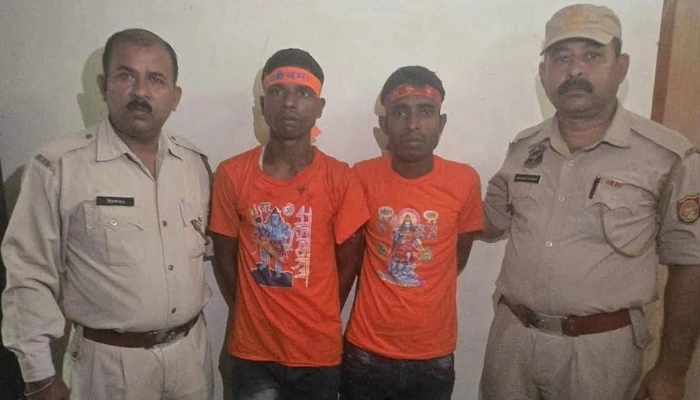
Case Summary
Hindu religious customs were desecrated in Guwahati, Assam, when two Muslim men disguised themselves as Hindu Kanwariyas to commit crimes. The accused molested Hindu girls and stole mobile phones from Hindu devotees during a religious procession in and around the premises of Basistha Mandir. According to media reports, on 19 August 2026, the Guwahati Police Commissionerate announced the arrest of Babul Ali, 22, and Sukur Ali, 22, both residents of Dhubri, in connection with the mobile phone thefts. A team from the East Guwahati Police District, Basistha Police Station, cracked the case linked to the religious procession and arrested the two accused. The police recovered and seized six stolen smartphones from their possession. Legal action was subsequently initiated against them. Babul Ali and Sukur Ali had dressed as Kanwariyas to commit the thefts. Both wore saffron shirts and similar headbands, disguising themselves as Hindu devotees and blending in with participants in the Hindu religious procession before stealing mobile phones from and molesting Hindu girls at the temple. Notably, this was not an isolated incident of Muslim men posing as Hindu religious figures or devotees. The Hinduphobia Tracker had previously documented another instance in Muzaffarnagar, Uttar Pradesh, where the Hindu Kanwar Yatra, a sacred religious pilgrimage observed by devotees of Lord Shiva, was desecrated when a group of Muslim men posed as Hindus and attended the event. They committed theft against devotees during the pilgrimage, resulting in communal tensions. In October 2021, two Muslim youths were detained and questioned by local authorities in Ayodhya after they were found roaming around dressed as Hindu sadhus and seers. A year later, in 2022, the Chhattisgarh Police apprehended two Muslim men who were moving through the streets of Gurur village in Balod district while dressed in saffron robes and posing as Hindu sadhus. According to the report, the two men were scouting the area with the intention of stealing young children. Earlier, in 2020, three Muslim men clad in saffron robes were seen roaming around in an empty area. A video of the incident later went viral.
Why it is Hate Crime ?
This case has been added to the tracker under the primary category- Attack on Hindu religious procession. Within this, the subcategory selected is- Defiling Religious customs. Sanatan Dharma is not a religion of one book, which is to say that while it has religious scriptures that form the central tenets of the faith, there are several traditions followed through thousands of years, mostly passed from generation to generation orally. There are several such customs and traditions that are followed by various Hindus and Hindu sects. Defiling of these traditions and customs is a breach of an individual or group’s religious practices. Such practices can range from dietary restrictions like not eating non-vegetarian food for a certain period of the year, not eating non-vegetarian food at all, not eating beef since the cow is considered holy in Hinduism, the sanctity of religious customs followed in the house (like many ISCKON devotees), etc. Any malicious action leading to the breach of such traditions or defilement of these traditions owing to animosity towards the faith or for the sake of activism stems not only from the lack of faith in the religion itself but also from disregard for the faith of the devotees who follow the customs/traditions and implicit bias against the faith, the tradition itself. Since these specific traditions are central to the faith of the devotees of that specific sect of Hindus, any non-compliance with these traditional rules would be considered a religiously motivated hate crime. This case in Assam demonstrated more than an ordinary act of theft or molestatino. It involved the deliberate exploitation of Hindu religious customs, symbols and identity by two Muslim men who disguised themselves as Hindu Kanwariyas in order to blend into a religious procession and steal from Hindu devotees. The accused also molested Hindu girls while disguised as Hindu devotees, further demonstrating that the false religious identity was used not merely to facilitate theft but also to gain access to and exploit Hindu worshippers. Babul Ali and Sukur Ali did not simply commit crimes in a neutral public space where Hindus happened to be present. They adopted the external markers associated with Hindu religious observance, including saffron clothing and headbands, to present themselves as participants in the procession. By doing so, they used the religious identity of the very community they targeted as a means of facilitating the crime. Their decision to disguise themselves as Hindu devotees while engaging in the molestation of Hindu girls further exploited the trust and security associated with the religious gathering. Such conduct demonstrated a complete lack of regard for the sanctity of Hindu religious customs and the trust associated with a sacred religious gathering. The religious significance of the Kanwar Yatra made this act particularly serious. The Kanwar Yatra is a sacred Hindu pilgrimage associated with devotion to Lord Shiva. During the pilgrimage, Kanwariyas undertake arduous journeys to collect holy water, traditionally from the River Ganga, and carry it to offer at Shiva temples. For participants, the Yatra represents faith, devotion, spiritual discipline and religious observance. Kanwariyas undertake the pilgrimage while following specific customs and disciplines, making their distinctive attire and appearance closely associated with a deeply revered religious tradition. It was within this religious setting that the two accused chose to disguise themselves as Kanwariyas. By appropriating the appearance and symbols associated with this sacred pilgrimage for the purpose of their crimes, they demonstrated that they had no respect for the religious significance attached to the Yatra or the customs observed by Hindu devotees. The manner in which the thefts were carried out further underscored this disregard for Hindu religious sentiments. Both accused wore saffron shirts and similar headbands in order to assume the appearance of Hindu devotees and move amongst genuine participants in the procession. Their disguise was not incidental to the crime; it enabled them to gain the trust of those around them and blend into the religious gathering before stealing mobile phones. The same false identity also provided them access to Hindu girls whom they subsequently molested. Hindu religious symbols and customs were thus deliberately used as instruments for criminal purposes. This undermined the sanctity associated with those symbols by reducing them to a disguise that could be worn and discarded to facilitate theft and the exploitation of Hindu women and girls. The act therefore involved not only deception and criminality but also the deliberate misuse of a Hindu religious identity in a manner that showed no regard for its sacredness. Such conduct also had wider implications for the Hindu community. When individuals disguise themselves as Hindu devotees and commit crimes while participating in a Hindu religious gathering, their actions create the false impression that the criminal conduct was committed by members of the Hindu community itself. To those unaware of the perpetrators' actual identities, the accused would have appeared to be Hindu Kanwariyas. Consequently, the use of Hindu religious attire as a criminal disguise propagated a misleading narrative that Hindu devotees or participants in Hindu religious processions were responsible for such acts. The perpetrators were Muslims, yet they deliberately adopted a Hindu identity while carrying out their crimes, thereby placing the visible markers of Hindu religious identity in association with criminal conduct and sexual misconduct against Hindu women. This was particularly concerning because religious gatherings depend to a significant extent on mutual trust amongst devotees. The Kanwar Yatra brings together large numbers of people united by faith, devotion and shared religious identity. By infiltrating such a gathering under a false Hindu identity, the accused exploited the openness and trust inherent in this sacred religious setting. Their molestation of Hindu girls while maintaining this false identity further demonstrates how that trust and access were exploited against Hindu devotees. Their actions demonstrated a complete lack of respect for the sanctity of the occasion, the religious customs associated with it and the devotees participating in it. Instead, they deliberately used a sacred Hindu tradition as an opportunity for criminal gain and to target Hindu girls with sexual misconduct. This conduct, therefore, reflected their disregard and hatred for Hinduism, its religious customs and symbols, and the Hindu community at large. The recurrence of similar incidents involving the misuse of Hindu religious identities and symbols during the Kanwar Yatra suggests that this was not an isolated occurrence but part of a broader pattern of exploiting Hindu customs for criminal purposes. In the present case, the exploitation extended beyond theft, as the accused also used their assumed Hindu identity and access to the religious gathering to molest Hindu girls. Such repeated acts undermine Hindu religious sentiments, violate the sanctity of sacred traditions and demonstrate a persistent disregard for Hinduism and its devotees, making this case significant as a religiously motivated hate crime. Since this case meets the parameters of a hate-driven offence, it is being added to the hate crime database of the Hinduphobia Tracker. Disclaimer: The Hinduphobia Tracker records incident dates based on when the crime occurred rather than when it was reported in the media. However, in the present case, media reports did not specify the exact date on which the crime took place. The only date mentioned was 19 August 2026, when the perpetrators were arrested. Therefore, this date has been selected as the indicative incident date for documentation purposes only.


Case Status
Arrested


Perpetrators Details
Perpetrators
Muslim Extremists
Perpetrators Range
From 2 To 5
Perpetrators Gender
male
 Sources




