Hindu leader Suvendu Adhikari threatened to back down from Murshidabad or face mass violence and Islamic mobilisation by Indian Muslim politician
 West Bengal, India
  26 June, 2026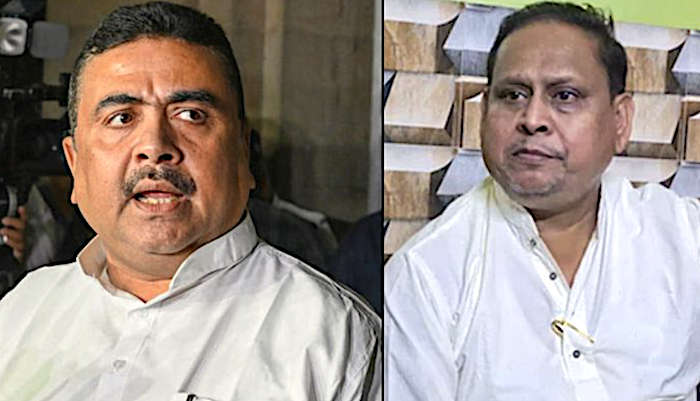
Case Summary
In West Bengal, Hindu Chief Minister Suvendu Adhikari was threatened with large-scale violence by Muslim politician Humayun Kabir, who warned that he would mobilise Muslim supporters to violently resist the newly elected Bharatiya Janata Party government in Murshidabad. During a public address, Kabir stated that if the Hindu Chief Minister or his party attempted to assert authority in the district, widespread violence would follow. This was the second instance of Humayun Kabir issuing threats against Suvendu Adhikari, with an earlier incident already documented by the Hinduphobia Tracker. The incident occurred amid heightened political and communal tensions following the Bharatiya Janata Party's formation of the government in West Bengal. On 27 June 2026, while addressing a political gathering, Humayun Kabir, founder of the Janata Unnayan Party and a former Trinamool Congress MLA, directed threatening remarks at Chief Minister Suvendu Adhikari. Referring to the BJP's electoral victory, Kabir stated that although the party had formed the government, it should "back down" in Murshidabad. He warned that if he took to the streets with his Muslim supporters, violence would erupt on such a scale that "there would be no one left to carry the BJP's flags." Kabir further escalated his remarks by declaring that he would bring lakhs of people onto the streets, physically assault his opponents, and willingly go to jail if required. He stated that imprisonment did not concern him and asserted that once his anger crossed a limit, he would no longer care who the Superintendent of Police or the Chief Minister was. Mocking the state's prison capacity, he remarked that the central jail could accommodate only around 4,800 prisoners, whereas he was capable of mobilising lakhs of people. Notably, Kabir repeatedly invoked Muslim mobilisation as the means through which these threats would be carried out. Rather than confining his remarks to political opposition, he framed the confrontation around the collective mobilisation of Muslims against the Hindu Chief Minister and his government. His statements conveyed that the authority of the newly elected Hindu Chief Minister would not be accepted in Murshidabad and warned that any attempt by the government to exercise its democratic mandate there would be met with organised violence by Muslim supporters. This was not the first occasion on which Humayun Kabir had threatened Suvendu Adhikari. In an earlier incident already documented by the Hinduphobia Tracker, Kabir had threatened to physically assault the Hindu leader during an interview with a Bangladeshi media platform shortly after Adhikari assumed office as Chief Minister. During that interview as well, he invoked Muslim political solidarity and warned of retaliatory violence if action was taken against Muslim legislators. On 29 June 2026, the matter was raised in the West Bengal Legislative Assembly, where Chief Minister Suvendu Adhikari issued a strong response to the remarks. He stated that the time had come to teach such individuals a lesson and informed the House that two First Information Reports had already been registered in connection with Kabir's statements. Adhikari described the remarks as objectionable, communal, anti-social, and anti-state, and reiterated that no individual had the right to issue such threats. The incident attracted widespread public attention, and legal proceedings were initiated after the FIRs were registered. The latest threats were not an isolated episode but formed part of a broader pattern of provocative and communal rhetoric by Humayun Kabir. During the 2024 Lok Sabha election campaign, Kabir stated that he would "throw BJP supporters into the Bhagirathi River" within two hours, invoking Murshidabad's Muslim majority while issuing the threat. The remarks drew widespread criticism and attracted the attention of the Election Commission. In late 2025, he again courted controversy by announcing plans to lay the foundation stone for a replica of the Babri Masjid in Murshidabad, a move widely criticised for aggravating communal tensions. Following the backlash, the Trinamool Congress suspended him, and he later publicly apologised to Hindus. More recently, in 2026, Kabir's newly formed Janata Unnayan Party removed its only Hindu candidate, Nisha Chatterjee, within 24 hours of announcing her candidature. Chatterjee subsequently stated that she had been dropped because of her religious identity. Viewed together, these incidents point to a recurring pattern of conduct in which Kabir has repeatedly made statements or taken actions that have been perceived as hostile towards Hindus and capable of inflaming communal tensions.
Why it is Hate Crime ?
This case has been added to the tracker under the primary category- Hate speech against Hindus. Within this, the sub-category selected is - Mocking/denigrating Hindu leaders. Hate speech is defined as any speech, gesture, conduct, writing, or display that is prejudicial against a specific individual and/or group of people, which is leading to or may lead to violence, prejudicial action or hate against that individual and/or group. Religious leaders are often seen as representatives of the community, especially, the community’s religious faith and beliefs. Mocking or denigrating a religious leader specifically owing to his religious identity and/or the religious rituals he observes can be considered hate speech because the motivating factor of the speech is animosity and/or dislike for what he represents – the religious beliefs and faith of the community. It is important to note that mere insulting words against an individual do not constitute hate speech. It is entirely possible that insulting words are used for an individual, however, the specific speech is not the result of religious hate and/or animosity towards the professed faith of the religious leader, but the individual himself. For the speech to be considered hate speech, the speech itself or the motivating factor behind the speech has to be religious in nature. Such speech which denigrates Hindu religious leaders specifically owing to animosity towards the faith they profess and the community faith they represent will be treated as hate speech under this category. The other sub-category selected for this case is - Violent threats. Violent threats, explicit, implicit or implied, is the most dangerous form of hate speech since it goes beyond discriminatory and prejudicial language to express the intent of causing harm to an individual or a group of people based on their religious identity and faith. There could be several different kinds of threats that are issued to Hindus based on religious animosity. An explicit threat would mean the direct threat of violence towards an individual Hindu, a group of Hindus or Hindus at large. Physical violence, death threats, threats of destruction of property belonging to Hindus and threats of genocide would mean explicit threats against Hindus for their religious identity. Implicit threats may not be a direct threat but implied through the use of symbols of actions – for example – in the Nupur Sharma case, other than explicit threats, there were also implicit threats when Islamists took to the streets to burn and beat her effigies. It implies that they want to do the same to Nupur Sharma – thereby is considered an implicit threat. Violent threats can be delivered in person, through letters, phone calls, graffiti, or increasingly through social media and other online platforms. It would be important to understand that a threat – explicit or implicit, online or offline – to an individual who happens to be a Hindu does not qualify as a religiously motivated threat. Such a threat, while vile and dangerous, could be owing to non-religious reasons and/or personal animosity. To qualify as a religiously motivated threat, it would need to exhibit an indication that the individual is being targeted for religious reasons and/or owing to his/her religious identity as a Hindu. This incident has been categorised as a hate incident because the threats, though directed at a political leader, were framed in explicitly communal terms. Humayun Kabir did not merely threaten political protests or public agitation against the newly elected government. Instead, he explicitly declared that he would bring his "Muslim supporters" onto the streets and warned that if Chief Minister Suvendu Adhikari attempted to exercise his authority in Murshidabad, violence would erupt on such a scale that there would be no one left to carry the BJP's flags. By invoking collective Muslim mobilisation against a Hindu Chief Minister, Kabir made religious identity the defining feature of the confrontation rather than political disagreement. The threat was therefore de facto against Hindus and his identity as a Hindu when he said he will specifically mobilise Muslims. The communal nature of the remarks becomes even more apparent when viewed in light of Kabir's previous conduct. This was the second documented instance in which he publicly threatened Suvendu Adhikari after he assumed office as Chief Minister. In an earlier incident already documented by the Hinduphobia Tracker, Kabir threatened to physically assault the Hindu leader during an interview with a Bangladeshi media platform and similarly invoked Muslim political solidarity while warning of retaliatory violence if action was taken against Muslim legislators. The recurrence of such statements indicates that the present incident was not an isolated outburst but part of a continuing pattern of communal intimidation directed at a Hindu public representative. The latest threat forms part of a broader pattern of anti-Hindu rhetoric and conduct by Humayun Kabir, making it difficult to view the present incident as an isolated political outburst. During the 2024 Lok Sabha election campaign, he threatened to "throw BJP supporters into the Bhagirathi River" while invoking Murshidabad's overwhelming Muslim population, remarks that drew the attention of the Election Commission. In late 2025, he announced plans to lay the foundation stone for a replica of the Babri Masjid in Murshidabad, a move that attracted widespread criticism for inflaming communal tensions and led to his suspension from the Trinamool Congress. Although he later apologised to Hindus, the episode demonstrated his willingness to invoke one of the most contentious religious disputes in India for political mobilisation. In 2026, his newly formed Janata Unnayan Party also removed its only Hindu candidate, Nisha Chatterjee, within twenty four hours of announcing her candidature. Chatterjee subsequently alleged that she had been dropped because she was a Hindu. These antecedents assume even greater significance because Kabir's political base is Murshidabad, a district that witnessed one of the most severe episodes of anti-Hindu violence in West Bengal in 2025. Following protests over the Waqf (Amendment) Act, organised Muslim mobs attacked Hindu homes, businesses, and places of worship, resulting in deaths, widespread destruction of property, and the exodus of more than 500 Hindus who fled to neighbouring districts fearing for their lives. The violence demonstrated the devastating consequences of communal mobilisation in the district and left the local Hindu community deeply vulnerable. Against this backdrop, Kabir's warning that he would mobilise Muslims to unleash large-scale violence if a Hindu Chief Minister attempted to exercise his democratic mandate in Murshidabad assumes far greater significance than ordinary political rhetoric. Coming from a politician with a documented history of communal provocations involving Hindus and from a constituency that has recently witnessed organised anti-Hindu violence and the displacement of hundreds of Hindus, the threat carried a credible message of communal intimidation. It reinforced the perception that collective Muslim mobilisation could be deployed not merely as a political tool but as a means of resisting, intimidating, and threatening a Hindu leader because of his religious identity, thereby fostering fear and hostility within the wider Hindu community. These elements established clear religious motivation underpinning the incident and justified its inclusion in the hate crime database.
Victim Details
Total Victim
1
Deceased
0
Gender
- Male 1
- Female 0
- Third Gender 0
- Unknown 0
Caste
- SC/ST 0
- OBC 0
- General 1
- Unknown 0
Age Group
- Minor 0
- Adult 1
- Senior Citizen 0
- Unknown 0


Case Status
Complaint filed


Perpetrators Details
Perpetrators
Muslim Extremists
Perpetrators Range
One Person
Perpetrators Gender
male
 Sources




