Hindu sentiments outraged; British newsdaily's Hinduphobic journalist spotted at Cockroach Janta Party's protest, Delhi
 Delhi, India
  5 June, 2026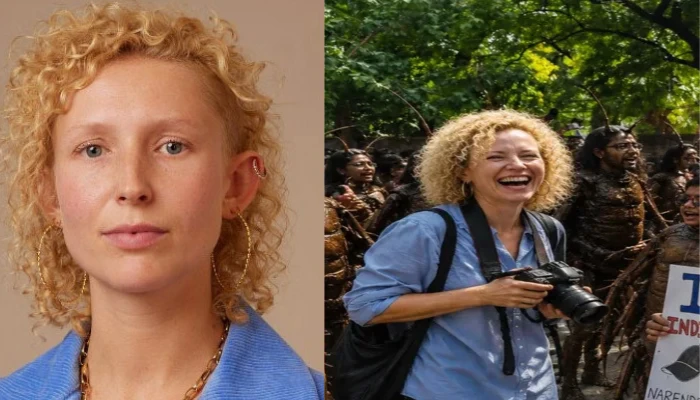
Case Summary
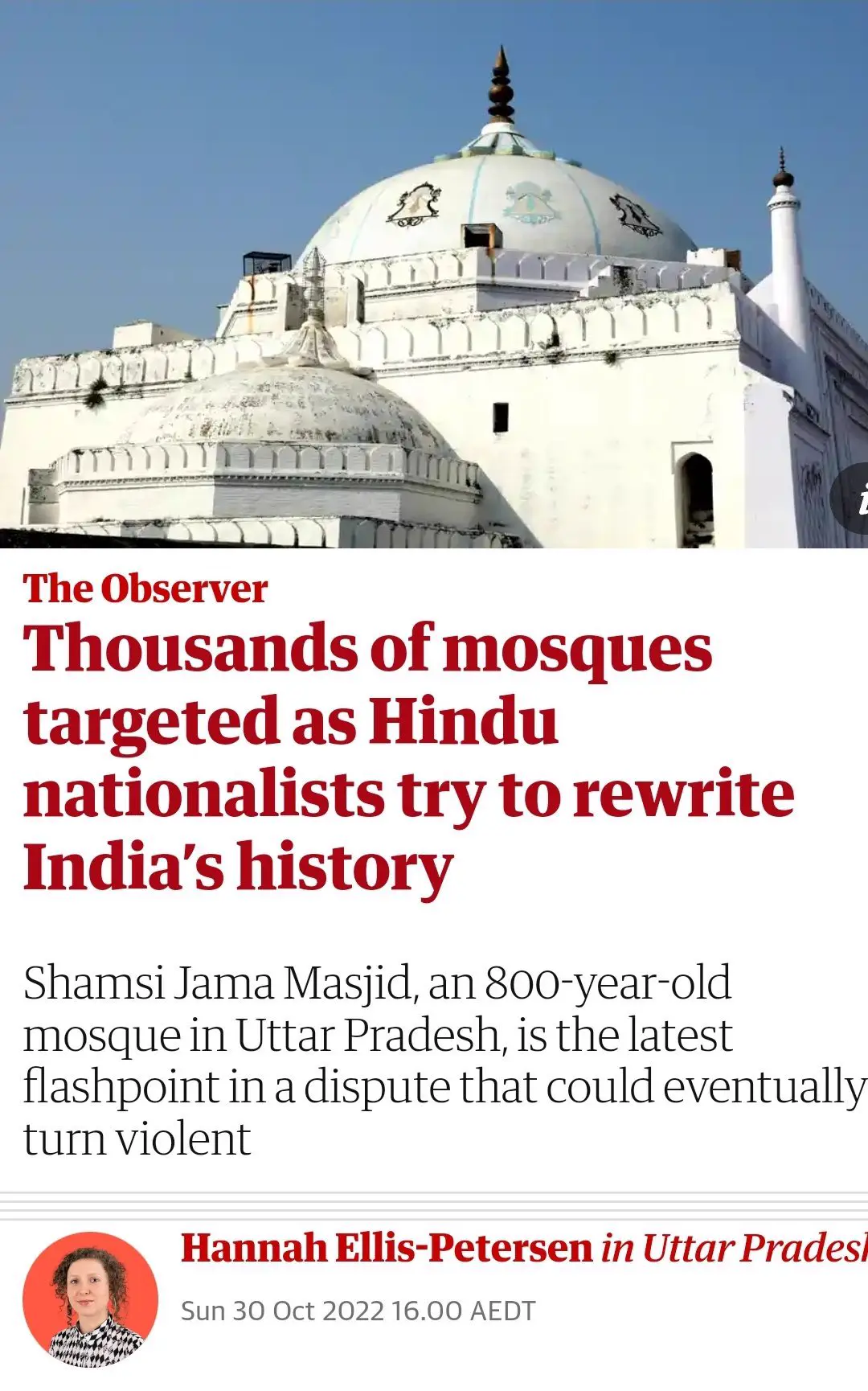
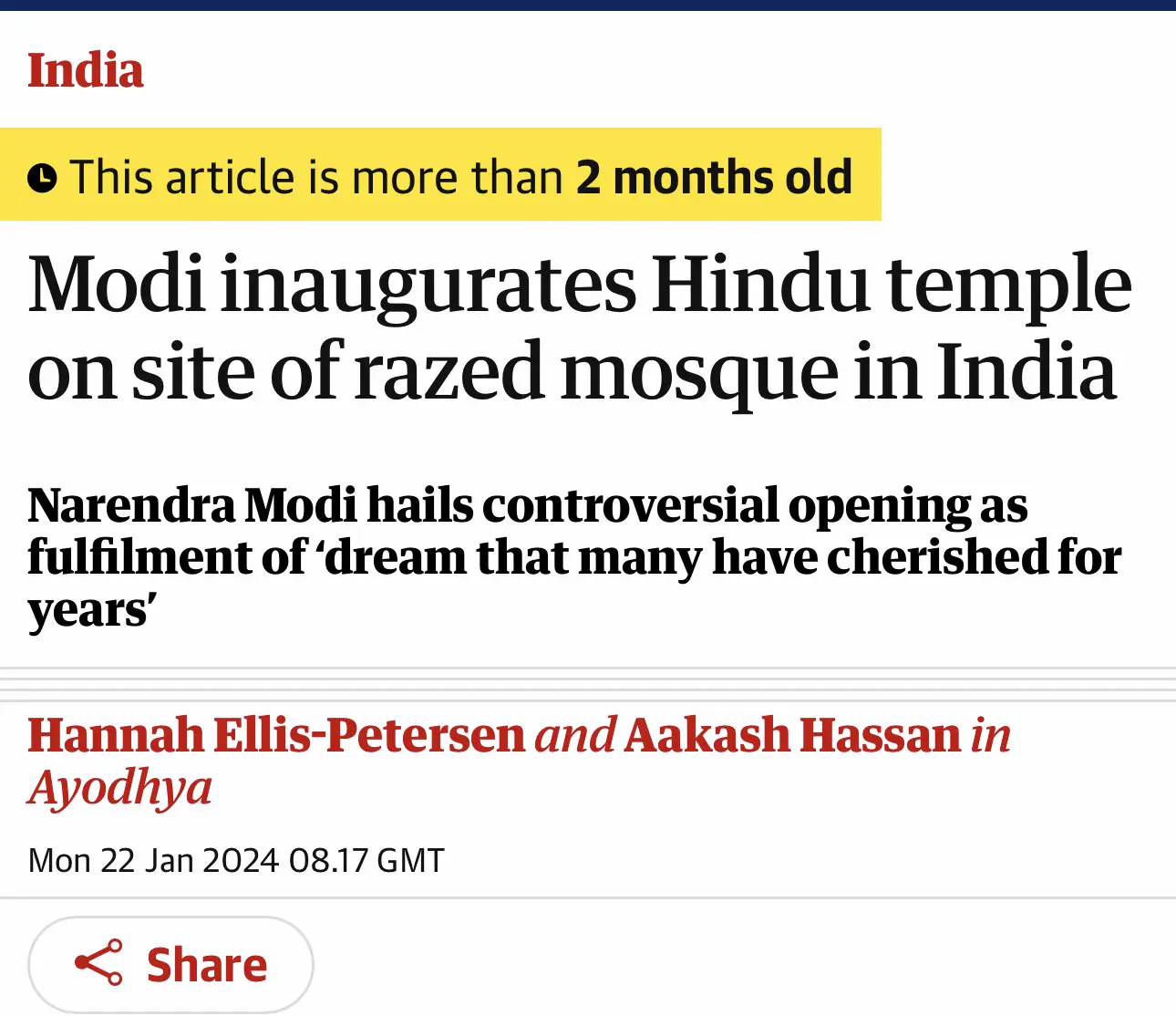
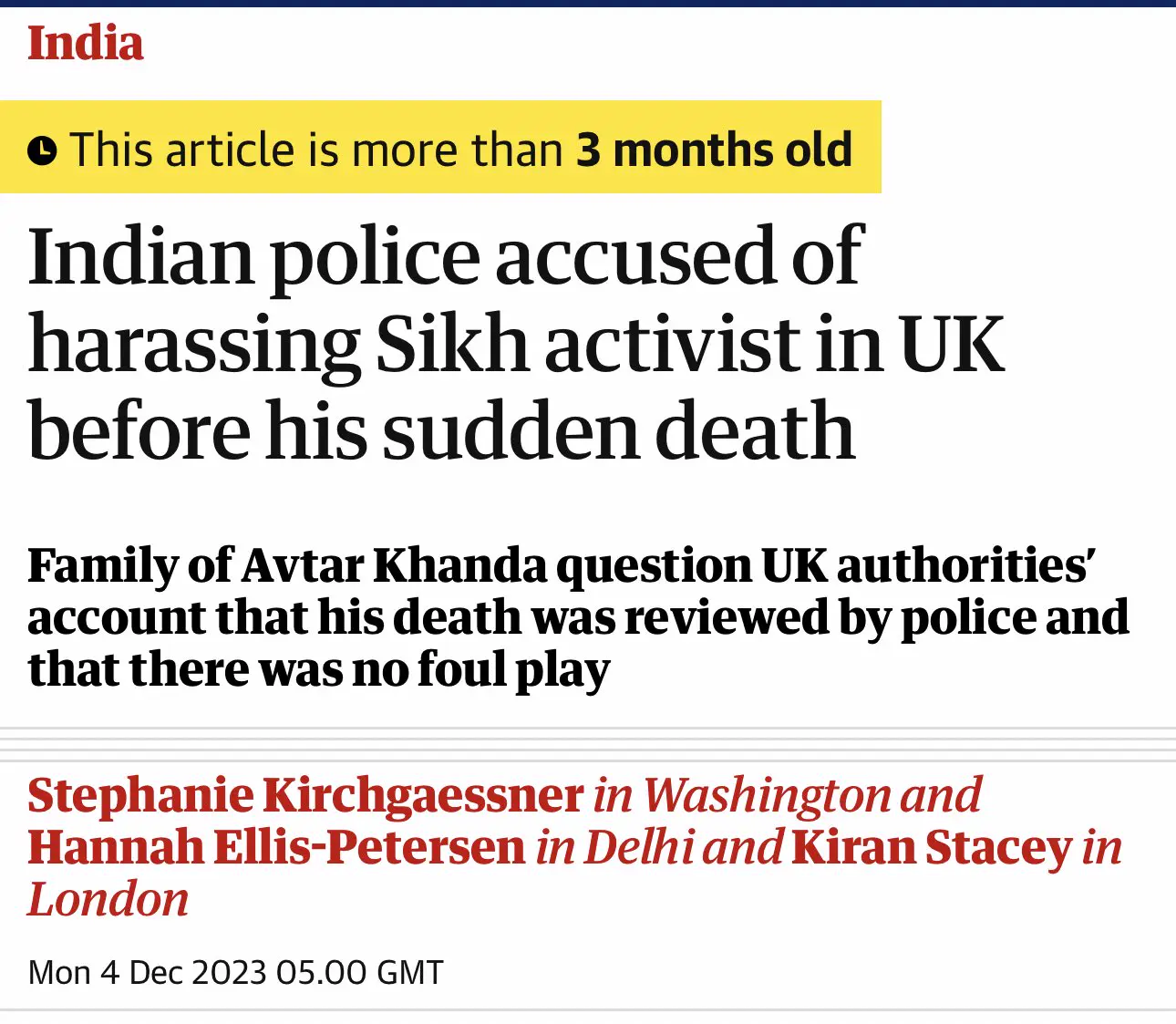
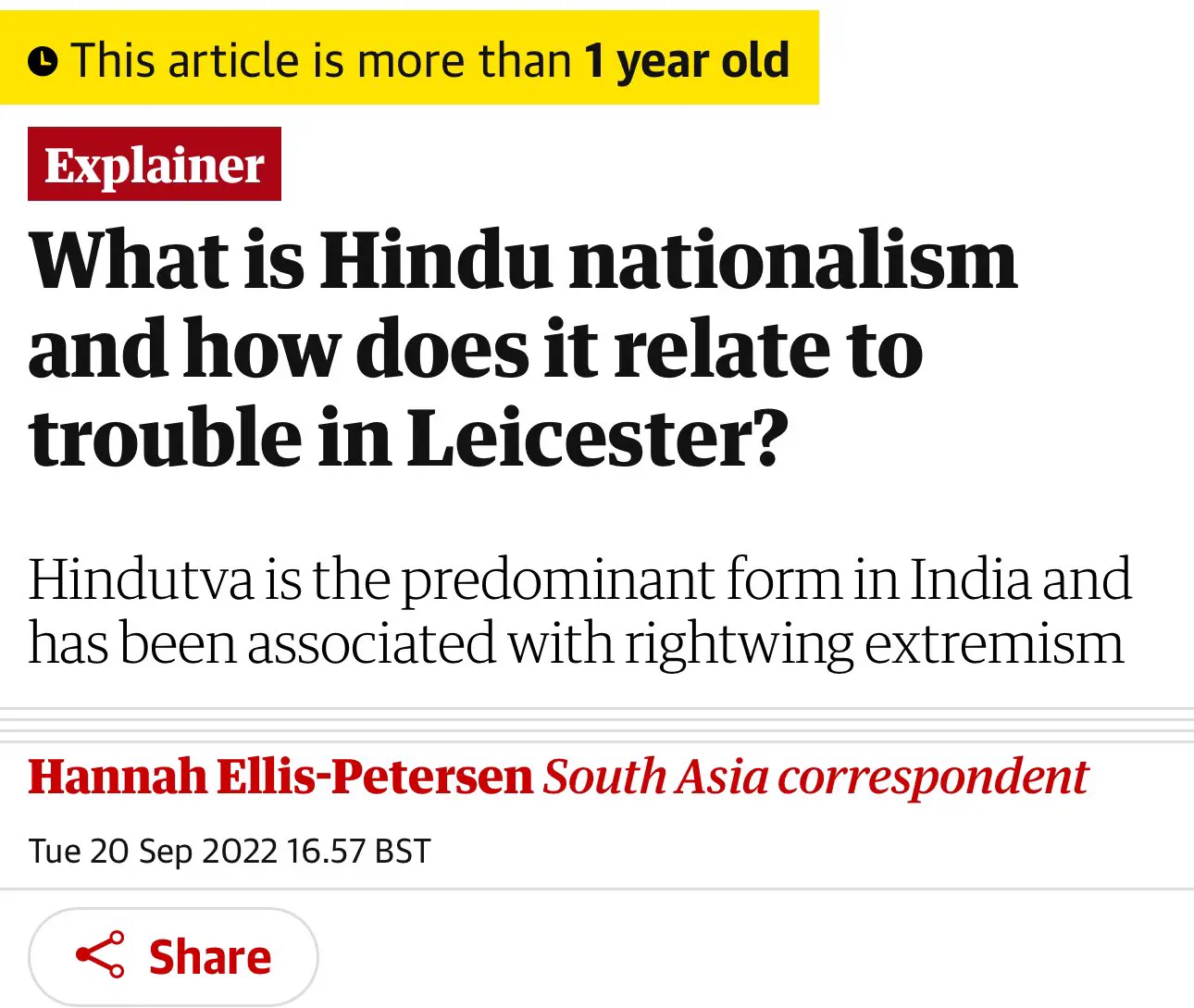
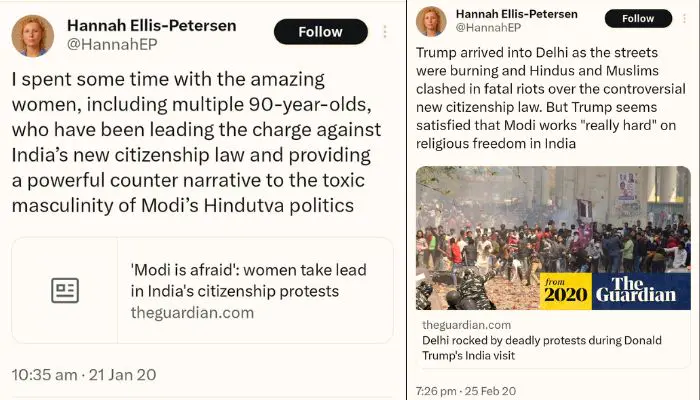
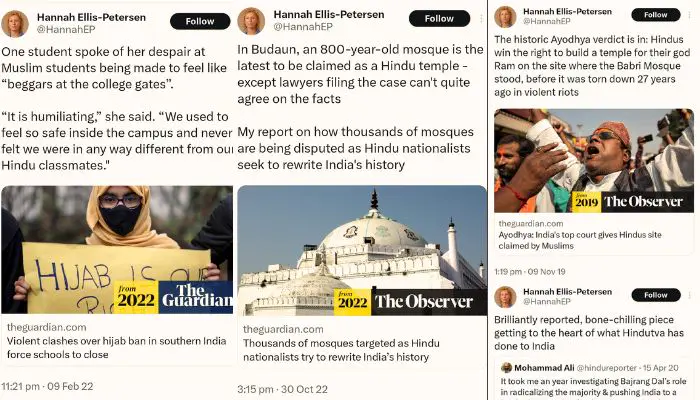
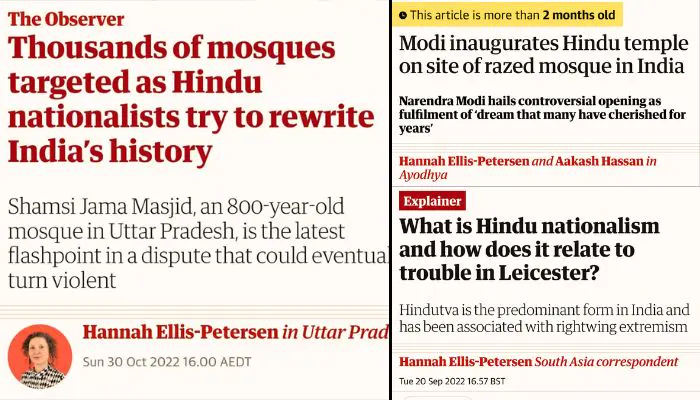
At Delhi's Jantar Mantar, Hindu sentiments were outraged when a British news outlet journalist, Hannah Ellis-Petersen, who is known for peddling anti-Hindu, anti-India rhetoric, was photographed openly supporting the Cockroach Janata Party (CJP) protest on 6 June 2026. Her presence drew immediate and sharp public reaction, with several social media users demanding that her visa be cancelled and that she be deported forthwith. A social media user, Sameer, questioned what a foreigner was doing at a political protest, noting that tourist visas do not permit such activity, and called on the Delhi Police and the Ministry of External Affairs to take immediate action. Hannah Ellis-Petersen is the South Asia correspondent of the British daily, The Guardian. She has a well-documented record of deliberately skewed and factually contested reportage on India and her anti-Hindu stance. During the anti-CAA protests in January 2020, she deliberately mischaracterised the Citizenship Amendment Act, legislation intended to fast-track citizenship for persecuted religious minorities from Afghanistan, Bangladesh, and Pakistan. She falsely framed it as a women-led protest against the law. She termed it a counter-narrative to what she called the "toxic masculinity of Modi's Hindutva politics," deliberately invoking divisive language to distort the humanitarian intent of the legislation. Further, when the February 2020 Delhi riots broke out, she falsely described the violence as a "clash between Hindus and Muslims," deliberately erasing any distinction between the instigators and those who retaliated. She further inflamed communal sentiment by labelling Karnataka's school dress code restrictions as a "hijab ban in South India," a characterisation widely seen as deliberately calculated to instigate Muslims across the country. She also falsely characterised the reclamation of disputed structures built atop Hindu temple sites as "Hindu nationalists rewriting India's history." She wrote pieces on the Ram Janmabhoomi verdict and the Pran Pratishtha of the Ram Mandir that deliberately invoked the demolished structure which had previously occupied the site, framing a matter of profound Hindu religious significance as an act of aggression. Additionally, when violence broke out in Leicester, England, in 2022, she deliberately linked it to "Hindu nationalism" without any evidentiary basis. This claim was directly and categorically contradicted by the Centre for Democracy, Pluralism and Human Rights, whose fact-finding report attributed the unrest to Islamist misinformation, documented human rights violations against Hindus, and described attempts at ethnic cleansing that led to the temporary displacement of Hindu families. The same report noted institutional Hinduphobia and bias in The Guardian's own coverage of the Leicester violence. In yet another instance, she falsely labelled Hindus attending the Kumbh Mela as "Covid superspreaders," without any evidentiary basis, while extending no comparable scrutiny to members of the Tablighi Jamaat, who at one point accounted for 30% of all Covid-19 cases in India. The Hinduphobia Tracker has also recorded instances where Ellis-Petersen peddled demonstrable falsehoods about India through The Guardian. On 30 May 2024, just days before the last phase of the Indian general elections on 2 June, The Guardian released a 17-minute documentary titled The Fake News Divide: How Modi's Rule Fractured India, featuring Ellis-Petersen interviewing the general public and known anti-BJP figures. The documentary falsely claimed that the Modi government's proposed citizenship law excluded Muslims, incited protests, and that BJP leaders instigated violence against Muslims. It further claimed that Hindu mobs targeted Muslims due to fake news on social media. Critically, the documentary made no mention of the Islamist leaders who had conspired and incited the anti-Hindu riots, several of whom were subsequently jailed and denied bail owing to the severity of their crimes. It deliberately omitted the documented evidence implicating AAP leader Tahir Hussain in instigating violence against Hindus. It also erased the legal and evidentiary distinction between Hindus accused of retaliatory action and Islamists accused of deliberate planning and conspiracy against the Hindu community. Notably, she was not the only individual who found a platform for anti-Hindu rhetoric at the CJP protest. The event brought together several familiar faces with a documented history of making derogatory remarks against Hinduism, using the protest as another opportunity to amplify the same narratives. The Cockroach Janata Party (CJP) emerged in mid-May 2026 as a satirical, youth-led online movement that rapidly transformed into a mass mobilisation platform for students and unemployed graduates, driven by social media engagement. It was founded by Abhijeet Dipke, an Aam Aadmi Party (AAP) member, who repurposed a controversial public remark comparing unemployed youth to "cockroaches" as a symbol of collective identity and protest. While Dipke initially portrayed the movement as a genuine, non-partisan, and constitutionally aligned initiative addressing youth unemployment and examination irregularities (such as the NEET and CBSE controversies), it quickly swayed from its original claimed narrative of criticising government policy failures. Rather than maintaining its focus on systemic educational reforms, the movement shifted toward targeted ideological opposition, marked by anti-Hindu remarks from its co-founders and participants. By the time it culminated in its first major street-level protest at Jantar Mantar on 6 June 2026, the movement's focus had drifted from neutral advocacy for students' rights into overt hostility against the Hindu community, Hindu organisations, activists, and what it termed a 'Hindutva-led government', exposing the initiative as an ideologically driven, anti-Hindu platform rather than a neutral student advocacy group. On 6 June 2026, Dipke flew in from the United States to lead the movement's first major street-level protest at Jantar Mantar. AAP-aligned figures attended the event under the guise of being neutral, anti-establishment voices. However, contrary to its stated claim of being a student advocacy movement focused on systemic failures, the CJP's conduct at Jantar Mantar told a starkly different story. The Hinduphobia Tracker recorded the protest as an instance of deliberate anti-Hindu provocation. A CJP supporter was caught on camera making derogatory remarks about Lord Ram during the 6 June 2026 protest. The accused was an elderly man who initially claimed he was opposing corruption and the NEET examination paper leaks but swiftly pivoted to openly mocking Lord Ram and Hindu deities. He was heard saying that the Pandavas never existed and that it was "all nonsense." He further stated that Ram does not kill Modi despite the latter allegedly looting the country and questioned why Ram does not act against those who eat beef. When questioned by a reporter about deliberately dragging Lord Ram into political discourse, he dismissed the deity's very existence, claiming Ram was merely a tool the BJP used to frighten people. The anti-Hindu remarks made during the protest reinforced concerns regarding the ideological direction of the Cockroach Janata Party and provided important context to the criticism surrounding Hannah Ellis-Petersen's public support for the demonstration. Although the movement claimed to advocate for unemployed youth and students, the events at Jantar Mantar demonstrated that the protest had also become a platform for openly disparaging Hindu beliefs and deities, thereby intensifying the public backlash against her participation.
Case Images
Why it is Hate Crime ?
According to case details, it has been added to the tracker under the main category- Hate speech against Hindus. Under this, the sub-category chosen is- Anti-Hindu subversion and prejudice. Hate speech is defined as any speech, gesture, conduct, writing, or display that is prejudicial against a specific individual and/or group of people, which leads to or may lead to violence, prejudicial action or hate against that individual and/or group. Media plays a specific and overarching role in perpetuating prejudicial attitudes towards a community owing to unfair, untrue coverage and/or misrepresentation/misinterpretation, selective coverage and/or omission of facts of/about issues affecting a specific religious group. This type of bias can dehumanise the victim group, making it easier for others to justify harmful actions against them, which aligns with the objectives of hate speech laws aimed at preventing such harm. It is often observed that the media takes a prejudicial stand against the Hindu community, driven by their need to shield the aggressor community, which happens to be a numeric minority; however, that is the one perpetrating violence against Hindus. For example, the media is often quick to contextualise religiously motivated crimes against Hindus, omit or misrepresent facts that point towards religiously motivated hate crimes, justify and/or downplay religiously motivated hate crimes, or simply present fake news to stereotype Hindus. Such media bias leads to the denial of persecution and is often used to dehumanise Hindus, leading to justification for violence against them. For example, the media covered several fake allegations of Hindus targeting Muslims and forcing them to chant Jai Shree Ram. Most of these cases were proved false and fabricated after police investigation. These fake news reports were subsequently never retracted or clarified. Such fake news led to the justification of violence and dehumanisation of Hindus based on the argument that since Hindus targeted Muslims and forced them to chant Jai Shree Ram, the dehumanisation of Hindus and violence against them was par for the course and merely a retaliation. Such media bias leads to prejudicial portrayals of Hindus and offers a justification for violence against them and, therefore, is considered hate speech under this category. Although Hannah Ellis-Petersen did not make any anti-Hindu remarks during the CJP protest, her presence at the event is significant in light of her documented history of making statements hostile towards Hinduism. The participation of individuals with established anti-Hindu antecedents demonstrates that the protest served as a platform that attracted and legitimised figures who have repeatedly targeted Hindu beliefs and practices. Her inclusion in the Hinduphobia Tracker is therefore based not on her conduct at the protest alone, but on the broader pattern of anti-Hindu actors finding space and visibility within the protest ecosystem. To properly assess the gravity of this case, it is necessary to recognise who Hannah Ellis-Petersen is and the position she occupies as The Guardian's South Asia correspondent. She was not an unknown face at the CJP protest at Jantar Mantar on 6 June 2026. She was a known and active propagator of anti-Hindu and anti-India narratives, operating from the platform of one of Britain's most widely read media houses. Her presence at a politically motivated protest with documented anti-Hindu undertones was therefore not incidental. It was consistent with a pattern she had established over years of deliberate misrepresentation. Her past conduct made the pattern impossible to ignore. For instance, the 2020 Delhi riots were falsely framed as a clash between two equal parties, a deliberate erasure of Islamist culpability and a shield for the aggressor community. Further, the 2022 Leicester violence was falsely linked to Hindu nationalism, a claim directly and categorically contradicted by an independent fact-finding report that documented Islamist misinformation, human rights violations against Hindus, and attempts at ethnic cleansing. Adding to it, Kumbh Mela devotees were falsely branded as Covid superspreaders, a targeted attack on a sacred Hindu religious gathering without an evidentiary basis. In addition, a documentary was produced and fronted that inaccurately presented Hindus as aggressors in riots where they were demonstrably the victims, while documented evidence of Islamist planning and conspiracy was entirely omitted. Ultimately, this sequence of actions was not accidental. It was systematic, deliberate, and consistently prejudicial against Hindus. Each instance followed the same method: selective omission, distortion of facts, and dehumanisation of Hindus through one-sided narratives. Such biased reporting fostered animosity against the Hindu community and perpetuated harmful stereotypes. By consistently framing Hindus as aggressors while deliberately omitting or downplaying violence inflicted upon them, her reportage contributed to creating a hostile environment against Hindus. This pattern of conduct fell squarely within the defined parameters of media-driven hate speech. This deliberate targeting of Hindus and their beliefs through one-sided narratives served to malign their identity, culture, and faith. When a media outlet or its representative consistently framed Hindus as aggressors, omitted facts that established Hindu victimhood, and produced content that fostered animosity against the Hindu community, it directly contributed to an environment where discrimination and violence against Hindus were normalised and justified. In this context, the presence of Hannah Ellis Petersen at the CJP protest was not an isolated occurrence but a continuation of a documented method. Moreover, when a media representative with such a record of anti-Hindu conduct was found actively present at a protest that itself recorded anti-Hindu provocation, it constituted a convergence that warranted formal documentation. Accordingly, this case was formally recorded in the Hinduphobia Tracker's database under Hate Speech against Hindus for structured classification and analysis.


Case Status
Unknown


Perpetrators Details
Perpetrators
Others
Perpetrators Range
One Person
Perpetrators Gender
female
 Sources




