Ex-Hindu employee of Wipro reveals she was pressured to convert to Islam and get physically involved with Muslim employees
 Pune, Maharashtra, India
  2 August, 2025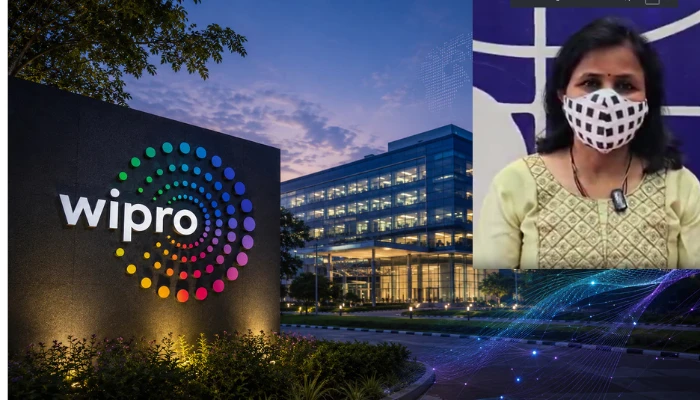
Case Summary
In Maharashtra, at the Pune office of Wipro Technologies, an ex-Hindu woman employee was subjected to sustained religious harassment by a female Muslim colleague. The Hindu woman revealed that she was forced to abandon her Hindu faith, convert to Islam, and enter into a physical relationship with a Muslim man while she was working in the company. When the victim reported the conduct to the company management, they took no action against the accused and instead forced her to resign. The Hindu woman employed at Wipro Technologies in Pune had separated from her husband and lived alone. A Muslim woman named Shaheena Rafiq, worked alongside her at the company. Shahina Rafiq began by contacting the victim on her personal mobile phone number beyond work-related communication. She gradually developed a relationship of closeness with the victim and obtained information about her personal life. Once she established that the victim lived alone, she began using that knowledge as an instrument of pressure. Shahina asked the victim uncomfortable questions about her personal life, including asking her how she managed her sexual needs while living alone. She offered to introduce the victim to her male friends for physical relations. She also asked the victim to send photographs of herself on WhatsApp, stating she wanted to know how the victim looked. The victim further stated that Shahina tried to convince her to abandon her Hindu faith and convert to Islam. She told the victim that leaving Hinduism would provide her with a better lifestyle and work opportunities abroad. She further insisted that the victim enter into a physical relationship with a Muslim man and relocate to Dubai, where she would be introduced to wealthy Sheikhs and given a comfortable life. Finding the pressure unrelenting, the victim restricted all communication with Shahina to professional matters only. She then filed an official complaint with the company administration. Rather than taking action against Shahina, the management responded by turning against the victim. Senior official Wasim failed to act on the complaint. HR and management members, including Zeeshan Ahmed, imposed disciplinary measures against the victim while disregarding her complaints and the supporting evidence she had submitted. A complaint was instead filed against her before the company's internal Ombuds Committee. In August 2025, the victim was called into a Microsoft Teams meeting by company representatives. She was forced to submit her resignation without being given a fair opportunity to be heard. The victim stated at the press conference: "While working at the company, immense systematic mental pressure was exerted on me to embrace Islam and establish physical relations with a Muslim man. When I firmly rejected this anti-religious and unethical proposition and lodged an official complaint with the company administration, instead of taking action against the accused, the management unjustly terminated my employment." Following the forced resignation, the victim filed a complaint at Hinjawadi Police Station, Pune. Her advocate, Vivek Bhosale, stated that the resignation had been obtained under coercion and in violation of the principles of natural justice. A legal notice was sent to Wipro Technologies seeking reinstatement with continuity of service, cancellation of the resignation, compensation of Rs 50 lakh for mental trauma and reputational damage, an official apology, and action against those responsible. The company was given 15 days to respond, after which civil, criminal, and labour court proceedings were to be initiated. The revelation was made at a press conference organised by Hindu Janajagruti Samiti at Shramik Patrakar Bhavan, Pune. Sunil Ghanwat, State Coordinator, Maharashtra and Chhattisgarh, Hindu Janajagruti Samiti, called for a high-level inquiry and stringent legal action against those responsible. This incident came to light in the context of a broader pattern of documented cases of religious targeting of Hindu employees in Indian corporate environments. The Hinduphobia Tracker had earlier documented the TCS Nashik case, in which Hindu employees, particularly women, were systematically targeted on account of their religious identity by Muslim colleagues and seniors running an organised grooming and conversion network. Those victims were pressured to convert to Islam, lured into sexual relationships, subjected to rape and sexual assault, compelled to eat beef, and forced to wear Islamic attire, including hijabs and Muslim caps, against their will. A separate incident at the TCS Chennai office, which came to light on 14 April 2026, involved a Muslim manager named Tabrez Mohammed, supported by his superior Mohammad Mustafa, who used his corporate position to coerce Hindu subordinates into adopting Islam, creating a hostile work environment and generating fear of professional retaliation among victims. The present case at Wipro Technologies reflected a similar structure: a Muslim employee using workplace proximity, personal information, and promises of material benefit to pressure a Hindu woman to abandon her faith, with institutional protection failing the victim at every stage. Hinduphobia has documented more than 37 workplace-related incidents, where Hindus have been targeted for their faith.
Why it is Hate Crime ?
This case is added to the tracker under the primary category- Predatory Proselytisation. The subcategory selected is- Harassment, threats, coercion for conversion. Harassment covers a wide range of behaviours of an offensive nature. It is commonly understood as behaviour that demeans, humiliates, and intimidates a person, including threats and coercion. Harassment and threats, in this case, find their root on discriminatory grounds, which has the effect of nullifying a person’s rights or infringing upon his freedom to exercise his right specifically owing to the victim’s religious identity. Verbal and physical threats and psychological or physical harassment are often used against Hindu victims because they choose to practice their professed religion. Religious harassment also includes forced and involuntary conversions by harassment, threats or coercion. Coercion includes intimidatory tactics like force-feeding a Hindu victim beef to convert to another religion, forceful circumcision, etc. In several cases documented, non-Hindu perpetrators or those who harbour specific animosity towards Hinduism, harass victims simply based on their religious identity. Such cases often also include harassment to ensure the Hindu victim abandons his/her professed religion and adopts the religion of the perpetrator. Such cases, where Hindu victims are harassed to convert to the perpetrator’s religion, are rooted in animosity towards the victim’s religious identity and are therefore documented as religiously motivated hate crimes. Another sub-category selected for this case is: Conversion/attempts to convert by inducements. Predatory Proselytisation is not just limited to threat, harassment, force and violence, but it also has contours of stealth. In several cases, the Hindu victim is exploited to convert, with non-Hindus taking advantage of their poverty. In such cases, the Hindu victim who is suffering financially is offered monetary benefits, including lucrative offers for jobs, health treatment, education, etc, to induce the victim into changing his/her religion. In such cases, the religious identity of the victim and the aim to disenfranchise him from his faith form the heart of the crime. Also, taking advantage of and exploiting an individual’s economic vulnerabilities is widely acknowledged as exploitation, forms of which are often penalised by law. Such cases, therefore, are considered religiously motivated hate crimes since the victim’s religious identity forms the very heart of the crime itself. This case was included in the Hinduphobia Tracker because the victim was targeted not as an employee, but as a Hindu. Her religious identity was central to the conduct she faced. The repeated attempts to persuade her to abandon Hinduism, the pressure that followed, and the adverse consequences she suffered after refusing all pointed towards religion being the primary basis of her targeting. At the outset, the most significant trigger was the demand for religious conversion itself. Shahina Rafiq did not approach the victim out of personal curiosity or friendship. Every interaction moved in the same direction: away from Hinduism and towards Islam. The consistency of that effort revealed intent. A person concerned about another's well-being does not repeatedly encourage them to leave their faith. Such persistence reflects a belief that the existing faith is an obstacle that must be overcome. Moreover, the nature of the inducements offered further underscored the religious motivation behind the conduct. The victim was promised a Muslim husband, a life in Dubai, wealthy Sheikhs, and material comfort if she embraced Islam. Significantly, these inducements were not made in a vacuum. After learning that the victim was a divorcee living separately and managing her life alone, Shahina Rafiq deliberately used these personal circumstances to make the conversion proposal more appealing. The assurances that she would be married in Dubai and be well cared for were tailored to her specific situation and presented as benefits that would flow from embracing Islam. These offers carried an implicit message that her existing life as a Hindu woman was somehow lacking and could be improved through conversion. The conduct, therefore, went beyond simple religious persuasion and reflected an attempt to exploit personal vulnerabilities to achieve a religious outcome. Adding to this, the victim's personal circumstances were used as a tool to advance the conversion effort. Living alone became a point of vulnerability that was repeatedly exploited. Questions about her personal life, discussions about relationships, and offers of companionship were woven into the religious pressure being exerted upon her. Her emotional and social circumstances were not treated separately from the conversion campaign; rather, they were used to make her more receptive to abandoning her faith. In effect, both her personal vulnerabilities and her religious identity were targeted simultaneously. The most troubling aspect of the case, however, was the institutional response. When the victim resisted the pressure and formally complained, the workplace did not act as a neutral arbiter. Instead of addressing her concerns, the organisation failed to provide meaningful protection. The consequences ultimately fell upon the complainant rather than the individual accused of exerting religious pressure. Her removal from employment transformed what began as religious targeting by an individual into a form of institutional complicity. The message conveyed was clear: resisting religious coercion came at a professional cost. When viewed alongside the TCS Nashik grooming and conversion racket, the TCS Chennai conversion pressure case, and several other incidents that the Hinduphobia Tracker has documented, this incident revealed a recurring pattern that warrants documentation. Across different organisations and cities, Hindu employees were subjected to sustained religious pressure by Muslim colleagues or associates, often accompanied by personal, emotional, or material inducements. The forms of retaliation differed from case to case. In Nashik, the outcome involved sexual exploitation. In Chennai, it involved professional intimidation. In Pune, it culminated in the loss of employment. The settings changed, but the underlying structure remained strikingly similar. Recording these incidents together is not an assertion of conspiracy; it is an acknowledgement of a recurring pattern that deserves scrutiny and institutional attention. The conduct documented in this case demonstrated how a professional workplace could be used as a site for religious targeting. Equally concerning was the response of Wipro Technologies to the complaint raised by its employee. The case raised a fundamental question that remained unanswered: whether a Hindu employee's right to religious autonomy and freedom from conversion pressure enjoyed meaningful protection within the institution at all. Taken as a whole, the conduct attributed to Shahina Rafiq reflected a sustained and deliberate effort to persuade the victim to abandon her Hindu faith. The repeated discussions about conversion, the promises of marriage, financial security, and a better life in Dubai, as well as the exploitation of the victim's status as a divorced woman living alone, all pointed in the same direction. These were not isolated remarks or casual conversations. Rather, they formed part of a pattern in which personal vulnerabilities were identified and leveraged to achieve a religious objective, the religious conversion. The consistency of the inducements, coupled with the adverse consequences that followed the victim's refusal, provided insight into both the motive and intent behind the conduct: to secure the victim's conversion to Islam and to penalise her resistance when those efforts failed. Disclaimer: The Hinduphobia Tracker records incident dates based on when the underlying events occurred, not when they are publicly reported. In this case, the report was published on 3 June 2026, but the victim's employment was terminated in August 2025. Since the exact date of termination was not specified, 3 August 2025 has been recorded as the indicative incident date for documentation purposes. This date has been selected solely to facilitate chronological recording and should not be interpreted as the confirmed date of the victim's termination. The report identified three perpetrators: Wasim, Shahina Rafiq, and Zeeshan. While the report suggested that others may also have played a role, no additional names or identifying details were provided. Accordingly, the perpetrator count was recorded as three(3). This represents a conservative estimate based exclusively on the information available in the source material and is intended for documentation purposes only.
Victim Details
Total Victim
1
Deceased
0
Gender
- Male 0
- Female 0
- Third Gender 0
- Unknown 1
Caste
- SC/ST 0
- OBC 0
- General 0
- Unknown 1
Age Group
- Minor 0
- Adult 1
- Senior Citizen 0
- Unknown 0


Case Status
Complaint filed


Perpetrators Details
Perpetrators
Muslim Extremists
Perpetrators Range
From 2 To 5
Perpetrators Gender
both
 Sources




