Hindu identity targeted through anti-Hindutva political rhetoric, Sanatan Dharma portrayed as oppressive and unequal
 Chennai, Tamil Nadu, India
  15 May, 2026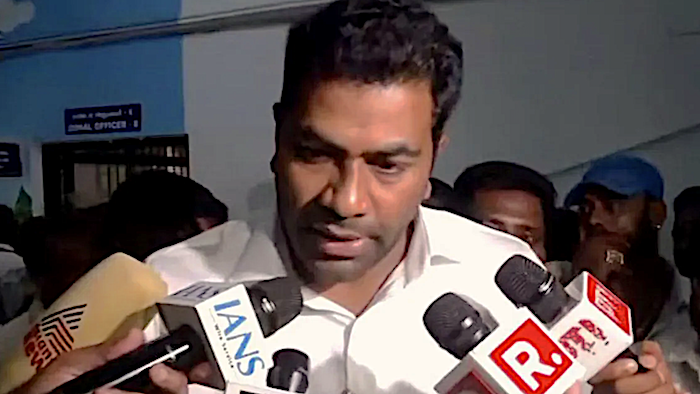
Case Summary
Hindu devotees and followers of Sanatana Dharma in Tamil Nadu faced renewed public hostility after senior political leaders once again made remarks targeting Sanatana Dharma and Hindutva in public political discourse. The controversy intensified after Tamilaga Vettri Kazhagam (TVK) general secretary Adhav Arjun publicly stated that his party was “not against Hindus, but against Hindutva”, while also describing Sanatan Dharma as something associated with inequality in Tamil Nadu. The remarks triggered strong reactions from Hindu groups and political leaders who viewed the statements as another continuation of organised rhetoric directed against Hindu religious identity. The incident unfolded in Chennai, Tamil Nadu, amid an ongoing political controversy surrounding repeated calls by Dravida Munnetra Kazhagam (DMK) leaders to abolish or eradicate Sanatana Dharma. Hindu communities viewed the repeated separation of “Hindus” and “Hindutva” in these political statements as an attempt to publicly attack core Hindu religious and civilisational identity while denying that Hindus themselves were being targeted. The remarks circulated widely across television debates, political discussions, and social media platforms. On 15th May 2026, Adhav Arjun reacted to earlier remarks made by Dravida Munnetra Kazhagam leader Udhayanidhi Stalin regarding Sanatan Dharma. Speaking to reporters in Chennai, Arjun stated that Udhayanidhi Stalin himself did not fully understand Sanatana Dharma. During the interaction, he said that his party was “not against Hindus, but against Hindutva”. He further stated that in the political and social context of Tamil Nadu, Sanatan Dharma was associated with inequality. Arjun also stated that “Hindutva means imposing one religion on others” and added that Tamil Nadu politics had historically stood for social justice and equality. He further stated that while Sanatana Dharma was treated as synonymous with Hinduism in North India, in Tamil Nadu, it was viewed differently. The statements publicly linked Sanatana Dharma and Hindu civilisational identity with oppression and social division while simultaneously attempting to distinguish Hinduism from Hindutva. The controversy emerged against the backdrop of earlier anti-Sanatan Dharma remarks made by Dravida Munnetra Kazhagam leader Udhayanidhi Stalin. On 2nd September 2023, during the “Sanatan Abolition Conference” organised by the Tamil Nadu Progressive Writers Forum, Stalin compared Sanatan Dharma to diseases such as dengue, malaria, and coronavirus and stated that such things should not merely be opposed but eradicated. During the same speech, he also stated that Sanatan Dharma was against equality and social justice and accused it of dividing people through caste. The issue resurfaced on 12th May 2026 during a discussion in the Tamil Nadu Assembly, when Udhayanidhi Stalin reiterated his earlier position, stating that “Sanatan Dharma, which divides people, must certainly be abolished.” The renewed remarks reignited political controversy across Tamil Nadu and led to further public discussion surrounding Hindu identity, Sanatan Dharma, and Hindutva. Against this broader backdrop, Adhav Arjun’s statements became closely linked to the ongoing political rhetoric surrounding Sanatan Dharma. Hindu organisations, political figures, and Hindu devotees criticised the repeated attempts to portray Sanatan Dharma as inherently oppressive while distinguishing attacks on Hindutva from attacks on Hinduism itself. Critics argued that Hindutva, Sanatan Dharma, and broader Hindu civilisational identity were being repeatedly invoked in political discourse in ways that singled out Hindu beliefs and traditions for hostility and delegitimisation. Arjun also stated during the interaction that he personally did not believe in God but that, as a minister, he respected all religions. Despite this, his remarks continued focusing specifically on Hindutva and Sanatana Dharma in the context of inequality and social oppression. Hindu groups stated that the repeated public framing of Hindu civilisational concepts as harmful or divisive contributed to hostility against Hindu identity in public discourse. The controversy escalated further after Bharatiya Janata Party spokesperson C. R. Kesavan criticised the remarks, accusing Dravida Munnetra Kazhagam leaders of repeatedly insulting Hindu sentiments. He stated that earlier remarks against Sanatan Dharma had already triggered nationwide criticism and political backlash. Public reactions continued across Tamil Nadu as political leaders, Hindu groups, and members of the public debated the repeated references to abolishing or opposing Sanatan Dharma. The statements and counter-statements remained at the centre of political controversy in Tamil Nadu after 15 May 2026. No apology or withdrawal of the remarks was issued. The issue continued drawing criticism from Hindu organisations and political groups who stated that repeated attacks on Sanatan Dharma and Hindutva amounted to hostility directed towards Hindu religious and civilisational identity.
Why it is Hate Crime ?
This case has been added to the tracker under the primary category of - Hate speech against Hindus. Within this, the sub-category selected here is- Anti-Hindu slurs, mocking faith. Anti-Hindu slurs and the deliberate mocking of the Hindu faith owing to religious animosity involve the usage of derogatory terms, stereotypes, or offensive references to religious practices, symbols, or figures. One of the common anti-Hindu slurs used against Hindus is “cow-worshipper” and “cow piss drinker”. The intention of using this term is to demean and mock Hindus as a group and their religious beliefs since Hindus consider the cow holy. Additionally, some symbols and the slurs attached to them have a historical context that exacerbates the insult, hate, stereotyping, dehumanisation and oppression against Hindus. Cow worship has been used for centuries to denigrate Hindus, insult their faith and oppress Hindus specifically as a religious group. There has been overwhelming documentation about how cow slaughter has been used to persecute Hindus with cow meat being thrown in temples and places of worship. There has also been overwhelming documentation where cow meat (beef) has been force-fed to Hindus to either forcefully convert them to Islam or denigrate their faith. Apart from cow worship, the Swastika – which holds deep religious significance for the Hindus – has also been misinterpreted and distorted to use as a slur against Hindus. Similarly, the worship of the Shivling has been used by supremacist ideologies and religions to denigrate Hindus owing to religious animosity. Such slurs and denigration stem out of inherent animosity and hate towards Hindus and their faith, therefore, it is categorised as hate speech targeted at Hindus specifically owing to their religious identity. The other subcategory is- Anti-Hindu subversion and prejudice. Hate speech is defined as any speech, gesture, conduct, writing, or display that is prejudicial against a specific individual and/or group of people, which is leading to or may lead to violence, prejudicial action or hate against that individual and/or group. Media plays a specific and overarching reach in perpetuating prejudicial attitudes towards a community owing to unfair, untrue coverage and/or misrepresentation/misinterpretation, selective coverage and/or omission of facts of/pertaining to issues affecting a specific religious group. This type of bias can dehumanise the victim group, making it easier for others to justify harmful actions against them, which aligns with the objectives of hate speech laws aimed at preventing such harm. It is often observed that the media takes a prejudicial stand against the Hindu community driven by their need to shield the aggressor community which happens to be a numeric minority, however, is the one perpetrating violence against Hindus. For example, the media is often quick to contextualise religiously motivated crimes against Hindus, omit or misrepresent facts that point towards religiously motivated hate crimes, justify and/or downplay religiously motivated hate crimes or simply present fake news to stereotype Hindus. Such media bias leads to the denial of persecution and is often used to dehumanise Hindus, leading to justification for violence against them. For example, the media covered several fake allegations of Hindus targeting Muslims and forcing them to chant Jai Shree Ram. Most of these cases were proved false and fabricated after police investigation. These fake news reports were subsequently never retracted or clarified. Such fake news led to the justification of violence and dehumanisation of Hindus based on the argument that since Hindus targeted Muslims and forced them to chant Jai Shree Ram, the dehumanisation of Hindus and violence against them was par for the course and merely a retaliation. Such media bias leads to prejudicial portrayal of Hindus and offers a justification for violence against them and therefore, is considered hate speech under this category. This case constituted a clear instance of religiously motivated hate speech because senior political figures publicly portrayed Sanatan Dharma as something associated with inequality, division, and social harm while simultaneously defending rhetoric directed against it. Sanatan Dharma is an endonym for the faith professed by Hindus and represents the spiritual, philosophical, and civilisational foundation of Hinduism. Rooted in Sanskrit and referenced in ancient Hindu scriptures such as the Mahabharata and Manusmriti, the term signifies the eternal and continuing faith of Hindus. Therefore, publicly advocating opposition to, abolition of, or hostility towards Sanatan Dharma directly targeted the religious identity of Hindus themselves. Denying or delegitimising Sanatan Dharma effectively amounted to denying the legitimacy of the Hindu faith, which in turn dehumanised Hindu devotees and normalised hostility against their religious identity. The statements carried strong anti Hindu prejudice because they deliberately reduced the entirety of Sanatan Dharma to a single negative stereotype centred around caste oppression and inequality. Hinduism encompasses vast philosophical schools, spiritual traditions, devotional movements, scriptures, rituals, and cultural practices followed by millions across generations. None of these dimensions were acknowledged. Instead, the religion was selectively framed as inherently regressive and socially harmful. By reducing Hinduism solely to accusations of inequality, the speakers distorted public understanding of the faith and encouraged suspicion and hostility towards Hindu beliefs and traditions rather than informed discussion. Such rhetoric did not criticise isolated social issues but attacked the legitimacy of the Hindu civilisational framework itself. The conduct also reflected deliberate subversion of Hindu identity through calculated linguistic framing designed to make anti-Hindu rhetoric appear socially acceptable. Statements such as “we are not against Hindus, but against Hindutva” attempted to artificially separate Hindu identity from concepts intrinsically linked to Hindu religious and civilisational thought. However, while presenting this distinction publicly, the same individuals simultaneously attacked Sanatan Dharma itself. Since Sanatan Dharma forms the philosophical and spiritual core of Hindu identity, publicly portraying it as dangerous or oppressive indirectly vilified Hindu devotees and their beliefs. This rhetorical strategy enabled repeated attacks on core Hindu concepts while attempting to avoid accountability for targeting Hindus directly. The use of the term “Hindutva” in such discourse also carries wider significance because it is frequently deployed as a euphemism to make the targeting of Hindus appear intellectually or politically acceptable. Hindutva emerged historically as a unifying civilisational framework through which Hindus sought to preserve their cultural and religious identity in the face of repeated Islamic invasions, colonial disruption, Christian missionary activity, and sustained attempts at religious conversion and cultural erasure. Far from being inherently destructive, Hindutva functions for many Hindus as an expression of collective civilisational continuity, cultural preservation, and religious self assertion. However, in contemporary political rhetoric, the term is often selectively weaponised to justify hostility towards Hindus and Hindu identity more broadly. The distinction drawn between “Hindus” and “Hindutva” frequently operates as semantic jugglery through which hostility directed at Hindu beliefs, practices, and civilisational identity is reframed as acceptable political critique. In effect, attacks on Hindu religious expression are sanitised by claiming that only “Hindutva” is being opposed, even when the rhetoric directly targets Sanatan Dharma, Hindu customs, temples, scriptures, or Hindu collective identity itself. The artificiality of this distinction has also been exposed openly in ideological spaces such as the “Dismantling Global Hindutva” conference held in the United States, where several speakers themselves acknowledged that Hindutva and Hinduism are inseparable in practice and argued that dismantling Hindutva would ultimately require dismantling Hinduism itself. Such examples demonstrate how the language of opposing “Hindutva” is often used not merely to critique political ideas, but to delegitimise Hindu religious and civilisational identity altogether. Furthermore, the repeated portrayal of Sanatan Dharma as synonymous with oppression also contributed to the spread of false and prejudicial narratives about Hindus beyond Tamil Nadu. Statements made by influential political leaders carried social and political weight and spread rapidly through media platforms, public debate, and political discourse across India. By repeatedly associating Hinduism with social evil, the rhetoric risked shaping wider public perception of Hindus as representatives of a harmful or discriminatory system. This was dangerous because it reinforced hostility towards Hindu communities and delegitimised Hindu traditions in the public sphere. Such messaging fostered contempt against Hindu identity and encouraged the treatment of Hindu beliefs as morally inferior compared to other religious traditions. The remarks further demonstrated conscious disregard for Hindu religious sensitivities because the controversy surrounding anti-Sanatan statements had already generated widespread outrage among Hindu communities across India. Despite being fully aware of the deep religious significance of Sanatan Dharma to millions of Hindus, the individuals involved continued amplifying rhetoric portraying the faith negatively. Rather than distancing themselves from language targeting Hindu beliefs, they defended and expanded upon it publicly. This reflected deliberate bias and reinforced the normalisation of anti-Hindu rhetoric within mainstream political discourse. When senior political leaders repeatedly validated hostile language against Hinduism despite nationwide backlash, it contributed to an environment where attacks on Hindu beliefs became increasingly normalised and socially acceptable. The controversy also reflected a broader, sustained pattern in which Hindu beliefs, traditions, and civilisational identity repeatedly became the focus of ideological attacks within Tamil Nadu's political discourse. The recurring emphasis on abolishing, opposing, or discrediting Sanatan Dharma singled out Hinduism in a manner not directed towards other religions. By repeatedly portraying Hindu civilisational identity as socially harmful and politically illegitimate, the rhetoric moved beyond ordinary political disagreement and entered the realm of targeted religious hostility. The repeated focus on weakening the legitimacy of Hindu beliefs in public life demonstrated sustained animosity towards the Hindu faith and its followers. Given that this case met the criteria for a religiously motivated hate speech incident, it was added to the tracker's hate speech database.


Case Status
Unknown


Perpetrators Details
Perpetrators
State and Establishment
Perpetrators Range
From 2 To 5
Perpetrators Gender
male
 Sources




