Sanatan Dharma targeted again as DMK leader Udhayanidhi Stalin repeats “eradication” remark in Tamil Nadu assembly
 Chennai, Tamil Nadu, India
  11 May, 2026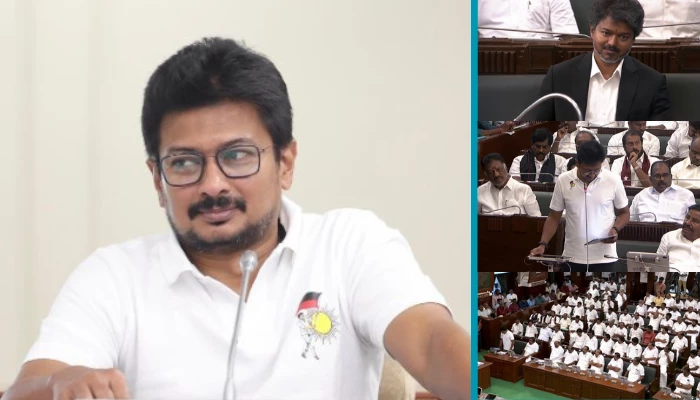
Case Summary
In Tamil Nadu, Sanatana Dharma was attacked and called to be eradicated by Dravida Munnetra Kazhagam (DMK) leader and Leader of Opposition Udhayanidhi Stalin on 12 May 2026 in the Tamil Nadu Legislative Assembly. His statement came months after the Madurai Bench of the Madras High Court held that his 2023 remarks against Sanatan Dharma amounted to hate speech against the Hindu community. While addressing the Assembly in the presence of the newly elected Chief Minister, C. Joseph Vijay, Udhayanidhi Stalin stated, “Sanathanam, which separated people, should be eradicated.” The remarks triggered widespread outrage because the leader repeated his earlier public calls for the destruction of Sanatan Dharma. This was not the first occasion on which Udhayanidhi Stalin had made such remarks against Hinduism and Sanatan Dharma. Earlier, on 2 September 2023, he delivered a speech at an event titled the “Sanatana Abolition Conference”, organised by the Tamil Nadu Progressive Writers Forum. During the conference, he compared Sanatan Dharma with mosquitoes, dengue, malaria and corona, and stated that such things should not merely be opposed but eradicated. He said, “Mosquitoes, dengue, flu, malaria, coronavirus - we should not oppose these things. They require complete eradication. The same holds true for Sanatanam (Hinduism). Our first work should be to abolish or eradicate Sanatanam instead of opposing it.” In the same 2023 speech, Udhayanidhi Stalin further claimed that Sanatan Dharma opposed equality and social justice. He stated that Sanatan Dharma divided people by caste and segregated communities. He also posted on X (formerly Twitter) that “Sanatan Dharma constitutes a principle that divides people in the name of caste and religion” and asserted that “uprooting Sanatan Dharma upholds humanity and human equality.” Following the 2023 remarks, Tamil Nadu Police registered a First Information Report against Bharatiya Janata Party leader Amit Malviya for allegedly distorting Udhayanidhi Stalin’s statements, after Malviya criticised the speech publicly. However, on 20 January 2026, the Madurai Bench of the Madras High Court quashed the FIR against Amit Malviya and observed that the remarks made by Udhayanidhi Stalin at the “Sanatana Abolition Conference” amounted to hate speech against the Hindu community. Justice S. Srimathy noted that Hinduism had faced constant attacks over decades and observed that while those reacting to the remarks were booked, no legal action had been initiated against the person who delivered the speech.
Why it is Hate Crime ?
This case is added to the tracker under the primary category- Hate Speech against Hindus. The subcategory selected is- Anti-Hindu slurs, mocking faith. Anti-Hindu slurs and the deliberate mocking of the Hindu faith owing to religious animosity involve the usage of derogatory terms, stereotypes, or offensive references to religious practices, symbols, or figures. One of the common anti-Hindu slurs used against Hindus is “cow-worshipper” and “cow piss drinker”. The intention of using this term is to demean and mock Hindus as a group and their religious beliefs since Hindus consider the cow holy. Additionally, some symbols and the slurs attached to them have a historical context that exacerbates the insult, hate, stereotyping, dehumanisation and oppression against Hindus. Cow worship has been used for centuries to denigrate Hindus, insult their faith and oppress Hindus specifically as a religious group. There has been overwhelming documentation about how cow slaughter has been used to persecute Hindus, with cow meat being thrown in temples and places of worship. There has also been overwhelming documentation where cow meat (beef) has been force-fed to Hindus to either forcefully convert them to Islam or denigrate their faith. Apart from cow worship, the Swastika – which holds deep religious significance for the Hindus – has also been misinterpreted and distorted to use as a slur against Hindus. Similarly, the worship of the Shivling has been used by supremacist ideologies and religions to denigrate Hindus owing to religious animosity. Such slurs and denigration stem from inherent animosity and hate towards Hindus and their faith; therefore, it is categorised as hate speech targeted at Hindus specifically owing to their religious identity. The other subcategory selected in this case is- Violent Threats. Violent threats, explicit, implicit or implied, are the most dangerous form of hate speech since it goes beyond discriminatory and prejudicial language to express the intent of causing harm to an individual or a group of people based on their religious identity and faith. There could be several different kinds of threats that are issued to Hindus based on religious animosity. An explicit threat would mean the direct threat of violence towards an individual Hindu, a group of Hindus or Hindus at large. Physical violence, death threats, threats of destruction of property belonging to Hindus and threats of genocide would mean explicit threats against Hindus for their religious identity. Implicit threats may not be a direct threat but implied through the use of symbols of actions – for example, in the Nupur Sharma case, other than explicit threats, there were also implicit threats when Islamists took to the streets to burn and beat her effigies. It implies that they want to do the same to Nupur Sharma, which is considered an implicit threat. Violent threats can be delivered in person, through letters, phone calls, graffiti, or increasingly through social media and other online platforms. It would be important to understand that a threat – explicit or implicit, online or offline – to an individual who happens to be a Hindu does not qualify as a religiously motivated threat. Such a threat, while vile and dangerous, could be owing to non-religious reasons and/or personal animosity. To qualify as a religiously motivated threat, it would need to exhibit an indication that the individual is being targeted for religious reasons and/or owing to his/her religious identity as a Hindu. This case constituted a clear instance of religiously motivated hate speech because Dravida Munnetra Kazhagam (DMK) leader Udhayanidhi Stalin, once again, publicly called for the eradication of Sanatan Dharma inside the Tamil Nadu Legislative Assembly. His remarks were not isolated or accidental, but rather they formed part of a continuing pattern in which he repeatedly targets Hinduism and portrays the faith as something dangerous and illegitimate. By openly declaring that “Sanathanam, which separated people, should be eradicated,” he directed hostility towards the religious identity, beliefs, and civilisational traditions of Hindus, and thus his language went far beyond political criticism and entered the realm of open religious vilification. The severity of the incident increased because these remarks have been echoed on multiple occasions, like in his earlier 2023 speech at the “Sanatana Abolition Conference,” where he compared Hinduism to mosquitoes, dengue, malaria, and coronavirus, and demanded its complete eradication. Such comparisons dehumanised Hindu beliefs and consequently reduced an ancient spiritual tradition to a blot contaminating society. Sanatan Dharma, however, is a Dharma fundamentally rooted in the idea of eternal truth and consciousness, universal harmony, and peaceful coexistence. The term itself means the “eternal way of life” and reflects principles that transcend rigid boundaries of sect, ethnicity, or geography. Its philosophical foundations teach that truth can be approached through different paths, which is why many Hindus regard all sincere spiritual traditions as part of the wider search for the same eternal reality. Concepts such as ahimsa, compassion, duty, self‑restraint, respect for all life, and “Vasudhaiva Kutumbakam,” the world as one family, form the moral core of Sanatan Dharma. Rather than preaching conquest or exclusion, it emphasises inner balance, coexistence, and peace among all beings. Therefore, calling for the eradication of such a civilisation‑rooted spiritual philosophy amounted not merely to criticism of a religion, but instead to hostility towards values of harmony and coexistence that millions of Hindus organise their lives around. Another significant aspect was the repeated attempt by the accused to reduce Hinduism entirely to caste oppression while ignoring the diversity and reformist traditions within the faith. Hindu civilisation has historically included saints, bhakti movements, social reformers, and spiritual traditions that challenged discrimination and welcomed devotees across caste and social backgrounds. Traditionally, the philosophical understanding within Sanatan Dharma linked social roles to duties, qualities, and the nature of work performed, rather than to a rigid birth‑based hierarchy alone. This understanding is reflected in Hindu scriptures and epics, including the Mahabharata, where the five Pandava brothers, despite being born into the same family, were associated with different varnas based on their qualities, skills, and duties rather than birth alone. Yudhishthira embodied the qualities of a Brahmin through wisdom and knowledge; Bhima displayed the traits of a Shudra through physical service and labour‑oriented strength; Arjuna reflected the qualities of a Kshatriya through warfare and the protection of society; while Nakula and Sahadeva were associated with Vaishya‑like duties related to animal care, administration, and management. Thus, this demonstrated that in the traditional understanding of Sanatan Dharma, social identity was linked to skills, conduct, and responsibilities performed in society rather than rigid hereditary division. The broader civilisational principle was therefore centred on dharma, duty, and contribution to society, not hatred or segregation between communities. Yet Udhayanidhi Stalin deliberately portrayed Hinduism as inherently unjust and incompatible with equality. This selective distortion weaponised social divisions to demonise the religion as a whole, and in turn, such rhetoric reflected a broader pattern frequently used by anti‑Hindu political and ideological groups, where caste issues were exaggerated and projected onto the entirety of Hinduism to fracture Hindu society and weaken Hindu identity. This incident also highlighted the continuing pattern of anti‑Hindu rhetoric associated with sections of Dravidian politics, particularly within the DMK. Over the years, leaders linked to the party repeatedly made derogatory remarks about Hindu practices, temples, beliefs, and traditions, while at the same time framing hostility towards Hinduism as a form of social justice politics and electoral appeasement. The Madras High Court itself observed in 2026 that there had been continuous attacks on Hinduism over decades by Dravidian political movements and specifically described Udhayanidhi Stalin’s earlier remarks as hate speech against Hindus. The court further noted the disturbing reality that action was often taken against critics of such speeches rather than against those making the anti‑Hindu remarks themselves. Consequently, this established that the present incident was not an isolated incident, but part of a larger, recurring pattern of hostility directed towards Hindus and their faith. More worrisome was the Assembly's conduct during the speech, which further aggravated the incident. Despite the open call for the eradication of Sanatan Dharma, no visible objection was raised by any of the members present in the House; moreover, the newly elected Chief Minister, C. Joseph Vijay, did not publicly object or intervene when the remarks were made. The silence of the Assembly in the face of such explicit anti‑Hindu rhetoric created the impression of institutional tolerance towards hostility against Hindu beliefs. Thus, when calls for the eradication of a religion are normalised within a legislative body without condemnation, it sends a deeply disturbing message to Hindu citizens that attacks on their faith can occur openly within political institutions without accountability or resistance. Furthermore, calling for the eradication of Hinduism carried deeply violent undertones because it framed an entire religious tradition as something that must be eliminated from society. Such rhetoric mirrored historical forms of dehumanising propaganda where communities were portrayed as social evils requiring destruction. By presenting Hinduism as equivalent to disease and by repeatedly insisting on its removal, the accused encouraged contempt and hostility towards Hindus as a collective community. Therefore, this transformed the speech from ordinary political expression into explicit hate speech targeting a religious group and its civilisational identity. Overall, this incident qualified as a serious instance of anti‑Hindu hate speech since the accused repeatedly denigrated Hinduism, compared it to diseases and pests, portrayed it as inherently oppressive, and openly demanded its eradication within a legislative assembly. The repeated nature of such remarks, the wider pattern of anti‑Hindu rhetoric associated with the DMK, and the silence of the Assembly collectively reinforced the perception of institutional hostility towards Hindu beliefs and traditions. Hence, this case was included in the Hinduphobia Tracker as a clear example of religiously motivated hate speech directed against Hindus and Hinduism.


Case Status
Unknown


Perpetrators Details
Perpetrators
State and Establishment
Perpetrators Range
One Person
Perpetrators Gender
male
 Sources




