Attack on Hindu sentiments: Leftist activist and anti-Hindu politician make derogatory remarks against Hindu culture, sacred symbols and religious chants
 India
India  7 May, 2026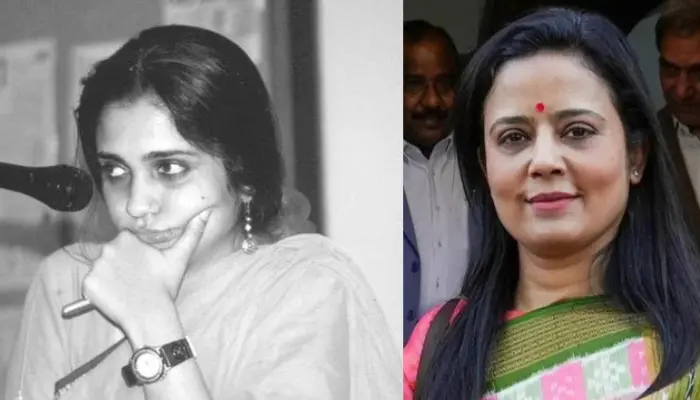
Case Summary
In West Bengal, Hindu sentiments were hurt when leftist activist Teesta Setalvad denigrated Hindu culture, the tilak (a sacred Hindu symbol) and Jai Shri Ram chants. The accused's remarks were supported by Trinamool Congress politician Mahua Moitra. According to reports, this incident occurred after the state legislative elections of 2026 in West Bengal, where the Bharatiya Janata Party won a striking majority of seats and the elections. Soon after this, a video surfaced showing some Bharatiya Janata Party supporters celebrating this victory by applying a tilak on portraits of several prominent historical figures, including Mother Teresa, Netaji Subhas Chandra Bose, Swami Vivekananda and Raja Ram Mohan Roy. The video showed Bharatiya Janata Party supporters chanting “Jai Shri Ram, Jai Shri Ram” while one man applied a tilak on the portraits. Chants of “Har Har Modi, Ghar Ghar Modi” were also heard in the video. The incident was from Asutosh College in Kolkata. Following this, the All India Trinamool Congress from its official X handle said that such acts of applying a tilak on images of Mother Teresa and Raja Ram Mohan Roy were acts of vandalism. Following this tweet, Teesta Setalvad called the act of applying a tilak and chanting Jai Shri Ram "uncouth culture". In her quote tweet, Teesta wrote: "Uncouth culture vs Bengali culture. #Bhadralok silent?" Following this, Trinamool Congress leader Mahua Moitra supported Teesta's remark by commenting: "Bhadraloks are busy celebrating that they got the “gundas” out!" Notably, this was not the first time Teesta Setalvad engaged in such anti-Hindu actions. Her entire career as an activist was built on the Gujarat riots of 2002, which occurred between Hindus and Muslims. During this period, she demonised the Hindu community, Hindutva and then Chief Minister Narendra Modi. The riots had occurred after communal tensions spread following the Godhra train burning incident, where Hindu community members, including women and children, were burnt alive in a train by members of the Muslim community. Teesta Setalvad also made false evidence to falsely book Hindus in cases related to the Gujarat riots. Similarly, in the case of Mahua Moitra, this was not the first time she supported or made such remarks. The Hinduphobia tracker previously recorded many such anti-Hindu remarks made by Mahua Moitra. For example, in August 2025, in West Bengal, she mocked the Hindu community and sacred symbols like the Kanthi Mala, traditionally worn by Vaishnava Hindus. Similarly, in October 2025, Mahua Moitra supported an anti-Hindu X post by a Christian extremist denigrating Diwali as "retarded garbage". In an 11 January 2026 debate at Kolkata's Calcutta Club ("Does Hinduism Need Protection from Hindutva?"), Mahua Moitra mocked Hindus and Hinduism as "paranoid."
Why it is Hate Crime ?
The primary category selected in this case is- Hate Speech against Hindus. The subcategory selected is- Anti-Hindu slurs, mocking faith. Anti-Hindu slurs and the deliberate mocking of the Hindu faith owing to religious animosity involve the usage of derogatory terms, stereotypes, or offensive references to religious practices, symbols, or figures. One of the common anti-Hindu slurs used against Hindus is “cow-worshipper” and “cow piss drinker”. The intention of using this term is to demean and mock Hindus as a group and their religious beliefs since Hindus consider the cow holy. Additionally, some symbols and the slurs attached to them have a historical context that exacerbates the insult, hate, stereotyping, dehumanisation and oppression against Hindus. Cow worship has been used for centuries to denigrate Hindus, insult their faith and oppress Hindus specifically as a religious group. There has been overwhelming documentation about how cow slaughter has been used to persecute Hindus with cow meat being thrown in temples and places of worship. There has also been overwhelming documentation where cow meat (beef) has been force-fed to Hindus to either forcefully convert them to Islam or denigrate their faith. Apart from cow worship, the Swastika – which holds deep religious significance for the Hindus – has also been misinterpreted and distorted to use as a slur against Hindus. Similarly, the worship of the Shivling has been used by supremacist ideologies and religions to denigrate Hindus owing to religious animosity. Such slurs and denigration stem out of inherent animosity and hate towards Hindus and their faith, therefore, it is categorised as hate speech targeted at Hindus specifically owing to their religious identity. This case is a clear example of a religiously motivated hate crime as the perpetrator, Teesta Setalvad, made derogatory remarks against sacred Hindu symbols like the tilak and Hindu culture, as well as Jai Shri Ram chants, by calling them "uncouth culture." The fact that Trinamool Congress leader Mahua Moitra supported this and did not oppose it showcases her animosity towards Hinduism and the Hindu community, making it a clear case of anti-Hindu hate speech. The tilak holds profound religious and cultural significance in Hinduism as a sacred mark applied to the forehead, symbolising divine blessings, spiritual protection, and devotion, often representing the third eye of Lord Shiva or the energy centre in yoga traditions. "Jai Shri Ram" chants also carry deep devotional meaning, invoking victory to Lord Ram, the embodiment of righteousness and dharma in the epic Ramayana, and serve as a unifying expression of faith, pride, and spiritual invocation commonly used in Hindu worship, festivals, and public celebrations. Similarly, Hindu culture encompasses millennia of rituals, festivals, philosophy, and religious practices that form the core identity and spiritual life for over a billion Hindus worldwide, fostering values like dharma (righteousness), ahimsa (non-violence), and unity through shared worship. Therefore, Teesta Setalvad's remarks denigrating Jai Shri Ram chants, the tilak, and Hindu culture as "uncouth" amount to hate speech, deliberately vilifying sacred Hindu practices and identity to stir contempt and division. Such attacks deeply hurt Hindu sentiments by invalidating their faith's core expressions, inflaming communal tensions by portraying Hindus as culturally inferior, and eroding social cohesion by normalising prejudice against a major religious community. This reveals the accused's deep-seated animosity towards Hindu culture, its religious symbols, public expressions of faith, and the Hindu community itself, making it an anti-Hindu hate speech. The fact that Mahua Moitra, a politician expected to uphold fairness and justice for all irrespective of religion, failed to condemn Teesta Setalvad's attacks on sacred Hindu symbols and Jai Shri Ram, instead supporting them via a quote-tweet stating, "Bhadraloks are busy celebrating that they got the 'gundas' out!", explicitly endorses denigrating Hindu symbols, culture, and chants. When a public figure like her normalises such prejudice, it signals to society that vilifying Hinduism is acceptable, emboldening others and amplifying communal harm. This support of Teesta's remark showcases her deep-seated animosity towards the Hindu community and their faith, making it a clear case of anti-Hindu hate speech. Teesta Setalvad and Mahua Moitra's histories expose a blatant, longstanding pattern of Hinduphobia, marked by repeated, targeted attacks on Hindu culture, community, faith, and sacred symbols that reveal deliberate prejudice and deep-seated bias. This latest episode fits that pattern because it did not target a stray comment; it targeted core expressions of Hindu identity, which shows religious animosity rather than neutral criticism. When such language is repeated over time by the same figures, it suggests a sustained hostility towards the Hindu community and its faith, not an isolated disagreement. Given that this case meets the parameters of a religiously-driven offence, it has been added to the Hate Crime database of the Hinduphobia Tracker.


Case Status
Unknown


Perpetrators Details
Perpetrators
Others
Perpetrators Range
From 2 To 5
Perpetrators Gender
female
 Sources




