Hindus and their practices insulted, Hindutva trope spewed by Indian politician during public debate in Kolkata, West Bengal
 Kolkata, West Bengal, India
  10 January, 2026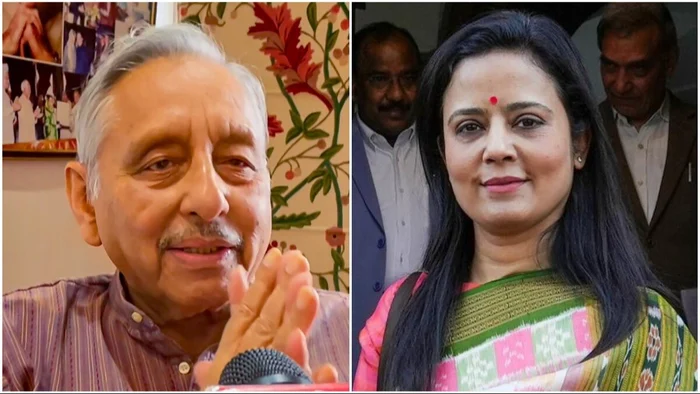
Case Summary
In West Bengal, Kolkata, Hindus and Hinduism were mocked at and called paranoid by Indian politician Mahua Moitra at a debate organised by Calcutta Club Circle, on 11th January 2026. The incident took place at the Calcutta Club in Kolkata, West Bengal, during a public debate attended by judges, politicians, and members of the public. The Trinamool Congress Member of Parliament, Mahua Moitra and former Congress leader Mani Shankar Aiyar made derogatory remarks on Hindus and Hinduism. The derogatory comments were made by Mahua Moitra while debating on the topic 'Does Hinduism Need Protection from Hindutva?' Trinamool Congress MP Mahua Moitra described Hinduism and Hindutva as two different concepts, saying that Hindutva is a political ideology, while Hinduism is a spiritual and pluralistic tradition. Mahua Moitra spoke on the topic of Hinduism needing protection from Hindutva. She asserted that Hinduism allowed for love between Hindus and Muslims, but Hindutva labelled such relationships as “love jihad.” She further argued that ‘a meat-eating Bengali Hindu will offer meat to Goddess Kali, but a Hindutva follower will say that this is not right.’ Mani Shankar Aiyar criticised Hindutva and asserted that Hinduism was in a state of paranoia. These remarks were delivered in a dismissive and mocking tone, presenting Hindu identity as intolerant and paranoid. The debate setting amplified the insult, as the comments were made before an audience and circulated widely in the media. Hindu practices and beliefs were ridiculed in a respected public institution, leaving those who identified with the faith demeaned and portrayed as regressive.
Why it is Hate Crime ?
This case has been added to the tracker under the primary category- Hate Speech against Hindus. Within this, the subcategory selected is- Anti-Hindu slurs, mocking faith. Anti-Hindu slurs and the deliberate mocking of the Hindu faith owing to religious animosity involve the usage of derogatory terms, stereotypes, or offensive references to religious practices, symbols, or figures. One of the common anti-Hindu slurs used against Hindus is “cow-worshipper” and “cow piss drinker. The intention of using this term is to demean and mock Hindus as a group and their religious beliefs since Hindus consider the cow holy. Additionally, some symbols and the slurs attached to them have a historical context that exacerbates the insult, hate, stereotyping, dehumanisation and oppression against Hindus. Cow worship has been used for centuries to denigrate Hindus, insult their faith and oppress Hindus specifically as a religious group. There has been overwhelming documentation about how cow slaughter has been used to persecute Hindus, with cow meat being thrown in temples and places of worship. There has also been overwhelming documentation where cow meat (beef) has been force-fed to Hindus to either forcefully convert them to Islam or denigrate their faith. Apart from cow worship, the Swastika – which holds deep religious significance for the Hindus – has also been misinterpreted and distorted to use as a slur against Hindus. Similarly, the worship of the Shivling has been used by supremacist ideologies and religions to denigrate Hindus owing to religious animosity. Such slurs and denigration stem from inherent animosity and hate towards Hindus and their faith; therefore, it is categorised as hate speech targeted at Hindus specifically owing to their religious identity. This case is being included in the hate crime database because it demonstrates deliberate, repeated, and publicly amplified religious hostility toward Hindus, expressed through speech by senior political figures using a prestigious public platform. Mahua Moitra used her public platform to ridicule Hindu identity by portraying Hindus as paranoid, intolerant, and socially regressive. These remarks were delivered during a formal public debate held at the Calcutta Club in Kolkata, a respected institution attended by judges, politicians, and members of the public. The institutional setting is significant because it lent legitimacy and authority to the speech, amplifying its impact and normalising religious denigration. The remarks were not isolated or incidental. They form part of a documented and escalating pattern of targeting Hindus across multiple dimensions of their religious identity. On earlier occasions, Mahua Moitra mocked Hindu deities, ridiculing sacred figures central to the faith. She dismissed Hindu malas, trivialising symbols of devotion and prayer. She attacked Hindu religious and political leaders, portraying them as regressive and intolerant. At the Calcutta Club debate, this progression culminated in a collective vilification of the Hindu community itself, which she characterised as paranoid and dangerous. The hostility was further reinforced by Mani Shankar Aiyar, who stated that Hinduism itself was in a state of paranoia. Labelling an entire religious tradition and its followers as paranoid constitutes collective psychological delegitimisation. This goes beyond ideological critique and amounts to a direct insult to the dignity of a religious group. The presence of multiple senior political figures expressing contempt toward Hinduism in the same forum demonstrates that the hostility was neither accidental nor individual, but reinforced and normalised. A critical religious marker in this case is the use of the “Hindutva” trope as a euphemism to target Hindus and Hinduism. While framed as opposition to an ideology, the language used repeatedly collapses any distinction between Hindutva and Hindu religious identity. In practice, hostility directed at the term is transferred onto Hindus as a community, making religious targeting appear politically justified. Hindutva functions as a unifying framework through which Hindus sought to preserve their cultural and religious identity after centuries of erosion due to Islamic invasions, British colonisation, and Christian theological impositions and conversions. It is not inherently destructive. However, it is routinely portrayed as such to delegitimise Hindu self-expression. This rhetorical strategy enables animosity toward Hindus to be reframed as principled opposition to an ideology, thereby masking religious prejudice. That this euphemism serves as a proxy for hostility toward Hinduism has been openly acknowledged in spaces such as the Dismantling Global Hindutva Conference in the United States, where speakers explicitly stated that Hinduism and Hindutva are indistinguishable and that dismantling Hindutva would require dismantling Hinduism itself. Such admissions expose the semantic strategy used to justify targeting Hindus while denying that Hindus are the victims. The harm caused by these remarks was intensified by public amplification. Speech delivered in a respected institution and circulated widely through media coverage legitimised ridicule of Hindu beliefs and reinforced harmful stereotypes in mainstream discourse. The mocking tone and dismissive delivery further underscore the animosity inherent in the remarks, replacing reasoned debate with scorn and contempt. Importantly, this was not the first instance of such conduct. In 2021, Mahua Moitra attacked Yogi Adityanath during election campaigning in West Bengal and referred to his supporters as a “Vanar Sena commune.” The Vanar Sena is a revered force in the Hindu epic Ramayana, associated with dharma and devotion to Lord Ram. Using a sacred religious reference as a slur further demonstrates contempt toward Hindu tradition and belief. Taken together, these incidents establish a consistent pattern of bias, ridicule, and hostility toward Hindus and Hinduism, rather than a one-time lapse or rhetorical excess. The repeated denigration of Hindu symbols, beliefs, and collective identity, reinforced by multiple speakers in a single high-profile forum, demonstrates clear religious animus. For these reasons, this case meets the threshold of religiously motivated hate speech and is rightly included in the hate crime database.


Case Status
Unknown


Perpetrators Details
Perpetrators
State and Establishment
Perpetrators Range
From 2 To 5
Perpetrators Gender
both
 Sources




