Hindu employees restricted from wearing sacred Hindu symbols by Indian Airline company, while no similar restrictions placed on other faiths
 India
India  23 April, 2026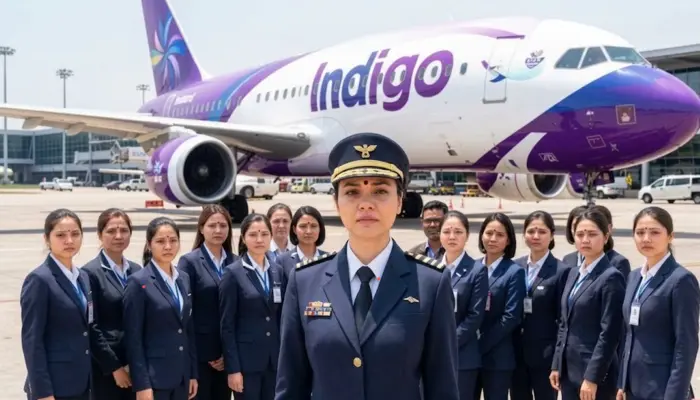
Case Summary
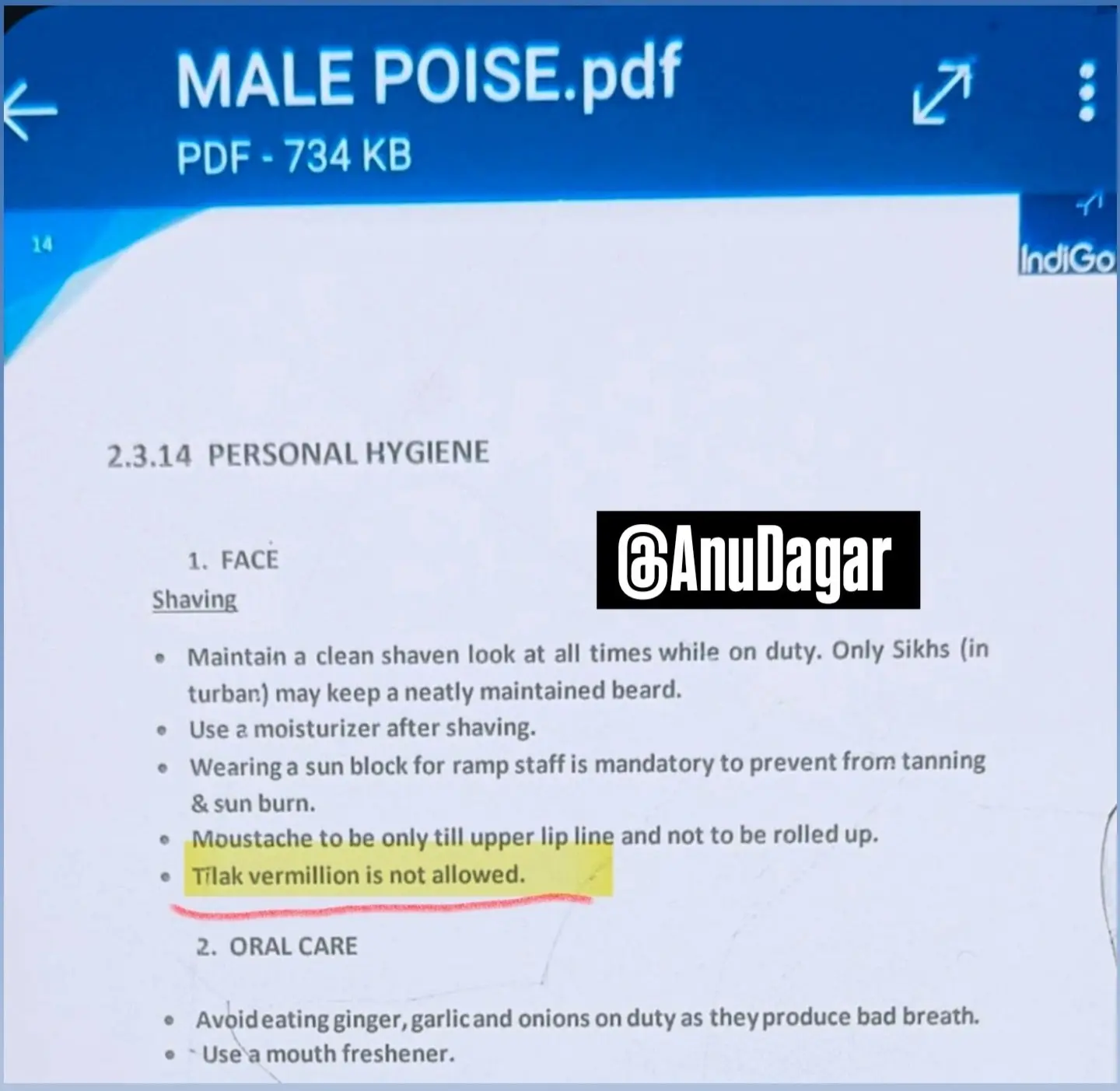
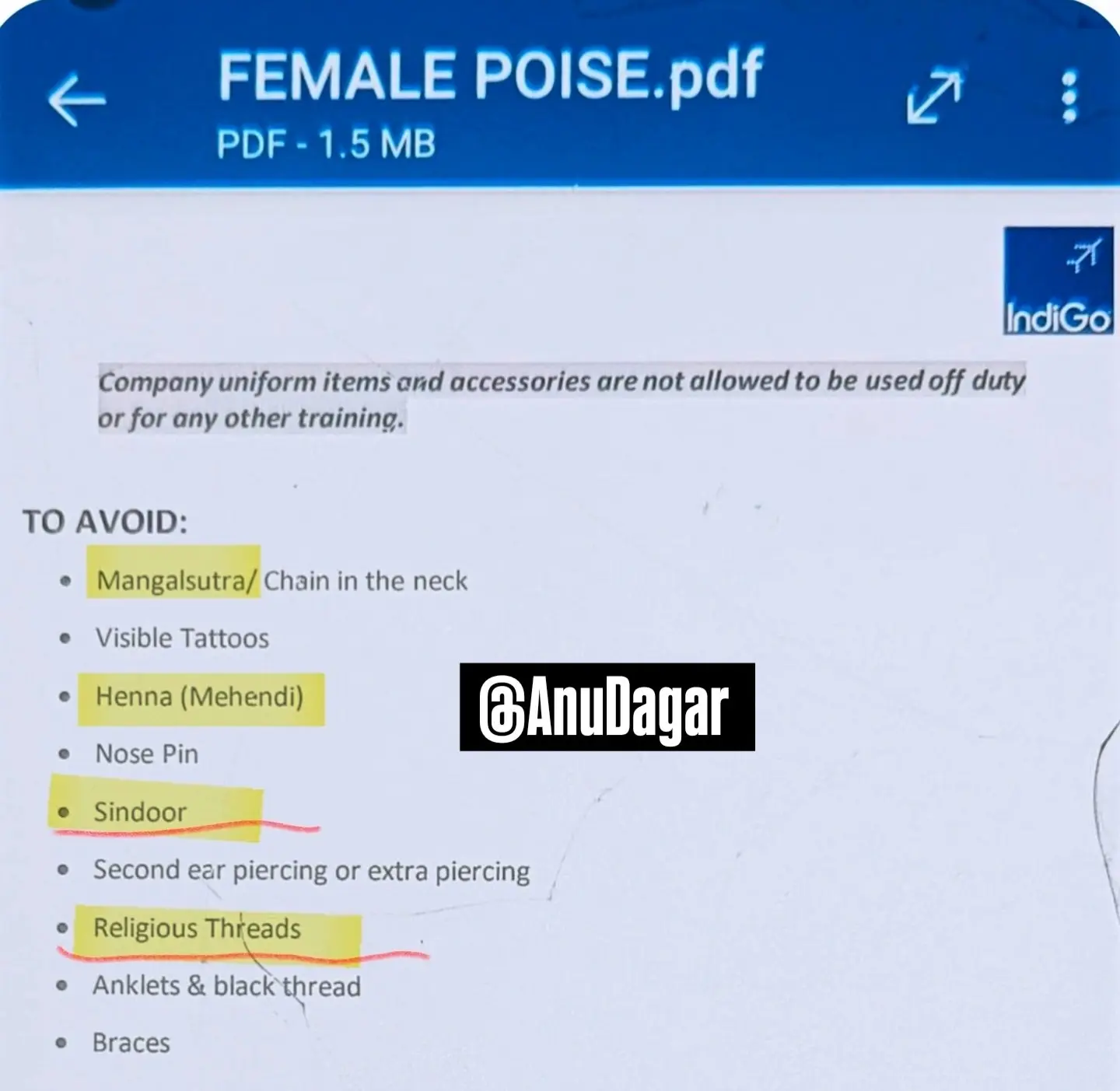
Hindu employees were restricted from wearing Hindu religious symbols like Tilak, Kalava, Bindis, etc by Indigo Airlines, while no similar restrictions were placed on employees of other religions. According to reports, an internal grooming policy manual of IndiGo Airlines went viral on social media platforms, triggering widespread backlash over restrictions on Hindu religious symbols. The documents, titled “Male Poise” and “Female Poise”, circulated online on 24 April 2026, which prohibited employees from wearing visible Hindu religious markers such as tilak, kalava, sindoor, and mangalsutra. At the same time, several social media users pointed out that no comparable restrictions seemed to apply to other religious identifiers, including Muslims, intensifying concerns regarding selective enforcement and sparking calls for boycotts. The issue gained traction rapidly on platforms such as X (formerly Twitter), where users criticised the inconsistency and questioned corporate policies governing religious expression in the workplace. In response to the backlash, IndiGo issued an official statement rejecting the authenticity of the circulating documents, claiming that they were incorrect and fabricated, and urging the public to refrain from sharing unverified information. The airline reiterated its commitment to maintaining an inclusive workplace and emphasised that its internal policies were aligned with global best practices, prioritising operational safety and the well-being of employees and passengers. It is important to mention that Hinduphobia has documented several incidents where Hindus have faced religious discrimination at work places. In a similar incident, Hindu employees working at Air India, an Indian airline company, were targeted and restricted from wearing their sacred religious symbols. According to media reports, this incident first came to light when a social media handle on X (formerly Twitter), Pranav Mahajan, shared a tweet and screenshots of Air India's grooming policy document, which strictly banned Hindu religious symbols such as bindi, sindoor, tilak, and kalava. This sparked a heated debate online, with many calling it an attack on Hindu employees' faith and religious expression.
Case Images
Why it is Hate Crime ?
This case has been documented under the primary category: Restriction/ban on Hindu practices. Within this, the subcategory selected is: Restriction on expression of Hindu identity. An example of the state-affected prejudicial and targeted orders against the Hindu community would be a government denying the right of a Hindu or a group of Hindus to hold a religious procession owing to the animosity of non-Hindu groups. Denial of the religious right of the Hindus to assuage the non-Hindu group, which harbours animosity to a point where it could lead to violence against Hindus, is not only a failure of law and order but is a prejudicial order against Hindus, denying them their fundamental rights to express their religious identity. An example of a hate crime against Hindus by a non-Hindu would be a non-Hindu institution forcing its Hindu employees to abandon religious symbols that a Hindu would wear as an expression of faith owing to inherent prejudice against the faith professed by the victim or a non-Hindu group of people restricting a Hindu group from constructing a place of worship simply because the demography of the area in which the temple is being built is dominated by non-Hindus. Such actions are driven by religious animosity and/or prejudice against Hindus and their faith and would therefore be categorised as a hate crime. This case qualifies as a religiously motivated hate crime as Hindu employees working at the Indigo Airlines were restricted from wearing visible Hindu religious symbols, such as a tilak, sindoor, mangalsutra, and kalava, under the guise of grooming policy. Hindu religious symbols, including bindi, tilak, and kalava, hold immense religious significance in Hinduism. Bindi marks the third eye and marital status. Tilak is applied to the forehead for blessings and spiritual protection. Kalava is a sacred thread worn on the wrist to ward off negativity. The company policy banned these items. These restrictions limited Hindu religious expression at work, forcing Hindu employees to conceal their religious identity under the garb of grooming policy; all of this showcases a clear example of institutionalised Hinduphobia. The act of forbidding Hindu employees from wearing Hindu religious symbols such as the bindi, tilak and kalava amounts to a clear case of anti-Hindu prejudice. These symbols are small, visible markers of Hindu identity and faith, not disruptive or dangerous. By banning them specifically while placing no similar restriction on expressions of other faiths in the workplace, the company reveals a deliberate religious bias against Hinduism. The policy sends the message that Hindu religious expression is unacceptable, while other religions are tolerated, which showcases intolerance toward Hindu symbols and faith practices. This restriction forces Hindu employees to conceal their religious identity to retain their employment, effectively making religious concealment a condition of professional survival. Such coercion violates the victims’ religious autonomy and fundamental right to freely express their religious identity in everyday life, including at work. The fact that the company treated these minute religious symbols as incompatible with workplace norms, whereas similar visible markers of other faiths were allowed, demonstrates a deep‑seated religious animosity towards Hinduism and Hindu religious expression. Furthermore, the another factor was the differential treatment of religious expression of other faiths. The viral documents indicated that while Hindu symbols were being restricted, visible markers associated with other religions were not subjected to similar limitations. This imbalance is critical because a policy that imposes restrictions on one religious group while accommodating others ceases to be neutral and instead places a disproportionate burden on Hindu religious community. Such selective restriction reflects a disregard for Hindu religious practices and the importance they hold in everyday life. By treating these expressions as expendable or inappropriate within the workplace, the rules effectively devalue the legitimacy of Hindu identity in a professional setting. The institutional nature of the policy further amplified these concerns. Grooming policies in large organisations are not informal guidelines but structured rules that shape acceptable behaviour and appearance within the workplace. When such policies are targets and restricts religious expressions of only Hindus, they carry the effect of normalising the exclusion of Hindu expressions from professional environments. This creates an atmosphere where Hindu identity is seen as something that must be moderated or hidden, reinforcing the idea that visible expressions of Hindu faith are incompatible with corporate standards. Taken together, the elements of restriction on Hindu symbols, the centrality of those symbols to religious practice, the concerns regarding unequal treatment, and the institutional context in which such policies operate contributed to the classification of this case within the framework of a religiously motivated hate incident. Given that this case fulfils the key parameters of a religiously motivated hate crime, it is added to the Hate Crime database of the Hinduphobia Tracker. Disclaimer: The Hinduphobia Tracker records incident dates based on when the issue comes to light rather than when the underlying events may have occurred. In this case, the controversy emerged publicly on 24 April 2026 following the circulation of the grooming policy documents on social media. This date has been recorded as the indicative incident date for documentation purposes only.


Case Status
Unknown


Perpetrators Details
Perpetrators
Others
Perpetrators Range
Unknown
Perpetrators Gender
unknown
 Sources




