Hindu employee targeted at Indian multinational company; fired from his job for refusing to remove his tilak, shikha, and religious tattoos
 Navi Mumbai, Maharashtra, India
  17 April, 2026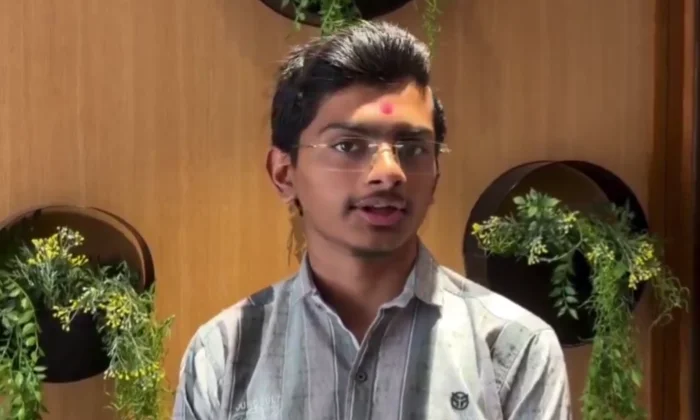
Case Summary
A Hindu man named Zeel Soghasia from Surat, Gujarat, working at Lenskart, a multinational company in Navi Mumbai, was fired from his job after he refused to remove his tilak, religious tattoos, and shikha, three sacred Hindu religious symbols. This incident lies at the backdrop of workplace discrimination in Lenskart stores, where Hindu employees were barred from visibly wearing religious symbols such as bindi, kalava and sindoor, while Muslim employees were allowed to wear the hijab. As earlier reported by the Hinduphobia Tracker, the issue emerged when a customer shared a video in which a store employee confirmed that wearing a bindi and kalava were not permitted, yet the hijab was allowed, sparking public criticism over unequal treatment. It later came to light that these instructions were part of an official training document, which prohibited Hindu religious markers while permitting the hijab (worn by Muslims) and turban (worn by Sikhs) under certain conditions. Following backlash, Lenskart initially dismissed the document as 'outdated', but later the founder apologised and claimed that such policies had existed in the past and had since been amended. According to media reports, this incident came to light when a video of the Hindu victim, Zeel, went viral on social media. In a video message, Zeel Soghasia said, “I was ordered by Lenskart to cut my shikha and remove my tilak. When I refused to do so, I was fired.” Sharing the video, JNU professor Anand Ranganathan wrote: “This is blatant discrimination and bigotry that goes beyond adhering to some internal memo. Mr Soghasia must be recalled and reinstated.” Reports confirmed that Soghasia had travelled from Surat to Navi Mumbai for training after receiving a job offer at Lenskart, where he was told on the first day to cut his shikha and remove his tilak and tattoos or risk losing the job. He was dismissed the next day after refusing to remove his tilak and shikha. According to Soghasia’s account, he first attended an interview in Surat, Gujarat, after being contacted for a job opportunity. He said no concerns were raised during the interview stage regarding religious marks, hairstyle or symbols. He later travelled to Navi Mumbai for professional training. There, he stated that on the second day of the programme, management objected to his appearance and told him he would need to remove his tilak and cut his shikha to continue working at Lenskart. He was also asked to remove religious tattoos from his hands. Soghasia said he chose not to comply and was then fired from his job. As this video went viral, Hindu users on social media stated that Lenskart was discriminating against Hindu employees, leading to massive social media outrage.
Why it is Hate Crime ?
This case has been documented under the primary category: Restriction/ban on Hindu practices. Within this, the subcategory selected is: Restriction on expression of Hindu identity. An example of the state-affected prejudicial and targeted orders against the Hindu community would be a government denying the right of a Hindu or a group of Hindus to hold a religious procession owing to the animosity of non-Hindu groups. Denial of the religious right of the Hindus to assuage the non-Hindu group, which harbours animosity to a point where it could lead to violence against Hindus, is not only a failure of law and order but is a prejudicial order against Hindus, denying them their fundamental rights to express their religious identity. An example of a hate crime against Hindus by a non-Hindu would be a non-Hindu institution forcing its Hindu employees to abandon religious symbols that a Hindu would wear as an expression of faith owing to inherent prejudice against the faith professed by the victim or a non-Hindu group of people restricting a Hindu group from constructing a place of worship simply because the demography of the area in which the temple is being built is dominated by non-Hindus. Such actions are driven by religious animosity and/or prejudice against Hindus and their faith and would therefore be categorised as a hate crime. Another primary category selected is: Attack not resulting in death. The subcategory selected is: Attacked for Hindu identity. In several cases, Hindus are attacked merely for their Hindu identity without any perceived provocation. A classic example of this category of religiously motivated hate crime is a murder in 2016. 7 ISIS terrorists were convicted for shooting a school principal in Kanpur because they got ‘triggered’ seeing the Kalava on his wrist and tilak that he had put. In this, the Hindu victim had offered no provocation except for his Hindu religious identity. The motivation for the murder was purely religious, driven by religious supremacy. Such cases where Hindus are targeted merely for their religious identity would be documented as a hate crime under this category. This case is a clear example of a religiously motivated hate crime because a Hindu man was fired from his job at Lenskart solely for refusing to remove his tilak, shikha and religious tattoos. The company’s decision was not a neutral personnel action but a targeted punishment for his religious identity, as it directly violated his religious autonomy and his right to express his faith through everyday markers that are central to Hindu practice. This was not merely about enforcing uniformity; it was about selectively restricting visible Hindu symbols that form part of how a Hindu devotee lives and is seen by the world, making it a deliberate act of discrimination against Hindu religious identity. To understand the depth of this case, it is necessary to know the significance of these religious symbols. In Hindu tradition, the tilak worn on the forehead is not a casual ornament but a sacred mark invoked in daily worship, representing the presence of the divine and the devotee’s inner commitment to dharma. It is applied during prayers, rituals and auspicious occasions, and for all Hindus it is an inseparable part of religious consciousness in public and private life. Forcing someone to remove it in a workplace strips them of a visible link to their faith at a moment when they should be free to practise their religion without fear. Similarly, the shikha is not simply a hairstyle but a religious symbol that carries deep scriptural and ritual meaning for Hindu men. It is traditionally left as a tuft of hair on the crown of the head, signifying a vow of devotion, discipline and spiritual focus. For those who wear it, cutting the shikha is often experienced as a violent rupture of religious identity, not a cosmetic change. When an employer compels a Hindu employee to cut his shikha, it is not asking him to change how he looks but how he is spiritually and religiously anchored in the world. Similarly, for many Hindus, religious tattoos are not cosmetic decorations but sacred expressions of faith, often inscribed with mantras, deities’ names or spiritual symbols that connect the wearer to his religious identity in everyday life. In Zeel’s case, the religious tattoos on his hands were part of his personal devotion and a visible sign of his Hindu identity, functioning much like the tilak and shikha as markers of faith. When Lenskart management asked him to remove those tattoos or risk losing his job, it was not a neutral request about appearance but a direct demand that he erase a sacred element of his religion in order to remain employed. This treatment placed a unique burden on Hindu religious expression, equating the removal of his tattoos with the removal of his tilak and shikha, and showed that Hindu markers were being singled out for suppression while markers of other faiths were allowed to remain visible. Such compulsion to erase or conceal religious tattoos amounts to religious discrimination and a clear suppression of Hindu expression in the workplace, reinforcing the broader pattern of anti‑Hindu bias in the company’s policies. The act of the Lenskart Company, requiring the Hindu victim Zeel to remove his sacred symbols, amounted to religious discrimination. The company did not seek merely to regulate appearance under a 'neutral' dress code; it demanded the removal and concealment of religious symbols that are integral to how Hindu employees practise their faith and express it in public spaces. This was not an incidental rule but a direct intervention into the religious practice of a Hindu employee, which makes it a clear restriction on the public expression of Hindu identity rather than an impartial workplace guideline. The compulsion to conceal the victim’s religious identity as a condition of employment further exposes the discriminatory nature of this act. Hindu employees like Zeel were effectively told that they could either remove such religious symbols or leave the workplace, presenting Zeel with a choice that was not a general professional standard but a demand to suppress his Hindu identity in order to keep his job. This transformed what purported to be a routine workplace rule into a form of coercion, where Zeel could only continue working if he diluted and extinguished the visible expression of his faith. Such an expectation reveals a deliberate and extreme attempt to suppress Hindu religious identity at the institutional level, making it a clear case of a religiously motivated hate crime. Another key aspect that underlines the religious motivation of the crime is the broader pattern of Lenskart’s policies, which had already come under scrutiny even before this incident became public. As earlier reported by the Hinduphobia Tracker, the company had implemented rules that selectively restricted Hindu employees from visibly expressing their religious identity, for example, by barring or limiting tilak, bindi, kalava and sindoor, while allowing Muslim employees to wear the hijab and Sikh employees to wear the turban or pagdi. Under the pretext of maintaining uniformity and dress code, the company was effectively normalising unequal treatment that placed a disproportionate burden on Hindu religious expression. When one group, namely Hindus, is required to alter or conceal its religious markers while others are permitted to retain theirs, the policy cannot be described as neutral; it becomes a clear case of religious discrimination, and in this context, an anti‑Hindu hate crime. In Zeel’s own case, the same discriminatory logic was applied directly to him. He was told to remove his tilak and tattoos and cut off his shikha, not because there was any safety or operational necessity, but because the company wished to suppress the visibility of his Hindu identity in the workplace. When he refused, he was fired, demonstrating that the real condition for employment was the erasure of his religious markers and faith expression rather than performance or conduct. This shows a deliberate attempt to suppress his faith and identity at the workplace, using job security as leverage against his conscience and religious practice, which again confirms that this was not an isolated mistake but a religiously motivated hate crime. The fact that these rules were enforced on an institutional level, and that Zeel and other Hindu employees were explicitly instructed to comply, further strengthens the case that this was an anti‑Hindu hate crime. Hindu religious symbols were effectively walked out of the workplace, while markers of other faiths were accommodated, giving the restriction a formal and systematic character rather than the appearance of an isolated incident. This institutionalisation amplifies the message that Hindu identity must be adjusted or concealed in professional spaces, normalising the expectation that Hindus must hide or modify their faith in order to access economic opportunities. The act of firing Zeel for refusing to discard his religious symbols showcases institutionalised discrimination, not individual misconduct. A Hindu employee was singled out and punished specifically because of his religious identity, and the consequence was the loss of his livelihood simply for maintaining symbols that are fundamental to his faith. When Hindus are treated in this manner, and their economic opportunities are taken away merely because they refuse to hide or erase their religious markings, it reveals a pattern of systemic religious bias within the workplace. This treatment is not a neutral or incidental policy oversight but a targeted attack on a Hindu individual because of his faith identity, using employment rules as a tool of coercion. Because the harm is inflicted directly on the basis of religion, linked to a broader pattern of unequal treatment of Hindu symbols compared to those of other faiths, and aimed at suppressing the visible expression of Hindu identity, this qualifies as a religiously motivated hate crime. Given that this case meets the parameters of an anti‑Hindu offence, it is being added to the hate crime database of the Hinduphobia Tracker. Disclaimer: The Hinduphobia Tracker records the dates of incidents based on when the crime occurs rather than when it is reported by the media. In this current case, media reports have not stated the exact date when the victim’s ordeal began. The first date on which the incident came to light on social media and in mainstream media is 18 April 2026. This date is being selected as the indicative incident date and is recorded for documentation purposes only.
Victim Details
Total Victim
1
Deceased
0
Gender
- Male 1
- Female 0
- Third Gender 0
- Unknown 0
Caste
- SC/ST 0
- OBC 0
- General 0
- Unknown 1
Age Group
- Minor 0
- Adult 1
- Senior Citizen 0
- Unknown 0


Case Status
Unknown


Perpetrators Details
Perpetrators
Others
Perpetrators Range
Unknown
Perpetrators Gender
unknown
 Sources




