Hindu women indicted with false charges upon refusal to convert to Christianity in Kanker, Chhatisgarh
 Kanker, Chhattisgarh, India
  5 April, 2026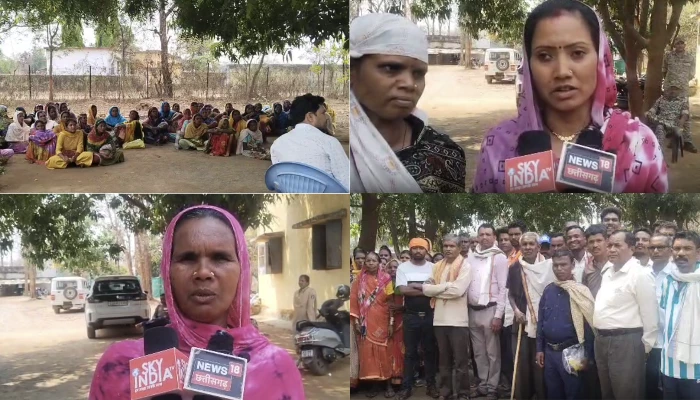
Case Summary
In Kanker, Chhattisgarh, Hindu women were implicated in false cases upon refusing to convert to Christianity. According to the report, Hindu villagers gathered and complained of being pressured to undergo religious conversion. The matter led to renewed tensions among villagers in the locality. Villagers staged a protest at the local police outpost, expressing concern over the issue of women being pressured for religious conversion. They further stated that those who refused to convert were subjected to false accusations. As seen in the video accompanying the report, the matter specifically centred around four women who refused to convert to Christianity. Following their refusal, a complaint and a police case were lodged against them. The women stated that this was a retaliatory step taken after they declined conversion. The video further showed that the case registered against the four women was false in nature and was directly linked to their refusal to convert. This development caused significant tension among local residents, with villagers raising objections and taking the matter before the police authorities. Notably, this was not an isolated incident; a series of such incidents had been recorded by the Hinduphobia Tracker, where innocent villagers of Chhattisgarh's Kanker district have been brainwashed and lured into converting to Christianity, and those who refused were threatened. For example, in December 2010, in Haradula village of Kanker district, Chhattisgarh, eight Hindu families were manipulated, brainwashed, and offered inducements for religious conversion by Christian missionaries. Further, in November 2015, in Sarona village of Kanker district, Chhattisgarh, six members of a Hindu family were forcibly converted to Christianity by members of a Christian missionary group. In September 2020, in Botechang village of Kanker district, Chhattisgarh, three tribal Hindu families were converted to Christianity under the guise of medical treatment by Christian evangelists. In December 2025, in Ghotiyawahi village of Kanker district, Chhattisgarh, five members of a Hindu family, including children, were lured with inducements and forcibly converted to Christianity. In January 2026, in Karaki village of Durgukondal, Kanker, Chhattisgarh, Hindu villagers were targeted and offered inducements for religious conversion by a Christian man named Shivram Kowachi. Hindu villagers submitted a written application to the Kodekursi police station, seeking registration of a case over forced religious conversions carried out through inducements. The application was submitted by the village sarpanch, Jawahar Thakur, along with Ramlal Jain, Narendra Kumar Rajman Kovachi, and several other villagers, in the presence of the Kodekursi police station in-charge.
Why it is Hate Crime ?
The primary category for this case is "Predatory Proselytisation". The sub-category for this case is "Harassment, threats, coercion for conversion". Harassment covers a wide range of behaviours of an offensive nature. It is commonly understood as behaviour that demeans, humiliates, and intimidates a person, including threats and coercion. Harassment and threats, in this case, find their root on discriminatory grounds, which has the effect of nullifying a person’s rights or infringing upon his freedom to exercise his right specifically owing to the victim’s religious identity. Verbal and physical threats and psychological or physical harassment are often used against Hindu victims because they choose to practice their professed religion. Religious harassment also includes forced and involuntary conversions by harassment, threats or coercion. Coercion includes intimidatory tactics like force-feeding a Hindu victim beef to convert to another religion, forceful circumcision, etc. In several cases documented, non-Hindu perpetrators or those who harbour specific animosity towards Hinduism, harass victims simply based on their religious identity. Such cases often also include harassment to ensure the Hindu victim abandons his/her professed religion and adopts the religion of the perpetrator. Another primary category selected is - Attack not resulting in death. The sub-category selected under this is- Attacked for refusal to convert. When there is pressure, threat or coercion employed upon the Hindu victim to convert to a different religion, in several cases, the victim refuses to succumb to the pressure/threats. Once the victim refuses, the perpetrator proceeds to attack/assault the victim owing to his/her refusal to convert. In such cases, the pressure/threat/intimidation/coercion/violence itself is driven by animosity towards the victim’s Hindu faith. The violence, then, is another hate crime driven by the victim’s refusal to abandon his professed faith, Hinduism, and convert to the religion of a non-Hindu perpetrator. Since the victim’s faith is at the heart of the pressure to convert and the ensuing violence towards the victim, such cases are considered religiously motivated hate crimes. This case has been included because the pressure exerted on the Hindu women was not incidental but directly linked to their religious identity and their decision to continue practising their own faith. The women were targeted solely because they remained Hindu and refused to abandon their professed religion. The coercive element lay not only in the pressure to convert but also in the consequences that followed once they refused. What makes this incident particularly serious is that the refusal to convert was followed by false charges being lodged against them. This transformed the pressure from a mere attempt at proselytisation into a form of intimidation and punishment. The use of legal proceedings as a retaliatory tool effectively conveyed that a Hindu woman could face consequences simply for choosing to continue worshipping her own faith. In a country where every individual is guaranteed the freedom to profess and practise religion, such action directly interferes with that freedom. The conduct also reflected a deliberate reversal of roles. Once the women did not agree to convert, the narrative was altered in a way that sought to portray the perpetrators as victims and the actual victims as wrongdoers. This inversion served to shield the coercive conduct while placing the burden of punishment on those who merely exercised their right to remain Hindu. Such targeting because of religious refusal clearly brought the case within the scope of a religiously motivated hate incident. This incident also did not arise in isolation. Kanker has seen a recurring pattern of conversion-related complaints over the years, including cases involving inducements, coercion, and threats directed at Hindu villagers. The repetition of such incidents in the same district pointed towards a continuing pattern where Hindus were repeatedly pressured to abandon their faith. The present case, therefore, formed part of a broader and troubling precedent in Kanker, strengthening the conclusion that the targeting was rooted in hostility towards the victims’ Hindu identity and their refusal to convert. Coercing individuals to convert through inducements, pressure, or harassment is inherently predatory, as it exploits existing vulnerabilities such as economic disadvantage or social insecurity. Such actions are not neutral acts of persuasion but involve the deliberate targeting of individuals who are less able to resist or make fully informed choices. This stems from inherent hostility towards the victim's professed faith since Abrahamic faiths believe that any non-adherent to the faith is subject to being dehumanised till they convert. In this case, the use of pressure reflects an attempt to override the victim’s existing religious identity rather than engage in voluntary or informed conversion. The focus on vulnerable individuals indicates a pattern in which conversion is pursued through unequal power dynamics rather than through genuine change of conscience. Since such predatory actions stem from doctrinal animosity towards the Hindu faith and its adherents, this case is being documented as a religiously motivated hate crime. Disclaimer: The Hinduphobia Tracker records incident dates based on when the victim's ordeal began, rather than when the media reported it. In this case, the report does not mention when the victim's ordeal began; therefore, the date when the report was published has been recorded as the indicative incident date for documentation purposes.
Victim Details
Total Victim
4
Deceased
0
Gender
- Male 0
- Female 4
- Third Gender 0
- Unknown 0
Caste
- SC/ST 0
- OBC 0
- General 0
- Unknown 4
Age Group
- Minor 0
- Adult 4
- Senior Citizen 0
- Unknown 0


Case Status
Complaint filed


Perpetrators Details
Perpetrators
Christian Extremists
Perpetrators Range
Unknown
Perpetrators Gender
unknown
 Sources




