Hindu religion demeaned by Pakistani Muslim legislator on live TV in Pakistan
 Punjab, Pakistan
  19 December, 2021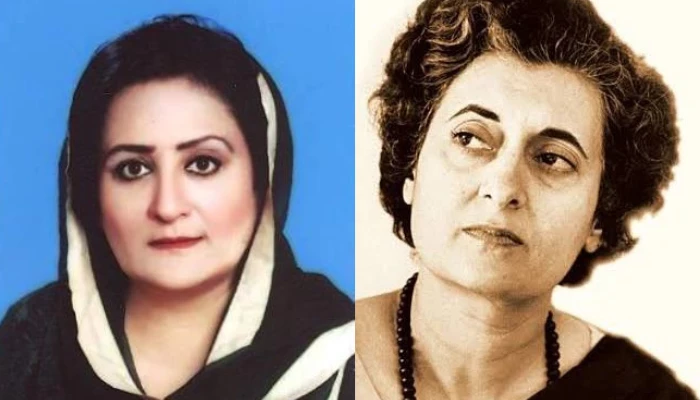
Case Summary
In Pakistan, Hindus were mocked and their religion demeaned during a live television discussion by a Muslim Pakistani legislator, Farah Agha. The incident occurred when a video clip was circulated widely on social media showing Pakistani legislator Farah Agha making remarks about Hindus. In the video, during a live television discussion on the Pakistani news channel, the anchor referred to former Indian Prime Minister Indira Gandhi while drawing a comparison with Agha. Agha immediately objected to the reference and responded strongly on air. Objecting to the comparison, Farah Agha stated, “How can you compare me to Indira Gandhi? I am a God-fearing person. How can you compare me to a Hindu? Please use better examples… don’t bring my religion into it… You are comparing me to people (Hindus) who don’t even know what mazhab (religion) is.” The remark was made during the ongoing panel discussion in the presence of the anchor and other participants. In another statement from the same televised exchange, Agha reiterated her objection and said, “Do anything, but don’t compare me with a Hindu who doesn’t even know what real faith is.” The comment suggested that she considered being compared to a Hindu as unacceptable, while the discussion continued on the programme. Farah Agha was a politician from Pakistan and a member of the Provincial Assembly (MPA) of Punjab. She was associated with the political party Pakistan Tehreek e Insaf, which was led at the time by then Prime Minister Imran Khan. She became a member of the Punjab Provincial Assembly in August 2018 after being elected on a seat reserved for women in the general elections. This was not the first time individuals from Pakistan made derogatory remarks against Hindus. Earlier, in 2016, Pakistan-born actor Marc Anwar was dismissed from his role in the British television show Coronation Street after posting offensive comments about Hindus on social media, in which he referred to them using abusive slurs, including “bastards” and “piss-drinking”. In another instance, in December 2021, Pakistani journalist Durdana Najam posted a tweet targeting Hindus in which she wrote: “So what, start worshipping dogs. It would be a good addition to the list of animals you Hindus worship… from snake to monkey to elephant to rat and not to forget the sewerage-laden waters of Ganga.” Najam writes columns for Arab News Pakistan, The Express Tribune and Roznama 92 News. Similarly, in 2021, Pakistani cricketer Waqar Younis also faced criticism after a statement regarding a match during the ICC T20 World Cup in which he said that, more than the batting performance of Pakistani player Mohammad Rizwan, what gave him greater happiness was seeing Rizwan offer namaz on the ground in front of Hindu players. In another instance, on 26th September 2025, Pakistan Prime Minister Shehbaz Sharif, at the United Nations General Assembly (UNGA), in New York City, United States, stated that India’s “Hindutva extremism” posed a serious threat to the world, while highlighting Pakistan’s false victimhood regarding terrorism. He also described the Hindutva movement as a “hate-driven movement”. He denigrated Hindutva, a political movement fighting for the rights and protection of Hindus. These incidents drew widespread criticism and triggered strong backlash on social media, with Hindus and many other users from around the world condemning the remarks.
Why it is Hate Crime ?
This case has been added to the tracker under the primary category: Hate speech against Hindus. The sub-category selected is Mocking/denigrating Hindu leaders. Hate speech is defined as any speech, gesture, conduct, writing, or display that is prejudicial against a specific individual and/or group of people, which leads to or may lead to violence, prejudicial action or hate against that individual and/or group. Religious leaders are often seen as representatives of the community, especially the community’s religious faith and beliefs. Mocking or denigrating a religious leader specifically owing to his religious identity and/or the religious rituals he observes can be considered hate speech because the motivating factor of the speech is animosity and/or dislike for what he represents – the religious beliefs and faith of the community. It is important to note that mere insults directed at an individual do not constitute hate speech. Insulting words may be used for an individual; however, the specific speech is not the result of religious hate and/or animosity towards the professed faith of the religious leader, but the individual himself. For the speech to be considered hate speech, the speech itself or the motivating factor behind the speech has to be religious in nature. Such speech, which denigrates Hindu religious leaders specifically owing to animosity towards the faith they profess and the community faith they represent, will be treated as hate speech under this category. The other subcategory selected is- Anti-Hindu slurs, mocking faith. Anti-Hindu slurs and the deliberate mocking of the Hindu faith owing to religious animosity involve the usage of derogatory terms, stereotypes, or offensive references to religious practices, symbols, or figures. One of the common anti-Hindu slurs used against Hindus is “cow-worshipper” and “cow piss drinker”. The intention of using this term is to demean and mock Hindus as a group and their religious beliefs since Hindus consider the cow holy. Additionally, some symbols and the slurs attached to them have a historical context that exacerbates the insult, hate, stereotyping, dehumanisation and oppression against Hindus. Cow worship has been used for centuries to denigrate Hindus, insult their faith and oppress Hindus specifically as a religious group. There has been overwhelming documentation about how cow slaughter has been used to persecute Hindus, with cow meat being thrown in temples and places of worship. There has also been overwhelming documentation where cow meat (beef) has been force-fed to Hindus to either forcefully convert them to Islam or denigrate their faith. Apart from cow worship, the Swastika – which holds deep religious significance for the Hindus – has also been misinterpreted and distorted to use as a slur against Hindus. Similarly, the worship of the Shivling has been used by supremacist ideologies and religions to denigrate Hindus owing to religious animosity. Such slurs and denigration stem from inherent animosity and hate towards Hindus and their faith; therefore, it is categorised as hate speech targeted at Hindus specifically owing to their religious identity. The remarks fell squarely within the ambit of hate speech because the contempt expressed was directed not at an individual’s political ideas but at a religious identity itself. The comparison being made in the discussion concerned political leadership. However, the response shifted the focus entirely to religion and conveyed that being compared to a Hindu was degrading. By framing Hindu identity as something unworthy or inferior, the statement transformed a political discussion into a direct expression of hostility towards an entire religious community. Such rhetoric crossed the line from disagreement to prejudice because the insult was based on the faith itself. The statement also amounted to mocking and denigrating a Hindu leader because the rejection of the comparison was rooted solely in the leader’s religious identity. A political figure was dismissed not for her governance, ideology, or public actions, but because she was Hindu. Leaders often symbolise the communities and traditions from which they emerge. When a leader was rejected in such terms, the contempt was implicitly extended to the religious community that the leader represented. The underlying message was that being associated with Hindu identity was inherently degrading, thereby projecting disdain towards the faith and those who follow it. The remarks further constituted anti-Hindu slurs and ridicule of the Hindu faith because they asserted that Hindus did not even understand religion. Such a claim was not a casual remark but a sweeping denunciation of an entire civilisation’s spiritual traditions. Hinduism is considered the world’s oldest living religious tradition, built upon centuries of philosophical reflection, spiritual practice and sacred literature. To declare that followers of such a tradition lack understanding of religion was an attempt to delegitimise and demean their faith altogether. It reduced a profound religious heritage to something supposedly inferior and unworthy. The severity of the statement lay in its unprovoked nature and the position of authority from which it was made. The discussion did not concern religion, and there was no provocation directed at Hindus. Yet the response openly expressed disdain for the faith and treated Hindu identity as something that should never be associated with respect or admiration. When a public representative articulated such sentiments, the harm extended beyond personal opinion; it normalised hostility and reinforced prejudice against Hindus. For Hindus who heard such remarks, the message was unmistakable: their faith was being mocked and their identity treated as inherently contemptible. The wider context also illustrated that such rhetoric did not emerge in isolation. Over the years, several public figures from Pakistan have made remarks that demeaned Hindus or ridiculed their faith. Statements by journalists, commentators and public personalities, whether mocking Hindu practices, ridiculing sacred symbols or using derogatory language, have periodically surfaced in public discourse. These examples reflected a recurring pattern where Hindu identity became an object of ridicule or hostility rather than a subject of respectful engagement. Hate speech becomes particularly damaging when it portrays an entire community as spiritually inferior or devoid of genuine belief. Such language fosters dehumanisation and strengthens social hostility because it frames the targeted group as lacking the very essence of faith or morality. By publicly asserting that comparison with a Hindu was unacceptable and by questioning the legitimacy of Hindu belief itself, the remarks demonstrated overt animosity towards Hindus and their religion. In that sense, the statement was not merely offensive; it represented a clear expression of religious contempt directed at Hindus as a community. Therefore, this case was recorded under the Hinduphobia tracker.


Case Status
Unknown


Perpetrators Details
Perpetrators
Muslim Extremists
Perpetrators Range
One Person
Perpetrators Gender
female
 Sources




