Hindus and Chhaava movie unfairly blamed by Muslims and leftists for anti-Hindu Nagpur Violence
 Nagpur, Maharashtra, India
  17 March, 2025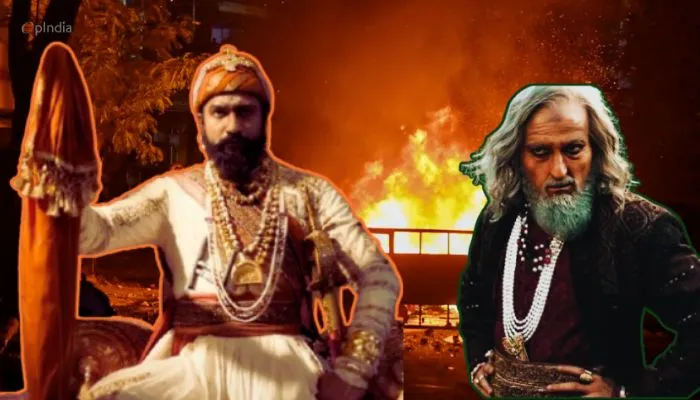
Case Summary
In Nagpur, Hindus were attacked by Muslim mobs following demands by Hindu organisations for the removal of Aurangzeb’s tomb in Sambhaji Nagar. The violence escalated after unverified rumours spread that Hindu groups had burnt the Quran during protests against the tomb, leading to stone-pelting and communal clashes by radical Muslim mobs. Following the Nagpur violence, Muslims and leftists on social media began blaming actor Vicky Kaushal for playing the role of Chhatrapati Sambhaji Maharaj in his upcoming film Chhaava. The film depicted Sambhaji Maharaj’s bravery and sacrifice, as he chose death over converting to Islam under Aurangzeb’s rule. Aurangzeb was a brutal Islamic ruler who destroyed Hindu temples, forcefully converted Hindus to Islam, and committed mass atrocities against Hindus. A film that accurately portrayed his tyranny was being cited as an excuse for the Nagpur violence. This is despite Maharashtra’s Chief Minister stating that the violence was pre-planned. Several eyewitnesses also narrated that Hindus were selectively targeted and attacked by the Muslim mobs. Instead of blaming the Muslim mobs who had initiated the violence over an unverified rumour of the Quran burning, the left-wing secularists and Muslims deflected the blame onto the Chhaava movie, its actor, and the Hindu community. They accused Vicky Kaushal and his film of spreading ‘hatred’ and inciting violence. This was a tactic used by Muslims and leftists to whitewash and downplay the violence committed by Muslim mobs and instead sought a scapegoat, Vicky Kaushal. However, they never criticised the Muslim rioters who initiated the attacks on the Hindus in Nagpur. An X user, Harun Khan, wrote: "Actors like @vickykaushal09 are a disgrace to humanity. Just to earn a few bucks, they make propaganda films that spread the poison of hatred. Shameless." Another user, Syed Abdul Rahim, claimed: "Polarisation and propaganda are being spread by Bollywood. The main accused is @vickykaushal09. Violence erupted in Nagpur when Hindu groups burned an effigy of Aurangzeb and a sheet with Quranic verses, leading to unrest and arson." One user directly blamed Vicky Kaushal for the Islamist violence in Nagpur, while another user, Syyeda_, called Vicky Kaushal the artist responsible for the art of Nagpur violence. Asif Mujtaba, a known Islamist who was an accomplice of Sharjeel Imam and played a key role in instigating violence during the Delhi anti-Hindu riots in 2020, wrote: "Violence erupted in #Nagpur when Hindutva groups burned the effigy of #Aurangzeb & a sheet with Quranic verses. This led to violence and arson." Aadesh Rawal, a journalist and BJP critic, selectively blamed Hindus for the Nagpur violence, ignoring the violence committed by Muslim mobs. He said that Hindus were ruining the social harmony of the country. On his official X account, he wrote: "You are not digging Aurangzeb’s grave; you are ruining the social harmony of this country. From Muzaffarnagar to Nagpur, the air is being poisoned. The blood of innocent people is on your hands, and it won’t wash off no matter how many times you try." Journalist Rohini Singh followed the left-Islamist playbook, ignoring the attacks on Hindus by Muslim mobs and instead blaming the BJP for the violence. On X, she wrote: "Nagpur is burning because the BJP has weaponised the history of a dead emperor. Congratulations Maharashtra. This is what you voted for." Meanwhile, The Wire’s Arfa Khanum Sherwani also blamed the BJP for the Muslim mob violence, arguing that the BJP manipulated the Hindus to fight against the grave of a ruler who died centuries ago. She wrote: “The party which is presenting rulers who left the world hundreds of years ago as your enemies, what future will the party that is making you fight not against living people, but against graves, give you? Write it down, BJP, which keeps you entangled in the past, is destroying your tomorrow.”
Why it is Hate Crime ?
This case has been added to the tracker under the primary category- Hate Speech against Hindus. Within this, the subcategory selected is- Anti-Hindu subversion or prejudice. Within this, the tertiary category selected is- Anti-Hindu fake news or downplaying. Hate speech is defined as any speech, gesture, conduct, writing, or display that is prejudicial against a specific individual and/or group of people, which is leading to or may lead to violence, prejudicial action or hate against that individual and/or group. Media plays a specific and overarching reach in perpetuating prejudicial attitudes towards a community owing to unfair, untrue coverage and/or misrepresentation/misinterpretation, selective coverage and/or omission of facts of/pertaining to issues affecting a specific religious group. This type of bias can dehumanise the victim group, making it easier for others to justify harmful actions against them, which aligns with the objectives of hate speech laws aimed at preventing such harm. It is often observed that the media takes a prejudicial stand against the Hindu community driven by their need to shield the aggressor community which happens to be a numeric minority, however, is the one perpetrating violence against Hindus. For example, the media is often quick to contextualise religiously motivated crimes against Hindus, omit or misrepresent facts that point towards religiously motivated hate crimes, justify and/or downplay religiously motivated hate crimes or simply present fake news to stereotype Hindus. Such media bias leads to the denial of persecution and is often used to dehumanise Hindus, leading to justification for violence against them. For example, the media covered several fake allegations of Hindus targeting Muslims and forcing them to chant Jai Shree Ram. Most of these cases were proved false and fabricated after police investigation. These fake news reports were subsequently never retracted or clarified. Such fake news led to the justification of violence and dehumanisation of Hindus based on the argument that since Hindus targeted Muslims and forced them to chant Jai Shree Ram, the dehumanisation of Hindus and violence against them was par for the course and merely a retaliation. Such media bias leads to prejudicial portrayal of Hindus and offers a justification for violence against them and therefore, is considered hate speech under this category. This entire incident surrounding the Nagpur violence and the blaming of the Chhaava movie and its lead actor, Vicky Kaushal, is a clear and blatant instance of anti-Hindu hate speech by Muslims and left-liberal journalists and commentators. This case reveals deep-rooted religious animosity and a deliberate attempt to victim-blame and whitewash violence against Hindus. Firstly, statements by individuals such as Harun Khan and Syed Abdul Rahim blaming Vicky Kaushal and the Chhaava movie for the Nagpur violence reveal a fundamental inability or refusal to acknowledge the real cause: the religiously motivated violence perpetrated by Muslim mobs against Hindus. Their arguments reduce the complex, targeted communal violence to merely a reaction to a film. This deliberately shifts blame from the Muslim perpetrators to the Hindu victims and uses the film as a convenient scapegoat. This misattribution exposes their religious prejudice, as they ignore the clear evidence that the violence was driven by Muslim animosity toward Hindus and an unverified, yet widely spread, rumour of Quran burning, which was used as a pretext to launch violent attacks against Hindus. Secondly, the notion that Hindus cannot protest or depict their own persecution, including through films like Chhaava, without being accused of inciting violence, further demonstrates the religious animosity. It silences Hindu voices about their own suffering and denies their right to resist historical oppression. To accuse the film of hatred simply because it portrays the truth about Aurangzeb’s brutal reign and Sambhaji Maharaj’s resistance reveals a desire to suppress Hindu identity and its historical grievances. This is yet another form of victim-blaming rooted in religious intolerance. Thirdly, the comments by well-known Islamists like Asif Mujtaba (an accomplice of Sharjeel Imam who was involved in the violent anti-Hindu Delhi riots in 2020) further underscore this hatred. He falsely blamed Hindus and “Hindutva groups” for burning an effigy of Aurangzeb along with Quranic verses, calling this the cause of “violence and arson.” This was a fabricated or unverified claim, deliberately cited to justify and whitewash the Muslim mob violence against Hindus. Such statements are attempts to rationalise targeted attacks by portraying Hindus as aggressors, in a calculated move to excuse violence committed against them. Figures such as Aadesh Rawal, a journalist and critic of the BJP, have deliberately misrepresented the legitimate Hindu demand to remove Aurangzeb’s tomb as an act of social disruption. By accusing Hindus of “ruining social harmony” simply for opposing a historical tyrant who massacred them due to their faith, Rawal’s words reveal deep-seated bias and prejudice against the Hindu community. Crucially, he fails to condemn the Muslim mobs that orchestrated targeted attacks and violent rampages against Hindus, instead shifting the blame onto the victims themselves. This selective condemnation and victim-blaming expose a profound animosity towards Hindus and clearly constitute religiously motivated hate speech. Similarly, journalist Rohini Singh ignored the targeted nature of Muslim mob violence and instead blamed the BJP for inciting the violence rather than calling out those who physically attacked Hindu organisations and individuals. The omission of the Muslim mobs’ culpability demonstrates selective outrage and a deep bias that whitewashes Islamist violence. Arfa Khanum Sherwani extended this narrative by framing the BJP as manipulating Hindus to fight over centuries-old graves, thus skewing the blame away from the Muslim mobsters. This collective silence and misdirection by leftist and Muslim journalists shield the real criminals while demonising Hindu victims. Despite on-the-ground evidence and even Maharashtra’s Chief Minister acknowledging that violence was premeditated, these left-liberal and Muslim voices deny accountability of Muslim mobs and instead deflect criticism onto Hindu cultural expression, a film (Chhaava) and its actor, and Hindu protestors. Their consistent victim-blaming, denial, and rationalisation of anti-Hindu violence reveal deep-seated religious hatred and systemic bias. Therefore, this incident is being added to the hate crime database.


Case Status
Unknown


Perpetrators Details
Perpetrators
Others
Perpetrators Range
From 5 to 10
Perpetrators Gender
both
 Sources




