Attempt to malign Kumbh Mela: social media accounts spread fake news of 'dead bodies in Ganga'
 Prayagraj (Allahabad), Uttar Pradesh, India
  11 February, 2025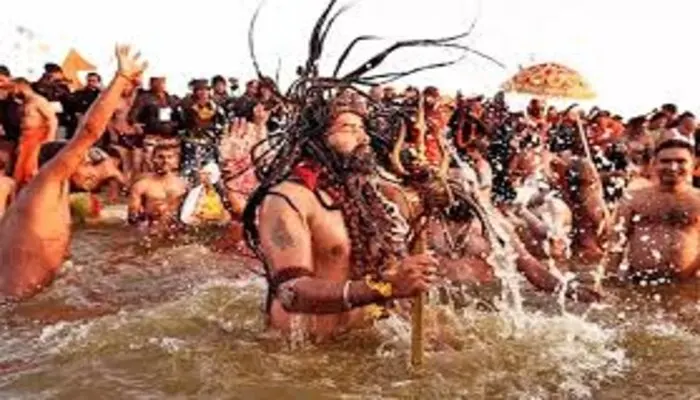
Case Summary
Fake news was circulated on social media with the aim of damaging the image of the Mahakumbh Mela, a major Hindu religious gathering. Seven social media handles were involved in this incident. They claimed that dead bodies were floating in the Ganga river during the Kumbh Mela. Mahakumbh Mela 2025 held deep spiritual significance for Hindus, having occurred after 144 years during the rare celestial alignment of the Sun, Moon, Jupiter, and Saturn. It represents the largest Hindu congregation, where millions of devotees take a holy dip in the Ganga, believing it cleanses them of their sins. According to news reports, the Prayagraj Police filed an FIR against the seven accounts for circulating misleading content and falsely linking images of dead bodies to the Mahakumbh Mela. The official X handle of Mahakumbh 2025 clarified that the images in question were from Ghazipur in 2021 and confirmed that false claims were being made about the Mahakumbh. The accounts named in the FIR were: ‘Yadavking000011’, ‘B_L__VERMA’ on X, ‘komalyadav_lalubadi94’, ‘amar_ydvkvp_5354_’ on Facebook, ‘KavitaK22628’ on X, ‘SonyChaudhary70’ on X, and ‘Puatulkumar9795’ on YouTube. The police had also warned the public that any attempt to spread misinformation about the Mahakumbh with the purpose of creating fear would be met with strict action.
Why it is Hate Crime ?
This case has been added to the tracker under the primary category- Hate Speech against Hindus. Within this, the subcategory selected is- Anti-Hindu subversion and prejudice. The tertiary category selected is- Anti-Hindu fake news or downplaying. Hate speech is defined as any speech, gesture, conduct, writing, or display that is prejudicial against a specific individual and/or group of people, which is leading to or may lead to violence, prejudicial action or hate against that individual and/or group. Media plays a specific and overarching reach in perpetuating prejudicial attitudes towards a community owing to unfair, untrue coverage and/or misrepresentation/misinterpretation, selective coverage and/or omission of facts of/pertaining to issues affecting a specific religious group. This type of bias can dehumanise the victim group, making it easier for others to justify harmful actions against them, which aligns with the objectives of hate speech laws aimed at preventing such harm. It is often observed that the media takes a prejudicial stand against the Hindu community driven by their need to shield the aggressor community which happens to be a numeric minority, however, is the one perpetrating violence against Hindus. For example, the media is often quick to contextualise religiously motivated crimes against Hindus, omit or misrepresent facts that point towards religiously motivated hate crimes, justify and/or downplay religiously motivated hate crimes or simply present fake news to stereotype Hindus. Such media bias leads to the denial of persecution and is often used to dehumanise Hindus, leading to justification for violence against them. For example, the media covered several fake allegations of Hindus targeting Muslims and forcing them to chant Jai Shree Ram. Most of these cases were proved false and fabricated after police investigation. These fake news reports were subsequently never retracted or clarified. Such fake news led to the justification of violence and dehumanisation of Hindus based on the argument that since Hindus targeted Muslims and forced them to chant Jai Shree Ram, the dehumanisation of Hindus and violence against them was par for the course and merely a retaliation. Such media bias leads to prejudicial portrayal of Hindus and offers a justification for violence against them and therefore, is considered hate speech under this category. In this case, fake news was spread on social media to damage the image of the Mahakumbh Mela, one of the most sacred gatherings for Hindus. By deliberately spreading fabricated claims that dead bodies were floating during the festival, the perpetrators sought to discredit an event that holds deep religious and cultural importance for Hindus. This act was not only an attempt to mislead the public but also fostered negative stereotypes against Hindus, portraying their sacred pilgrimage in a disrespectful and dishonourable manner. Such narratives created distrust and stigmatised a community’s centuries-old tradition of faith and devotion. The deliberate targeting of a Hindu religious event with falsehoods turned this episode into more than just misinformation; it became a form of religiously motivated hate speech. By linking fabricated imagery and accusations to the Mahakumbh, the accused promoted hostility towards Hindu practices and disrespected the sanctity of one of the world’s largest faith-based gatherings. Such actions are a result of deep-seated animosity towards the Hindu community, making it an instance of religiously motivated hate speech. Therefore, it is being added to the hate crime database.


Case Status
Complaint registered


Perpetrators Details
Perpetrators
Others
Perpetrators Range
From 5 to 10
Perpetrators Gender
both
 Sources




