Holi marred, Holika Dahan by Hindus opposed by local Muslims
 Mirzapur, Uttar Pradesh, India
  4 February, 2025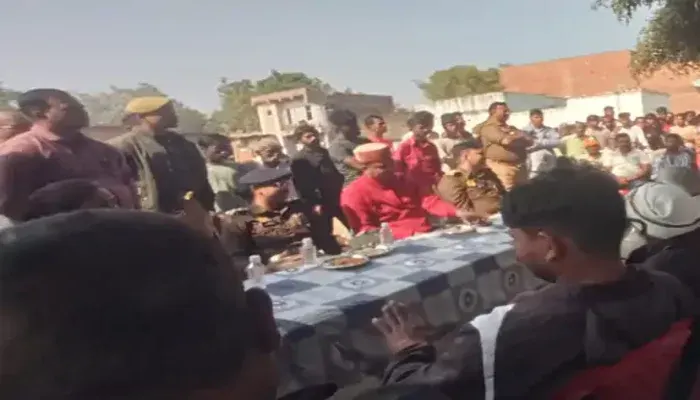
Case Summary
In Chota Mirzapur village in Mirzapur, Uttar Pradesh, an old grave in a cemetery was declared as government land by authorities and surrounded it with barbed wire. On 3rd February 2025, Hindus celebrated Holika Dahan in this land. In reaction to these celebrations, the Muslims complained to the police regarding the celebrations. On 4th February 2025, a panchayat was called between the two parties. It was held in the presence of Tehsildar Chunar, Naib Tehsildar and CO Chunar. The Tehsildar clarified that this is government land where no permanent construction is allowed. The Muslim side argued that when permission for burial was not given one and a half months ago, how can permission for Holika be given? The Tehsildar clarified that Holika Dahan is a temporary event, so it can be allowed, and he also said that both communities can organize temporary events, but no one will be allowed to make permanent construction. But the Muslims were not happy with this.
Why it is Hate Crime ?
This case has been added to the primary category "Restriction/Ban on Hindu practices" under the sub-category "Restriction on expression of Hindu identity". An example of the state-affected prejudicial and targeted orders against the Hindu community would be a government denying the right of a Hindu or a group of Hindus to hold a religious procession owing to the animosity of non-Hindu groups. Denial of the religious right of the Hindus to assuage the non-Hindu group which harbours animosity to a point where it could lead to violence against Hindus is not only a failure of law and order but is a prejudicial order against Hindus, denying them their fundamental rights to express their religious identity. An example of a hate crime against Hindus by a non-Hindu would be a non-Hindu institution forcing its Hindu employees to abandon religious symbols that a Hindu would wear as an expression of faith owing to inherent prejudice against the faith professed by the victim or a non-Hindu group of people restricting a Hindu group from constructing a place of worship simply because the demography of the area in which the temple is being built is dominated by non-Hindus. Such actions are driven by religious animosity and/or prejudice against Hindus and their faith and would therefore be categorized as a hate crime. In this case, the land which used to be a Muslim cemetery was declared a government land. In that case, any permanent use of the land was banned. As such, Hindus were celebrating a festival on the land, which was not a permanent use of the land but a temporary celebration which would last only for a few hours. The Muslims raised objections and despite intervention and explanations, the Muslims attempted to restrict Hindus from expressing their religious identity. That the Muslims were not allowed to bury their deceased in that land was a government decision given that the land belonged to the government, and therefore, no permanent construction or use of the land was allowed. However, for the local Muslims to then oppose temporary religious celebration on the land points towards the restriction coming from religious hostility towards the Hindus which infringed on their legal right to use the land for the festivities. As such, this opposition stems from religious animosity towards the Hindu faith, resulting in the restriction of the Hindus' rights to express their religious identity, which is why this case is being added to the Hinduphobia Tracker.


Case Status
Case adjudicated


Perpetrators Details
Perpetrators
Muslim Extremists
Perpetrators Range
Unknown
Perpetrators Gender
unknown
 Sources




