Clashes erupt in Bihar's Jamui when Hindus put flags during Akhand Ram Dhun, Muslims raise swords, Police call it land dispute and arrest 10 people
 Jamui, Bihar, India
  16 April, 2023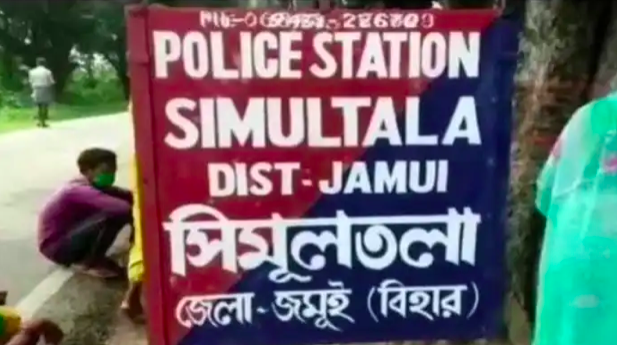
Case Summary
Simultala police station area of Bihar's Jamui had an Akhand Ram Dhun organised on April 18, 2023, in Dhodhari village. In preparation for this, flags were being put up across the village. People from the Muslim community lodged objections to the hoisting of flags in front of their houses. An altercation started between the two sides regarding this issue which later escalated into even sword fighting. The video of this incident went viral on social media, where it is evident that two parties, including women, are fighting. An audible voice in the background talked about Hindus being killed with swords. Bihar Police have described this matter as a land dispute. 10 people from both parties who tried to disturb communal harmony have been arrested.
Why it is Hate Crime ?
Communal clash is a form of collective violence that involves clashes between groups belonging to different religious identities. For a communal clash between Hindus and non-Hindus to qualify as a religiously motivated hate crime, the trigger of the violence itself would have to be anti-Hindu in essence. For example, if there is a Hindu religious procession that comes under attack from a non-Hindu mob and after the initial attack, Hindus retaliate in self-defence, leading to a communal clash between the two religious communities. While at a later stage, both communities are involved in the clash/violence, the initial trigger of the violence was by the non-Hindu mob against the Hindus and therefore, it could safely be termed as an anti-Hindu violence. Further, the trigger would also have to be religiously motivated. In the cited example, the attack by the non-Hindu mob was against religious processions and therefore, can be concluded to be religiously motivated. In some cases, the trigger may be non-religious, however, it develops into religious violence against Hindus at a later stage. In such cases too, the foundational animosity towards Hindus becomes the motivating factor of the crime and therefore, it would be classified as a religiously motivated hate crime against Hindus under this category. In this instance, the conflict was triggered after Islamists launched an attack on a Hindu for hoisting flags during Akhand Ram Dhun, a profound spiritual practice in Hinduism that emphasizes continuous and collective chanting of Lord Ram's name. The initial trigger of the violence itself was religious in nature, in this case, since the Muslim mob attacked the Hindu devotees owing to them celebrating their religious festival. Due to the perpetrator's obvious contempt for the victim's faith, this case qualifies for documentation under this hate tracker. Notably, in this case, the police denied any communal angle and described this matter as a land dispute. The police, in many such cases, where the motive behind the crime is obvious but not explicitly mentioned, deny that the crime committed was in any way motivated by a religious bias or say that there was ‘no communal angle’ to the crime. Several factors are generally at play here. Many a time the police downplay incidents of low-level communal crime because it is their jurisdiction that comes under question. The police also often say that there was ‘no communal angle’ to a crime when there was one because they wish to ensure that owing to the crime already committed, there is no further flare up in the area. Likewise, the Left media and the leftist elite are also inclined to emphasise this "no communal angle" trope, especially wherever the victim of the crime is a Hindu. However, only a police statement or a media report, for instance, cannot be enough to determine whether there is a communal angle present in the crime that has been committed. In fact, to determine whether the crime is communal in nature or not, we need to give emphasis to the ground realities. For example in the case of Rinku Sharma, the Bajrang Dal activist who was mercilessly stabbed in his house in front of his family members in Delhi’s Mangolpuri area in the year 2021, the leftist media and the leftist ecosystem had tried to peddle that there was no communal angle to the crime. Even the police denied that the crime was communal in nature. However, Opindia spoke to several people who are on the ground with the family of Rinku Sharma and we were told that the communal tension in the area is palpable. The family of Rinku Sharma has said that the Muslims of the area held a grudge against Rinku ever since he celebrated the Ram Mandir verdict. Like the case of Rinku Sharma, those cases where even if the police have denied a communal angle or the leftist media have gone on an overdrive to peddle the ‘no communal angle’ trope, the ground reality, like the victim’s family or relative's testimonies, make it clear that there was an obvious religious bias that led to the crime, will be documented in this tracker.


Case Status
Arrested


Perpetrators Details
Perpetrators
Muslim Extremists
Perpetrators Range
From 5 to 10
Perpetrators Gender
male
 Sources




