Multiple Hindu girls lured and targeted for conversion by Muslim youth associated with Haidari dal
 Muradabad, Uttar Pradesh, India
  13 June, 2025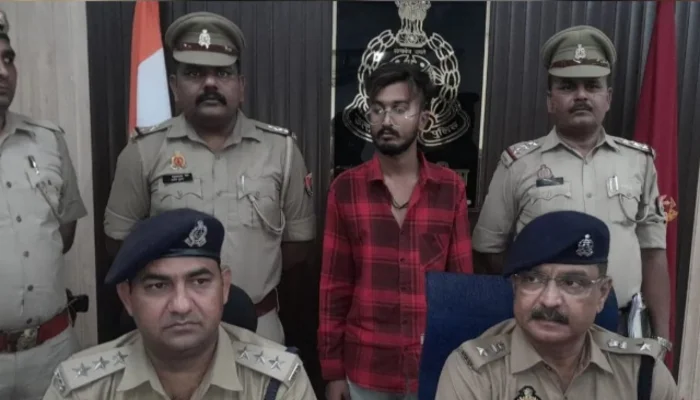
Case Summary
Multiple Hindu girls were targeted, lured and tricked into converting to Islam by a Muslim youth named Mohammad Ragib, who is an active member of the Haidari Dal. Haidari Dal is an informal Islamist vigilante group comprising Muslim men who engage in moral policing against interfaith couples involving Muslim women and non-Muslim men by claiming Bhagwa Love Trap conspiracy, a dishonest Islamist counter to international phenomenon of Grooming Jihad or Love Jihad. Mohammad Ragib, along with the other Muslim men who were part of the Haidari Dal, were running a conversion racket targeting Hindu girls through social media. Ragib had created multiple fake identities on Instagram and Facebook, including one under the name "Haidri Dal Moradabad," later renamed "Moradabad 8988." Through these fake profiles, he lured and befriended multiple Hindu girls with the intent of converting them to Islam. Simultaneously, he also posted anti-national and anti-religious content designed to incite communal unrest in the area. During interrogation, Ragib confessed that his objective was to provoke communal riots in the country and to convert Hindu girls by gaining their trust and befriending them. He admitted that, along with him, many others are involved in similar activities of targeting Hindu girls. Ragib used forged Aadhaar cards to lend credibility to his fake identities and mislead Hindu girls. The police recovered four such fake Aadhaar cards and multiple mobile phones from his possession. As of the date of writing this report, the accused was arrested by the police. The investigation was ongoing into the extent of the crimes committed by other members of the group.
Why it is Hate Crime ?
This case has been added to the tracker under the primary category of: - Predatory Proselytisation. Within it, the sub-category selected is: - Proselytisation by grooming, brainwashing, manipulation or subtle indoctrination, with the tertiary category being: - Pattern of targeting Hindus. Religious brainwashing essentially means the often subtle and forcible indoctrination to induce someone to give up their religious beliefs to accept contrasting regimented ideas. Religious grooming or brainwashing also involves propaganda and manipulation. It involves the systematic effort, driven by religious malice and indoctrination, to persuade “non-believers’ to accept allegiance, command, or doctrine to and of a contrasting faith. Cases of such grooming or brainwashing are far more nuanced than direct threats, coercion, inducement and violence. In such cases, it is often seen that there is repeated, subtle and continual manipulation of the victim to induce disaffection towards their own faith and acceptance of the contrasting faith of the perpetrator. While subtle indoctrination is widely acknowledged as predatory, an element which is often understated in such conversions or the attempts of such conversion is the role of loyalty and trust which might develop between the perpetrator and the victim. Fiduciary relationships are often abused to affect such religious conversion. For example, an educator transmitting religious doctrine of a competing faith to a Hindu student. The Hindu student is likely to accept what the teacher is transmitting owing to existence of the fiduciary relationship. The exploitation of the fiduciary relationship to religiously indoctrinate victims would also be included in this category. Since the underlying animosity towards the victim’s faith forms the basis of predatory proselytization, such cases are considered religiously motivated hate crimes. The second primary category selected here is: - Hate speech against Hindus. Within it, the sub-category selected is: - Anti-Hindu slurs, mocking faith Anti-Hindu slurs and the deliberate mocking of the Hindu faith owing to religious animosity involve the usage of derogatory terms, stereotypes, or offensive references to religious practices, symbols, or figures. One of the common anti-Hindu slurs used against Hindus is “cow-worshipper” and “cow piss drinker”. The intention of using this term is to demean and mock Hindus as a group and their religious beliefs since Hindus consider the cow holy. Additionally, some symbols and the slurs attached to them have a historical context that exacerbates the insult, hate, stereotyping, dehumanisation and oppression against Hindus. Cow worship has been used for centuries to denigrate Hindus, insult their faith and oppress Hindus specifically as a religious group. There has been overwhelming documentation about how cow slaughter has been used to persecute Hindus with cow meat being thrown in temples and places of worship. There has also been overwhelming documentation where cow meat (beef) has been force-fed to Hindus to either forcefully convert them to Islam or denigrate their faith. Apart from cow worship, the Swastika – which holds deep religious significance for the Hindus – has also been misinterpreted and distorted to use as a slur against Hindus. Similarly, the worship of the Shivling has been used by supremacist ideologies and religions to denigrate Hindus owing to religious animosity. Such slurs and denigration stem out of inherent animosity and hate towards Hindus and their faith, therefore, it is categorised as hate speech targeted at Hindus specifically owing to their religious identity. This case has been added to the tracker because multiple Hindu girls were lured and targeted for religious conversion by a Muslim man named Mohammad Ragib, an active member of the Muslim gang called Haidari Dal. During interrogation, Ragib clearly stated that his motive was to befriend Hindu girls and convert them to Islam. This confession exposes not only his malicious intent but a deeper, jihadist mindset. His actions were driven by a calculated strategy rooted in religious supremacism, where friendship is used as a cover to initiate grooming and eventual conversion. In such cases, Hindu girls are not merely being pursued for relationships but are specifically marked for conversion through manipulation and deceit, and sometimes for even sexual exploitation and trafficking. This systematic targeting of Hindu girls stems from an inherent hostility towards the victim's professed faith since Abrahamic faiths believe that any non-adherent to the faith must be converted through any means necessary, including brainwashing, deception, or violence. Such conversion campaigns often disguise themselves in the language of love and friendship, but in reality, they are expressions of a deeper religious animosity towards the Hindu faith. Further, Ragib also admitted that he intended to incite communal riots in the country. He used fake social media IDs to spread anti-national and anti-religious (most likely anti-Hindu, as he was targeting Hindu girls) content. It is pertinent to note that Muslim extremists harbour specific animosity towards Hindus and their faith and also view India as a Hindu collectivity. The very basis of the partition of India was that the Muslims believed that Islam was a nation unto itself, which could not survive with a Hindu collectivity like India. Thus, these actions stem from deeper animosity towards the Hindu faith rather than just India. Police investigations revealed that Ragib carried multiple forged Aadhaar cards, which strongly suggests that he faked his identity to befriend Hindu girls. This itself is a clear manifestation of bias and malicious intent towards the victim's religion. By concealing his true identity, he would have exploited victims' trust and would have targeted them under false pretences. This indicates a premeditated intent to manipulate victims based on their religious background. In cases like these, the tactic of adopting a false identity to manipulate and "ensnare" a Hindu individual is not just an act of personal betrayal but can also be interpreted as an expression of disdain or disregard for Hinduism and its customs that reflects a deeper animosity towards Hindus and their beliefs. It is also important to highlight that the Haidari Dal, the group Ragib is associated with, has previously been involved in the harassment of interfaith couples, especially Hindu men who were seen in the company of a Muslim woman. In Bareilly, they were promoting the fake narrative of a “Bhagwa Love Trap.” The conspiracy theory of ‘Bhagwa Love Trap’ is explicitly rooted in anti-Hindu sentiment. This false narrative vilifies Hindu men by portraying them as predators targeting Muslim women, despite no basis in reality. This narrative is weaponised to legitimise violence against Hindus in a consensual relationship with a Muslim woman. The use of deceit, fake identities, and religious manipulation to target Hindu girls for conversion exposes a deeply predatory strategy rooted in religious animosity towards Hindus. Thus, this case has been added to the tracker.


Case Status
Arrested


Perpetrators Details
Perpetrators
Muslim Extremists
Perpetrators Range
One Person
Perpetrators Gender
male
 Sources




