Inflammatory and obscene graffiti targeting Hindus discovered on the wall of a toilet in Karnataka's girls' hostel
 Udupi, Karnataka, India
  6 May, 2025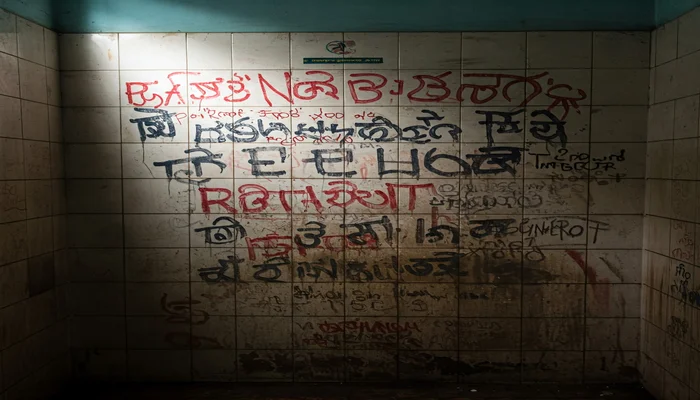
Case Summary
Inflammatory and obscene graffiti targeting Hindus were discovered on the wall of a toilet in the girls' hostel of NITTE Engineering College, located in the Udupi district, Karnataka. The slogans, written in English, included highly provocative and communal messages such as “Muslim Zindabad, Hindus fuck off” and “Hindustan nahi, Muslimstan bolo,” clearly aimed at Hindus inciting hatred and enmity between religious groups. The matter came to light in the evening, following which the hostel manager lodged a complaint with the local police. The police registered a case under Section 353(2) of the Indian Justice Code, relating to the circulation of statements intended to create or promote enmity and hatred among different communities. Superintendent of Police Arun K confirmed the registration of the case and stated, “We are in the process of identifying those responsible.” CCTV footage is being reviewed, and several students are being questioned, though no suspect has been officially identified. Preliminary inputs suggest the possible involvement of a female student." As of the date of writing this report, the investigation into the incident was ongoing.
Why it is Hate Crime ?
This case has been added to the tracker under the primary category of: - Hate speech against Hindus. With it, the sub-category selected is: - Anti-Hindu slurs, mocking faith. Anti-Hindu slurs and the deliberate mocking of the Hindu faith owing to religious animosity involve the usage of derogatory terms, stereotypes, or offensive references to religious practices, symbols, or figures. One of the common anti-Hindu slurs used against Hindus is “cow-worshipper” and “cow piss drinker”. The intention of using this term is to demean and mock Hindus as a group and their religious beliefs since Hindus consider the cow holy. Additionally, some symbols and the slurs attached to them have a historical context that exacerbates the insult, hate, stereotyping, dehumanisation and oppression against Hindus. Cow worship has been used for centuries to denigrate Hindus, insult their faith and oppress Hindus specifically as a religious group. There has been overwhelming documentation about how cow slaughter has been used to persecute Hindus with cow meat being thrown in temples and places of worship. There has also been overwhelming documentation where cow meat (beef) has been force-fed to Hindus to either forcefully convert them to Islam or denigrate their faith. Apart from cow worship, the Swastika – which holds deep religious significance for the Hindus – has also been misinterpreted and distorted to use as a slur against Hindus. Similarly, the worship of the Shivling has been used by supremacist ideologies and religions to denigrate Hindus owing to religious animosity. Such slurs and denigration stem out of inherent animosity and hate towards Hindus and their faith, therefore, it is categorised as hate speech targeted at Hindus specifically owing to their religious identity. The other sub-category relevant here is: - Violent threats. Violent threats, explicit, implicit or implied, is the most dangerous form of hate speech since it goes beyond discriminatory and prejudicial language to express the intent of causing harm to an individual or a group of people based on their religious identity and faith. There could be several different kinds of threats that are issued to Hindus based on religious animosity. An explicit threat would mean the direct threat of violence towards an individual Hindu, a group of Hindus or Hindus at large. Physical violence, death threats, threats of destruction of property belonging to Hindus and threats of genocide would mean explicit threats against Hindus for their religious identity. Implicit threats may not be a direct threat but implied through the use of symbols of actions – for example – in the Nupur Sharma case, other than explicit threats, there were also implicit threats when Islamists took to the streets to burn and beat her effigies. It implies that they want to do the same to Nupur Sharma – thereby is considered an implicit threat. Violent threats can be delivered in person, through letters, phone calls, graffiti, or increasingly through social media and other online platforms. It would be important to understand that a threat – explicit or implicit, online or offline – to an individual who happens to be a Hindu does not qualify as a religiously motivated threat. Such a threat, while vile and dangerous, could be owing to non-religious reasons and/or personal animosity. To qualify as a religiously motivated threat, it would need to exhibit an indication that the individual is being targeted for religious reasons and/or owing to his/her religious identity as a Hindu. This is a clear case of religiously motivated hate crime and hate speech specifically targeting Hindus. The phrases written on the hostel wall—"Muslim Zindabad, Hindus fuck off" and "Hindustan nahi, Muslimstan bolo"—are explicit anti-Hindu slurs that not only demean and vilify the Hindu community but also imply violent intent. These slogans suggest that the perpetrators hoped for erasure of Hindu identity and the imposition of Islamic dominance, thereby inciting communal hatred, fear and violence against Hindus. It also implicitly threatened the position and safety of Hindus within their own nation. Such language is not merely offensive but constitutes an implicit call for ethnic and religious cleansing of Hindus, promoting the notion of a nation ruled solely by Muslims and devoid of Hindus. This form of hate speech is dangerous because it not only dehumanises Hindus but also normalises and legitimises threats against them when left unchecked or unpunished. The slogans reflect a deep-rooted religious animosity that exists in Islam, where hatred and even violence against non-Islamic faiths, including Hinduism, are justified and frequently glorified. The normalisation of this rhetoric in educational institutions or public spaces creates a climate of fear for Hindu students and signals a broader societal failure to uphold the principles of religious harmony and constitutional equality. These remarks are not mere casual insults; they reflect deep-seated hostility driven by an intent to intimidate and erase Hindu identity. Given their targeted and inflammatory nature, this incident is being categorised as a religiously motivated hate crime against Hindus. It is also important to mention here that, though the last update was that the perpetrators were unknown, regardless, the action stemmed from hatred against Hinduism and resulted in the desecration of the hotel wall with obscene graffiti targeting Hindus and would therefore be considered a religiously motivated hate crime.


Case Status
Complaint filed


Perpetrators Details
Perpetrators
Unknown
Perpetrators Range
Unknown
Perpetrators Gender
unknown
 Sources




