Hindu shopkeeper deliberately targeted in communal conspiracy by Muslim man post Pahalgam terror attack
 Muzaffarnagar, Uttar Pradesh, India
  27 April, 2025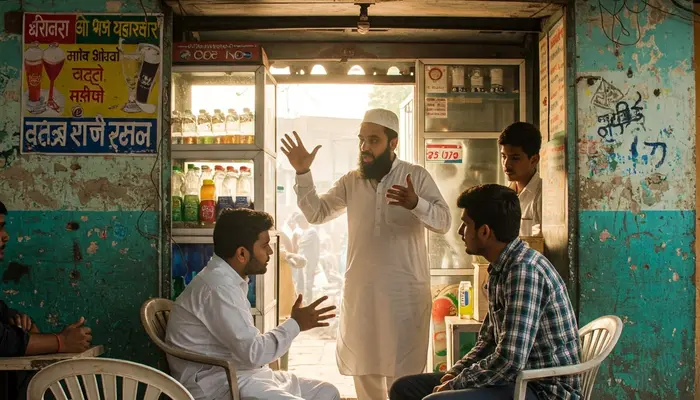
Case Summary
In Mirapur, Muzaffarnagar, Uttar Pradesh, a Hindu shopkeeper was targeted by a Muslim man in a communal conspiracy. This incident was linked to the Pahalgam terror attack, as the accused intended to create communal disturbances following the attack. In a horrific act of terror in the Baisaran Valley of Pahalgam, Anantnag district, Jammu and Kashmir, Islamic terrorists systematically identified and targeted Hindu victims. The terrorists demanded names and religious identities, inspected ID cards, coerced tourists to recite the Kalma, and even forcibly pulled down their trousers to check for circumcision—all to single out Hindus. Once identified, the Hindus were shot at point-blank range. The attack, carried out by operatives of The Resistance Force, a proxy of the Pakistan-based terror group Lashkar-e-Taiba (LeT), took the lives of 24 Hindus and left 16 others critically injured. According to media reports, an audio clip against the Hindu shopkeeper was deliberately made viral by the Muslim accused, Pravesh, son of Sattar. The accused called for a boycott of the Hindu shopkeeper and asserted that announcements had been made in mosques to that effect. As the matter gained media attention and was linked to the Pahalgam incident, it prompted a swift response from the police, who launched an investigation. Initial inquiries indicated a deeper conspiracy, leading to the arrest of the accused. According to police sources, the audio clip went viral on 28th April 2025, in which a Muslim man was heard urging other Muslims not to purchase goods from the Hindu shopkeeper. The accused further stated that several mosques had also issued announcements reinforcing the boycott. The police immediately took notice and began verifying the facts surrounding the audio and its potential connection to wider communal unrest. During the investigation led by Circle Officer Yatendra Singh Nagar, it came to light that the viral audio stemmed from a personal quarrel between the Muslim accused and the Hindu shopkeeper over a soft drink purchase. Upon inquiry, the local Muslim cleric clarified that no such announcement had been made in any mosque. The accused, Pravesh, son of Sattar and a resident of Mirapur, was arrested for attempting to disrupt communal harmony by circulating the audio. A case was registered, and further investigation was initiated. Authorities confirmed that all emerging evidence would be reviewed for appropriate legal action.
Why it is Hate Crime ?
This case is categorised under the primary category- Hate Speech against Hindus. The subcategory selected is- Anti-Hindu subversion and prejudice. Hate speech is defined as any speech, gesture, conduct, writing, or display that is prejudicial against a specific individual and/or group of people, which is leading to or may lead to violence, prejudicial action or hate against that individual and/or group. Media plays a specific and overarching reach in perpetuating prejudicial attitudes towards a community owing to unfair, untrue coverage and/or misrepresentation/misinterpretation, selective coverage and/or omission of facts of/pertaining to issues affecting a specific religious group. This type of bias can dehumanise the victim group, making it easier for others to justify harmful actions against them, which aligns with the objectives of hate speech laws aimed at preventing such harm. It is often observed that the media takes a prejudicial stand against the Hindu community driven by their need to shield the aggressor community which happens to be a numeric minority, however, is the one perpetrating violence against Hindus. For example, the media is often quick to contextualise religiously motivated crimes against Hindus, omit or misrepresent facts that point towards religiously motivated hate crimes, justify and/or downplay religiously motivated hate crimes or simply present fake news to stereotype Hindus. Such media bias leads to the denial of persecution and is often used to dehumanise Hindus, leading to justification for violence against them. For example, the media covered several fake allegations of Hindus targeting Muslims and forcing them to chant Jai Shree Ram. Most of these cases were proved false and fabricated after police investigation. These fake news reports were subsequently never retracted or clarified. Such fake news led to the justification of violence and dehumanisation of Hindus based on the argument that since Hindus targeted Muslims and forced them to chant Jai Shree Ram, the dehumanisation of Hindus and violence against them was par for the course and merely a retaliation. Such media bias leads to prejudicial portrayal of Hindus and offers a justification for violence against them and therefore, is considered hate speech under this category. This case is an example of a hate crime because the audio message didn’t just target a single person for personal reasons- it singled out the Hindu community. The message called for a boycott of a Hindu-owned shop and falsely claimed that such calls were being made from mosques. This shows a clear attempt to create hostility against the Hindu community and isolate the shopkeeper based on his religion. By spreading false information and invoking religious institutions, the Muslim accused tried to manipulate public opinion and fuel animosity, which could have resulted in religious tensions and violence. The incident was triggered by a seemingly trivial quarrel over a soft drink; however, this was far more than a personal dispute. It was a deliberate attempt to weaponise religious identity at a time when communal tensions were already heightened following the brutal massacre of Hindus in the Pahalgam terror attack. In Pahalgam, Islamic terrorists had mercilessly profiled Hindu victims before executing them. In the wake of such horrific violence, every word and action carried enormous weight within communities still reeling from grief and fear. Despite this atmosphere of vulnerability, the Muslim perpetrator deliberately created and circulated a false narrative against a Hindu shopkeeper. He spread the claim that local mosques had called for a boycott of the shop, thereby shifting a personal quarrel onto communal lines. In doing so, he endangered not only the Hindu shopkeeper’s livelihood but also his very dignity and right to exist peacefully in society. This was not simply a dispute between two men; it was the conscious targeting of an individual because he was a Hindu. The Hindu shopkeeper was not targeted for his conduct as a trader but for being a Hindu. His livelihood, his security, and his religious identity were turned into weapons against him. This act must therefore be recognised as a hate crime, born out of religious intolerance and designed to instil fear within members of the Hindu community. Given that this incident meets the parameters of a religiously motivated crime, it is being added to the hate crime database.
Victim Details
Total Victim
1
Deceased
0
Gender
- Male 0
- Female 0
- Third Gender 0
- Unknown 1
Caste
- SC/ST 0
- OBC 0
- General 0
- Unknown 1
Age Group
- Minor 0
- Adult 1
- Senior Citizen 0
- Unknown 0


Case Status
Arrested


Perpetrators Details
Perpetrators
Muslim Extremists
Perpetrators Range
One Person
Perpetrators Gender
male
 Sources




