Dalit Hindu woman in Bareilly faces death threats, caste abuse, and eviction pressure from Muslim neighbours
 Bareilly, Uttar Pradesh, India
  20 April, 2025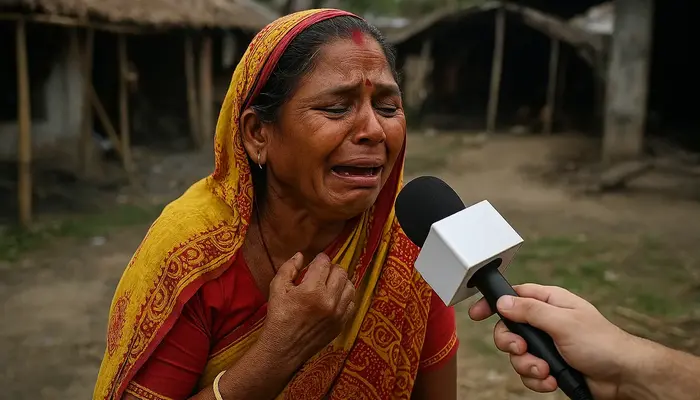
Case Summary
In Bareilly’s Laturi Aata Kayasthan village, a Dalit Hindu woman endured death threats, violence, and caste-based abuse from her Muslim neighbour, Nanhe, and his friends for several months. The woman, who has been living alone since 2019, initially experienced peaceful coexistence with her Muslim Neighbours. However, the situation began to deteriorate when members of the Muslim community built houses nearby, and the area became essentially a Muslim majority. Nanhe, along with two or three of his friends, started targeting her with frequent verbal abuse, casteist slurs, and physical intimidation, including throwing stones at her house and demanding that she sell her property and leave the area, which they consider a "Muslim" space that has no place for Hindus. The harassment took a violent turn when Nanhe and his associates forcefully broke into her home. When the woman resisted, they threatened her with death, all while continuing their barrage of caste-based slurs and insults. Nanhe openly pressured the woman to sell her house and leave the Muslim area, threatening her with death if she refused. She immediately reported the matter to the police, filing a written complaint, but according to the report, no action was taken.
Why it is Hate Crime ?
This case has been added to the tracker under two primary categories. First being: - 'Attack not resulting in death', with sub-category being selected as:- 'Attacked for Hindu identity'. In several cases, Hindus are attacked merely for their Hindu identity without any perceived provocation. A classic example of this category of religiously motivated hate crime is a murder in 2016. 7 ISIS terrorists were convicted for shooting a school principal in Kanpur because they got ‘triggered’ seeing the Kalava on his wrist and tilak that he had put. In this, the Hindu victim had offered no provocation except for his Hindu religious identity. The motivation for the murder was purely religious, driven by religious supremacy. Such cases where Hindus are targeted merely for their religious identity would be documented as a hate crime under this category. The second sub-category selected here is: - Attacked to induce migration from non-Hindu dominated area. There have been cases where the Hindus living in an area, often with a majority dwelling belonging to non-Hindus or those harbouring animosity towards the Hindu faith, the Hindu residents experience threats and violence. The violence is employed with the aim of making the Hindus leave the area and relocate, so the area could be turned into an exclusive ghetto for adherents of the non-Hindu faith or those who harbor animosity towards the Hindu faith. In several cases, the aim of exodus is explicit. However, in several cases, the demand for exodus of Hindu residents is not explicit, however, violence by non-Hindu residents leaves the Hindu residents no option but to leave the area, thereby, turning the area into an exclusive ghetto of non-Hindu residents. In such cases, there are instances violence against the Hindu residents explicitly. For example, in the Hauz Qazi case of 2019, the Muslim residents claimed that mob violence against the Hindu residents had been triggered by a parking dispute. However, the violence did turn religious with a temple being desecrated and was directed specifically against the Hindu residents. The Hindu residents of the area were clear that the violence was religiously motivated and one of the motives was to affect an exodus of the Hindu residents. In such cases, even though the perpetrators have not explicitly expressed the aim of affecting exodus, the given circumstances and violence and precedent point to the intention of exodus and therefore would be categorized under this sub-category. Such crimes are religiously motivated and therefore are hate crimes. The second primary category selected is: - 'Hate speech against Hindu', with a sub-category selected is:- 'Anti-Hindu slurs, mocking faith'. Anti-Hindu slurs and the deliberate mocking of the Hindu faith owing to religious animosity involve the usage of derogatory terms, stereotypes, or offensive references to religious practices, symbols, or figures. One of the common anti-Hindu slurs used against Hindus is “cow-worshipper” and “cow piss drinker”. The intention of using this term is to demean and mock Hindus as a group and their religious beliefs since Hindus consider the cow holy. Additionally, some symbols and the slurs attached to them have a historical context that exacerbates the insult, hate, stereotyping, dehumanisation and oppression against Hindus. Cow worship has been used for centuries to denigrate Hindus, insult their faith and oppress Hindus specifically as a religious group. There has been overwhelming documentation about how cow slaughter has been used to persecute Hindus with cow meat being thrown in temples and places of worship. There has also been overwhelming documentation where cow meat (beef) has been force-fed to Hindus to either forcefully convert them to Islam or denigrate their faith. Apart from cow worship, the Swastika – which holds deep religious significance for the Hindus – has also been misinterpreted and distorted to use as a slur against Hindus. Similarly, the worship of the Shivling has been used by supremacist ideologies and religions to denigrate Hindus owing to religious animosity. Such slurs and denigration stem out of inherent animosity and hate towards Hindus and their faith, therefore, it is categorised as hate speech targeted at Hindus specifically owing to their religious identity. This case qualifies as a hate crime, as the Dalit Hindu woman has been specifically targeted for her Hindu identity in a Muslim-majority locality. Nanhe and his Muslim associates launched a sustained campaign of harassment involving caste-based slurs, threats of violence, and physical intimidation, all aimed at compelling her to vacate her house. The intention was clearly to drive her out solely because she is a Hindu living among Muslims. This fits the established pattern of identity-based targeting and coercion, making it a textbook example of a religiously motivated hate crime. Such incidents follow a disturbing trend observed across various parts of India, where Hindu residents in Muslim-majority areas are systematically pressured to sell their properties and vacate their homes. These efforts are often carried out through threats, abuse, and intimidation. Even when the demand for exodus is not made explicit, the violent conduct and the coercive environment created leave the targeted Hindu residents with no viable option but to leave. This deliberate creation of religious ghettos by pushing Hindus out of mixed areas is not only an act of religious hostility but also a form of social engineering through intimidation. Therefore, this case rightfully falls under the hate crime category, specifically as an instance of religiously motivated aggression aimed at inducing demographic change through fear and violence. Also, the caste slurs that were hurled at the Hindu-Dalit woman by the Muslim men. It can be argued that a caste-specific slur is aimed at her micro identity of belonging to the Dalit section of the Hindu community and not her Hindu identity itself. However, as far as Abrahamic religions are concerned, the micro identities of caste, region, and language are secondary. It is the religious identity that drives the animosity of the perpetrator against the Hindu victim. In this case, while the Muslim men hurled caste abuses at the victim, the animosity was driven by their animosity towards Hinduism and Hindus. The fact that caste slurs were hurled at the victim by the perpetrator makes it a religiously motivated hate crime against the victim. Disclaimer: It is important to clarify that the report does not specify the exact date when the woman’s ordeal began. Therefore, for documentation purposes, we have recorded the date based on when the incident was reported in the media.
Victim Details
Total Victim
1
Deceased
0
Gender
- Male 0
- Female 1
- Third Gender 0
- Unknown 0
Caste
- SC/ST 1
- OBC 0
- General 0
- Unknown 0
Age Group
- Minor 0
- Adult 1
- Senior Citizen 0
- Unknown 0


Case Status
Complaint filed


Perpetrators Details
Perpetrators
Muslim Extremists
Perpetrators Range
From 2 To 5
Perpetrators Gender
male
 Sources




