Shiva Temple, next door to a mosque, desecrated in London, idols smashed, diyas thrown
 Wembley, England, United Kingdom
  5 January, 2024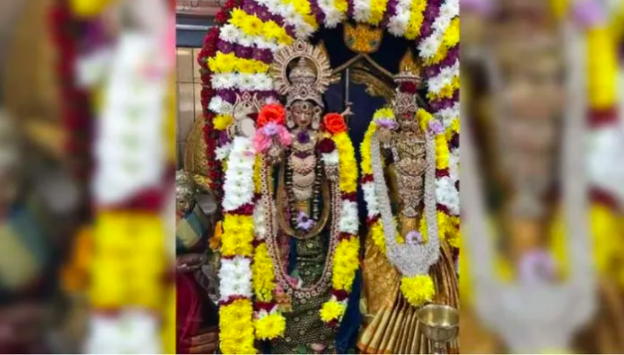
Case Summary
The Eelapatheeswarar Alayam temple of Bhagwan Shiva in London’s Wembley was attacked on January 6, 2024, when an intruder desecrated the idols. The temple is next door to a mosque. The man, wearing shoes inside the temple (and refused to take them off), was confronted by devotees and volunteers. He was first asked to take off his shoes and pull down his hoodie. He went out, and then rushed back in aggressively to desecrate the temple. In a fit of anger, he threw one idol out and smashed an oil lamp. Despite being restrained, he remained aggressive towards both temple-goers and the police, even assaulting an officer. Rajasingham Jayadevan, the Founder of the temple suggested the attack might be linked to the Israel-Gaza conflict. “I feel like this individual’s actions may be in relation to India’s support towards Israel in the ongoing conflict in the Middle East,” he said. The 22-year-old suspect was arrested on suspicion of assaulting an emergency worker. The temple was built by Eelam Tamils who had fled Sri Lanka owing to a decades-long civil war. The incident raised concerns within the local Hindu community.
Why it is Hate Crime ?
Three distinct elements in this particular case demonstrate that the crime was committed while harbouring a bias against the Hindu faith. Since the attack was carried out on a Hindu temple, this case has been categorised under three sub-categories within the prime category 'Attack on Hindu religious symbols'. The first sub-category selected, as per the case specifics, is 'Breaking rules of place of worship'. Sanatan Dharma is not a religion of one book, which is to say that while it has religious scriptures that form the central tenets of the faith, there are several traditions followed through thousands of years, mostly passed from generation to generation orally. One of these oral traditions or written traditions is the rules of specific temples. Certain temples have rules which are traditional rules, dependent on the worship of the presiding deities. These rules and traditions have been followed for thousands of years whether they find scriptural mention or not. Such traditions are based on the nature and rules of worship of the presiding deity of that temple. Any non-compliance of these traditions owing to animosity towards the faith or for the sake of activism stems not only from the lack of faith in the presiding deity but also disregard for the faith of the devotees of that deity/temple and implicit bias against the faith, the tradition and the deity itself. Since these specific traditions are central to the faith of the devotees of that specific temple and presiding deity, any non-compliance with these traditional rules would be considered a religiously motivated hate crime. In this case, the perpetrator entered the Hindu temple with his shoes on. In Hinduism, entering a temple with shoes on is considered disrespectful and insulting. Hindu temples are considered the abode of deities and are highly revered as sacred spaces. Wearing shoes inside a temple is seen as bringing the impurities of the outside world into a holy space. It is believed that wearing shoes within a temple is an insult to the Hindu faith, something one would only do if they had no regard for it. The second sub-category under which this case has been documented under the core category 'Attack on Hindu religious symbols' is 'Attack on Temples'. In Hinduism, a temple is the abode of the Deity. The Deity in the Temple is consecrated, thereby, making it a real, breathing entity. Hindus believe that not just the Deity but the temple premises itself are sacred to Hindus since Hindus hold the faith that the entire Temple space is an amalgamation of the divine energy of the deity. Given the central significance of Temples in Hindu Dharma, any attack against a Hindu Temple or its peripheral premises is an attack on the faith itself and is born out of animosity towards the faith, of which, the Temple is a central tenet. Any manner of attack against a Temple and/or its premises would therefore be considered a religiously motivated hate crime. The third sub-category under which this case has been documented within the core category 'Attack on Hindu religious symbols' is 'Desecration of Hindu religious symbol' since the perpetrator, in this case, had desecrated the idols placed in the sanctum sanatorium of the temple. Icons and symbols or a religious representation of a spiritual ideal are widely revered in Hinduism. Iconography is of vital significance in the Hindu milieu. It helps connect people’s spiritual beliefs with the real world. Iconography within the Hindu faith takes several shapes and forms. Murtis are of most significance to Hindus, to which daily rituals, prayers and offerings are done. Besides the murtis, there are several other symbols which have deep significance in the Hindu faith – the Om and Swastika for example. Since these Hindu religious symbols hold paramount importance in Hinduism, any desecration of symbols, icons, murtis, religious representations and manifestations, is driven by animosity towards the faith itself which manifests itself through these murtis, icons and symbols. Therefore, any desecration of these Hindu religious symbols and representations is considered religiously motivated hate crimes under this category.


Case Status
Arrested


Perpetrators Details
Perpetrators
Unknown
Perpetrators Range
One Person
Perpetrators Gender
male
 Sources




