Violent anti-Hindu threats to demolish Ram Janmabhoomi temple raised by Muslim man from Jhansi
 Jhansi, Uttar Pradesh, India
  2 January, 2024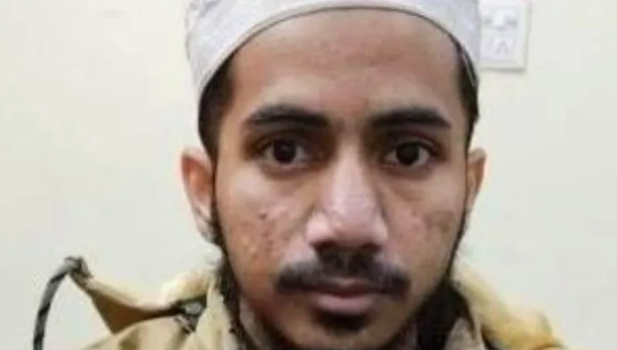
Case Summary
In Jhansi, Uttar Pradesh, violent anti-Hindu threats to demolish the Ram Janmabhoomi Temple at Ayodhya were made by a Muslim man named Hafiz Jibran Makrani. The accused was also inciting other Muslims to demolish the Ram Temple and take revenge against “Kafir Hindus.” Notably, these threats were made ahead of the Ayodhya Ram Mandir Pran Pratishtha on 22nd January 2024. The Ram Janmabhoomi in Ayodhya, Uttar Pradesh, is a site deeply revered by Hindus as the birthplace of Lord Rama, considered an incarnation of Lord Vishnu and a central figure in the Hindu faith. The temple held immense religious and cultural significance, having existed on this sacred land for centuries before being desecrated in 1528. At that time, the Mughal tyrant Babur ordered the destruction of the original temple and the construction of the Babri Masjid on its ruins, inflicting generations of anguish upon the Hindu community. Hindus endured decades of legal and social hardships, fighting relentlessly in courts to reclaim and restore their holy site. Their struggle concluded with the Supreme Court of India’s 2019 verdict, which legally restored the site to the Hindu community and permitted the temple’s consecration. This incident came to light when the Uttar Pradesh Anti-Terrorism Squad (UP ATS) arrested 24-year-old Jibran Makrani from Jhansi city for issuing threats and attempting to incite Muslims. It was found that the X (formerly Twitter) account from which the threats originated was operated by Hafiz Jibran Makrani, son of Israr Makrani from Jhansi. According to a press note released on 3rd January 2024 by the Uttar Pradesh Anti-Terrorism Squad, cyber patrolling officials flagged an inflammatory post on X from the handle @jibranMakrani1. The post read, “We will not let go of a single masjid. If a masjid is snatched from us by force, then be ready to face the consequences. Babri Masjid is also ours and will always be ours.” The press note stated that the post was clearly intended to create communal disharmony, increase religious hostility, and spread frenzy. The post was deleted by Jibran after he was summoned for questioning. According to the First Information Report (FIR), Jibran stated that he wanted Muslims to demolish the Ram Mandir and rebuild a grand Babri Masjid. He further said that he had been successful in achieving the objective behind his posts. “Insha Allah, whenever I get the chance in the future, I will continue to appeal to my Muslim brothers through my Twitter (X) handle and other social media platforms to avenge the Babri Masjid demolition against the Kafir Hindus. I am proud of my work,” he said. When questioned by the Uttar Pradesh Anti-Terrorism Squad about his posts, Jibran stated that he had posted them with the intention of taking revenge for the Babri Masjid and to motivate Muslim brothers to raze the Ram Mandir to the ground, “like our ancestors had done,” referring to the demolition of the Ram Mandir by the Mughal ruler Babur. Reports also stated that the data recovered from Jibran’s phone contained screenshots of posts by various individuals, including content on the Babri Masjid demolition, material supporting terrorist attacks by Hamas on Israel, and posts endorsing the banned Islamic terror organisation, the Popular Front of India (PFI). When questioned about these screenshots, Jibran stated that he was angered by what he described as supposed “atrocities against Muslim brothers” and that he reposted such content on his X handle to amplify these inciting messages among his followers. Hafiz Jibran Makrani was arrested under Sections 153A and 505(2) of the Bharatiya Nyaya Sanhita (BNS) for promoting enmity between religious groups. One mobile phone and three SIM cards were recovered from his possession, and further investigation was underway.
Why it is Hate Crime ?
This case has been added to the tracker under the primary category- Hate Speech against Hindus. The subcategory selected is- Violent Threats. Violent threats, explicit, implicit or implied, is the most dangerous form of hate speech since it goes beyond discriminatory and prejudicial language to express the intent of causing harm to an individual or a group of people based on their religious identity and faith. There could be several different kinds of threats that are issued to Hindus based on religious animosity. An explicit threat would mean the direct threat of violence towards an individual Hindu, a group of Hindus or Hindus at large. Physical violence, death threats, threats of destruction of property belonging to Hindus and threats of genocide would mean explicit threats against Hindus for their religious identity. Implicit threats may not be a direct threat but implied through the use of symbols of actions – for example – in the Nupur Sharma case, other than explicit threats, there were also implicit threats when Islamists took to the streets to burn and beat her effigies. It implies that they want to do the same to Nupur Sharma – thereby is considered an implicit threat. Violent threats can be delivered in person, through letters, phone calls, graffiti, or increasingly through social media and other online platforms. It would be important to understand that a threat – explicit or implicit, online or offline – to an individual who happens to be a Hindu does not qualify as a religiously motivated threat. Such a threat, while vile and dangerous, could be owing to non-religious reasons and/or personal animosity. To qualify as a religiously motivated threat, it would need to exhibit an indication that the individual is being targeted for religious reasons and/or owing to his/her religious identity as a Hindu. In this case, it is first important to state that the Ram Janmabhoomi temple in Ayodhya holds profound religious importance for Hindus, as the site is believed to be the birthplace of Lord Rama, one of the most revered deities in Hinduism and regarded as an ideal of virtue and dharma. A Hindu temple originally existed at this sacred place, serving as a focus of worship for the Hindu community for centuries. In 1528, the Mughal emperor Babur ordered the desecration and demolition of this temple, upon whose ruins a mosque named the Babri Masjid was built. The act of destroying a temple to build a mosque not only symbolised the forced erasure of the religious heritage and identity of Hindus but was a wound that persisted through generations. For Hindus, temples are not merely structures—they are vital sanctuaries for spiritual practice, religious gathering, festival celebration, abode of their deity, and preservation of heritage. The eventual reclamation of the Ram Janmabhoomi site, following an arduous legal and social battle that culminated with the Supreme Court’s historic verdict in 2019, marked the restoration of justice and dignity to generations of Hindus. The accused, being fully aware of the temple’s unique significance—both as a symbol of worship and as an emblem of Hindu resilience and faith—issued threats to destroy it again. Such targeted threats revealed a deep-seated religious animosity, serving as a pointed attack not only on a structure but on the collective dignity and heritage of the Hindu community. Such speech is motivated by immense hatred and animosity towards the Hindu community and its faith, clearly amounting to religiously motivated hate speech. The accused had not only issued violent threats against the Ram Janmabhoomi Temple in Ayodhya but had also actively incited other Muslims to destroy the temple and avenge the so-called wrongs against “Kafir Hindus.” His inflammatory rhetoric was directed explicitly at a religious community, calling for collective violence and destruction of a sacred Hindu site. Such acts of provocation clearly reflected targeted hostility towards Hindus, intending to instil fear, provoke violence, and create communal division—core elements of a hate crime. Furthermore, the hate motivation behind Jibran Makrani’s actions was reinforced by his open support for Islamic extremist organisations, including the Popular Front of India (PFI), and his endorsement of the Hamas terrorist attacks. Both groups are known for their radical Islamist ideologies and hostility towards non-Muslims. Makrani’s digital activity—reposting and amplifying content glorifying such violence—revealed his deep-rooted anti-Hindu and anti-non-Muslim sentiment. Given all these facts, this case met the parameters of an anti-Hindu hate crime. Therefore, this case is being added to the hate crime database maintained by the Hinduphobia Tracker.


Case Status
Arrested


Perpetrators Details
Perpetrators
Muslim Extremists
Perpetrators Range
One Person
Perpetrators Gender
male
 Sources




