Gujarat: Mohsin attacks Radhakrishna temple in Morbi, pelts stones and threatens to kill the priest, arrested
 Morbi, Gujarat, India
  26 October, 2023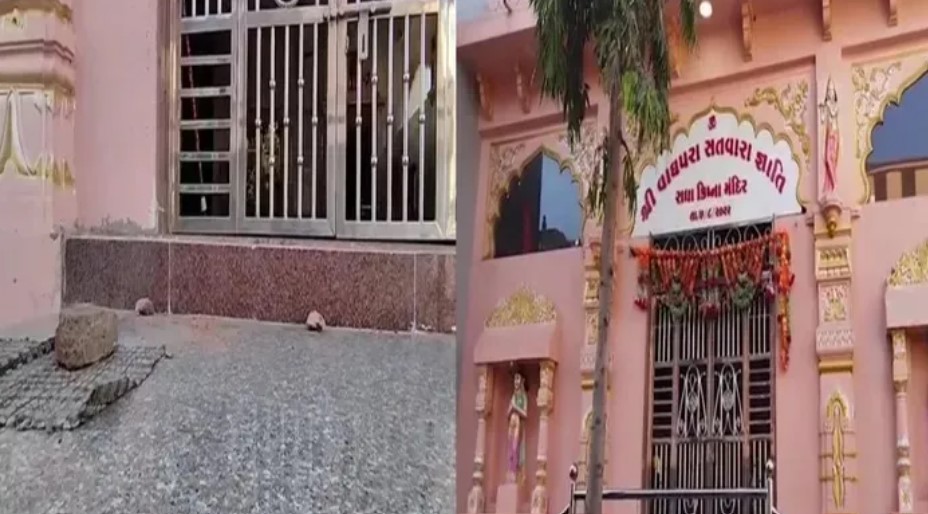
Case Summary
On October 27, 2023, a Muslim youth named Mohsin pelted stones at the Radhakrishna Temple at Waghpara in Morbi in the early hours of Friday (27th October). He had a scuffle with the priest and his wife before the attack. Mohsin threatened Pujari and his wife by hurling abuses at them. He became more aggressive when the priest stopped him. Mohsin inflicted stone slashes on him. He pelted stones at the temple as a panicked priest couple switched off the iron grill gates of the temple. OpIndia spoke to Kamlesh Ahir, the president of Morbi district Hindu Yuva Vahini you said that the accused was a repeat offender. Kamlesh Ahir further described Mohsin as someone embodying an intense and radical zeal. Ahir said that Mohsin’s language is particularly abrasive, and he had caused disturbances on multiple occasions in the past to instil fear within the community.
Why it is Hate Crime ?
This particular case has been classified as a religiously motivated hate crime under two prime categories of the tracker. The first is- Attack on Hindu religious symbols and under this the sub-category chosen is- Attack on Temples- In Hinduism, a temple is the abode of the Deity. The Deity in the Temple is consecrated, thereby, making it a real, breathing entity. Hindus believe that not just the Deity but the temple premises itself are sacred to Hindus since Hindus hold the faith that the entire Temple space is an amalgamation of the divine energy of the deity. Given the central significance of Temples in Hindu Dharma, any attack against a Hindu Temple or its peripheral premises is an attack on the faith itself and is born out of animosity towards the faith, of which, the Temple is a central tenet. Any manner of attack against a Temple and/or its premises would therefore be considered a religiously motivated hate crime. The second category under which this case has been placed is- Hate speech against Hindus. Under this, the sub-category selected is- Violent threats. Violent threats, explicit, implicit or implied, is the most dangerous form of hate speech since it goes beyond discriminatory and prejudicial language to express the intent of causing harm to an individual or a group of people based on their religious identity and faith. There could be several different kinds of threats that are issued to Hindus based on religious animosity. An explicit threat would mean the direct threat of violence towards an individual Hindu, a group of Hindus or Hindus at large. Physical violence, death threats, threats of destruction of property belonging to Hindus and threats of genocide would mean explicit threats against Hindus for their religious identity. Implicit threats may not be a direct threat but implied through the use of symbols of actions – for example – in the Nupur Sharma case, other than explicit threats, there were also implicit threats when Islamists took to the streets to burn and beat her effigies. It implies that they want to do the same to Nupur Sharma – thereby is considered an implicit threat. Violent threats can be delivered in person, through letters, phone calls, graffiti, or increasingly through social media and other online platforms. It would be important to understand that a threat – explicit or implicit, online or offline – to an individual who happens to be a Hindu does not qualify as a religiously motivated threat. Such a threat, while vile and dangerous, could be owing to non-religious reasons and/or personal animosity. To qualify as a religiously motivated threat, it would need to exhibit an indication that the individual is being targeted for religious reasons and/or owing to his/her religious identity as a Hindu. This incident is a clear case of a religiously motivated hate crime for two primary reasons. First, the temple itself was attacked, which represents an assault on the Hindu faith. Temples are sacred spaces central to Hindu worship, and pelting stones at the Radhakrishna Temple was an act of desecration aimed at disrespecting and harming the religious sentiments of the Hindu community. Such attacks are often motivated by a desire to undermine the sanctity of religious symbols, and in this case, the attack on the temple signifies hostility towards the Hindu faith and its followers. Secondly, the violent threats issued by Mohsin to the priest and his wife were based on their religious identity. As custodians of the temple, the priest and his wife symbolize the Hindu religion, and the aggressive threats and physical violence targeted them specifically because of their association with the temple and their faith. Mohsin's actions were not merely random; they were rooted in religious animosity, aimed at intimidating and terrorizing individuals because of their religious role and identity. This combination of attacking a sacred religious space and threatening individuals for their faith demonstrates a clear case of religiously motivated hate.
Victim Details
Total Victim
2
Deceased
0
Gender
- Male 1
- Female 1
- Third Gender 0
- Unknown 0
Caste
- SC/ST 0
- OBC 0
- General 0
- Unknown 2
Age Group
- Minor 0
- Adult 2
- Senior Citizen 0
- Unknown 0


Case Status
Arrested


Perpetrators Details
Perpetrators
Muslim Extremists
Perpetrators Range
One Person
Perpetrators Gender
male
 Sources




