Kerala High Court restricts expression of Hindu faith by disallowing installation of saffron flags inside a Hindu temple
 Kollam, Kerala, India
  4 September, 2023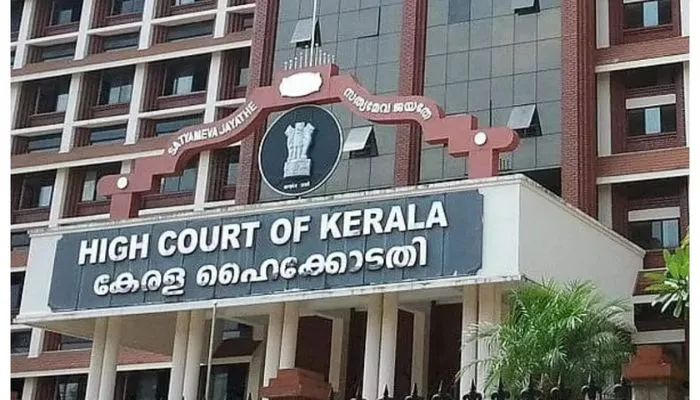
Case Summary
On September 5, 2023, the Kerala High Court dismissed a petition seeking approval to install saffron flags within the Muthupilakkadu Sree Parthasarathy temple premises. Justice Raja Vijayaraghavan V emphasised that utilising sacred temple grounds for political purposes, particularly by displaying flags linked to specific political parties, is impermissible. Notably, two devotees of the Muthupilakkadu Sree Parthasarathy temple had filed a petition in the Kerala HC. They established the “Parthasarathy Bakthajanasamithi” organisation in 2022, with a focus on the temple’s well-being and welfare of its worshippers. They asserted that their efforts to display saffron flags on the temple premises during special occasions and festivals were consistently thwarted by the respondents, who allegedly wielded political influence. Consequently, they sought a Court order to compel the police to provide them with protection, preventing any hindrance to their flag-raising activities. In opposition to the plea, the Kerala State Government Pleader Appu PS contended that granting permission to the petitioners to adorn the temple with flags and decorations associated with a specific political party would equate to transforming the temple into a battleground for political rivalry.
Why it is Hate Crime ?
In several cases, it is seen that the administration/state disallows a religious practice owing to prejudicial orders and concerns, targeted specifically against the Hindu community. Such restriction/prohibition would be considered documented as a hate crime because the orders are often a result of pressure by groups that harbour animosity towards Hinduism and Hindus. Often, the restriction by the authorities is driven by bias, hostility, or prejudice against the specific community being stopped from holding a religious practice, by pressure groups that harbour animosity towards Hindus, intrinsic to their faith. Since practices are intrinsic to the faith of the Hindus, such prejudicial restriction is considered a curtailing of the fundamental rights of the Hindu community. In several cases, for example, the authorities ban a Hindu religious practice due to pressure from groups opposed to the religion. In other instances, the prohibition is selectively enforced against one religious group (Hindus) while others are allowed to proceed. There are still other cases where the authorities preemptively restrict a religious practice by Hindus because those who hold animosity towards Hindus may get “provoked” leading to them being violent, thereby assuaging the sentiments of those who hold animosity towards Hindus by curtailing the religious rights of Hindus. Such acts and orders are prejudiced, indicating discriminatory motives owing to the capitulation to groups that harbour animosity towards Hindus and therefore, would be categorized as a religiously motivated hate crime since the original pressure leading to the order itself is a result of hatred/bias/prejudice/religious hate against Hindus. Here, the Kerala HC restricted the installation of saffron flags inside the premises of a Hindu temple. The order came after the communist govt in Kerala objected to the same, equating the Hindu saffron flag to that of the BJP party. The saffron flag, known as the “Bhagwa Dhwaj” or “Kesari Flag,” holds profound significance in Hinduism. It symbolises various spiritual and cultural aspects of the Sanatan Dharma. Saffron, representing purity and spirituality, is associated with the sacred fire, a central element of Hindu rituals. The flag often bears symbols like the Om, signifying the ultimate reality, and the Trishul, the divine weapon of Lord Shiva. It is seen during religious processions, ceremonies, and atop temples, signifying the presence of the divine. The saffron flag unifies devotees, fostering a sense of belonging and reverence, making it an essential emblem of Hindu faith and identity. Kerala's communist govt objected to the installation of a saffron flag inside the temple premises, comparing it to the symbol of the BJP. To reduce a religious symbol to political compulsions and banning its display infringes on the religious rights of the Hindu community and stems out of animosity and prejudice towards the Hindu community, for their religious beliefs. The Kerala HC restricting the display of a religious symbol inside a temple can also be considered a prejudicial order denying the Hindu community its fundamental rights. Since the demand for the removal of the saffron flag and the order as a result of it both were prejudicial to the rights of Hindus and the original demand itself stemmed from animosity and prejudice against Hindu beliefs, this case is being categorized as a religiously motivated hate crime.


Case Status
Case adjudicated


Perpetrators Details
Perpetrators
State and Establishment
Perpetrators Range
N/A
Perpetrators Gender
unknown
 Sources




