Attack on Hindu religious religious sentiments: Muslim man arrested for vulgar and derogatory attacks on Hindu deities and Sanatan dharma
 Kolkata, West Bengal, India
  13 December, 2023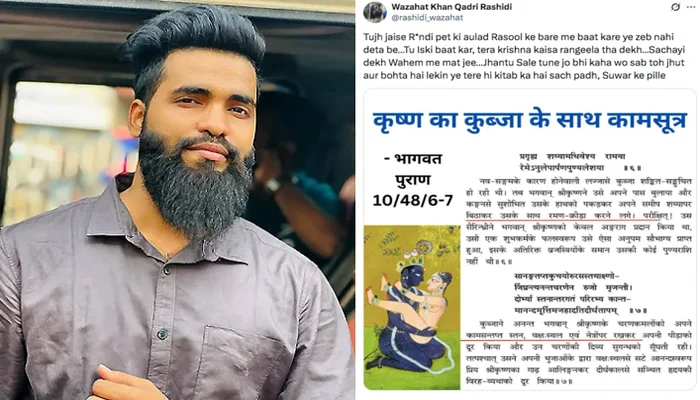
Case Summary
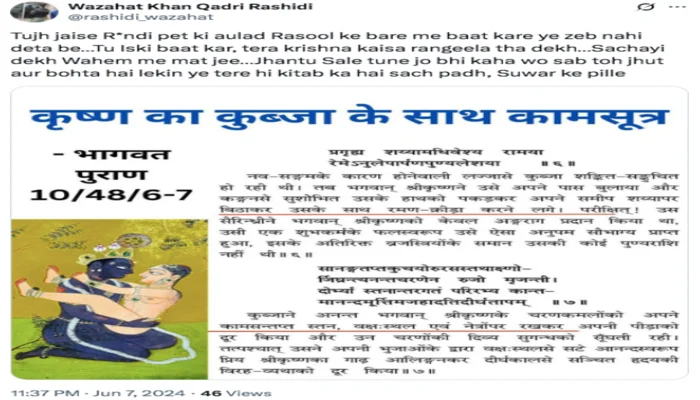
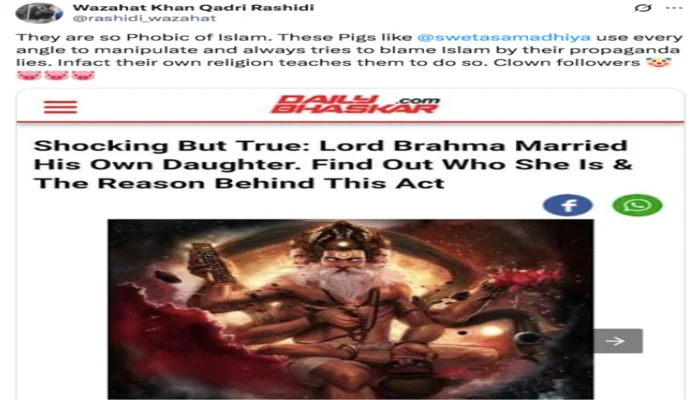
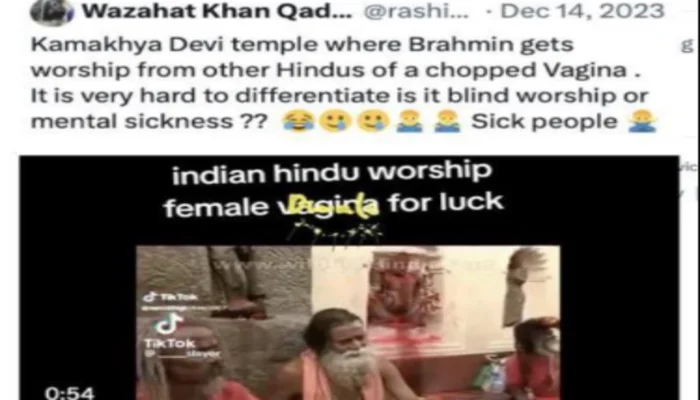
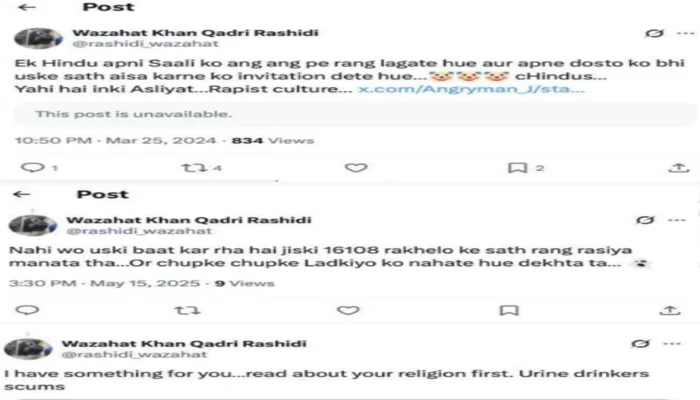
A radical Muslim man from Kolkata, identified as Wazahat Khan, posted multiple social media posts denigrating Hindu deities and making vile comments about the Sanatan Dharma. He is the same man who filed a complaint against the Hindu influencer Sharmishta Panoli for alleged hate speech against Islam. The Muslim man from Kolkata, who runs the Rashidi Foundation, claimed credit for the arrest of a Hindu girl over 1500 km away in Gurgaon. The girl, Sharmishta Panoli, had posted an Instagram video criticising Pakistan, which inexplicably angered some Indian Muslims, leading to death and rape threats against her. Hinduphobia Tracker has documented the case. Despite being on the receiving end of these threats, Sharmishta was arrested, denied bail, and sent to judicial custody for two weeks. Meanwhile, Wazahat Khan was seen celebrating her arrest alongside other Muslim youths. After Sharmishta's arrest, several people scrutinised the social media presence of Wazahat Khan Qadri Rashidi and discovered numerous posts in which he had abused Hinduism and Hindu deities. Wazahat Khan Qadri Rashidi's posts included derogatory comments about Hindu festivals, sacred scriptures, and revered figures such as Lord Krishna. The content involved sexually explicit language, vulgar references to Hindu practices, and graphic misinformation about Hindu gods. He also deliberately mocked Kamakhya Devi Temple by stating that Hindus "worship chopped vagina.". In one of his posts, he called Hindus 'urine drinkers' and said that Hindus have a 'rapist culture'. Many of these posts, which were available on public platforms including Twitter (now X), have since been deleted by Rashidi. A complaint was filed by Advocate Vineet Jindal for hate speech. Assam police went to the house of Wajahat Khan, who was absconding, to conduct a raid and arrest him. According to a report by PratidinTime, tensions emerged between the Assam and West Bengal police during the course of the raid. It has been reported that the raid, conducted at the accused's residence, was met with strong resistance from West Bengal Police, who attempted to protect the accused and refused to cooperate with Assam police. As of the date of writing this report, the accused was arrested by the police and his bail application was also rejected. The investigation was ongoing.
Case Images
Why it is Hate Crime ?
This case has been added to the tracker under the primary category of: - Hate speech against Hindus. Within it, the sub-category selected is: - Anti-Hindu slurs, mocking faith. Anti-Hindu slurs and the deliberate mocking of the Hindu faith owing to religious animosity involve the usage of derogatory terms, stereotypes, or offensive references to religious practices, symbols, or figures. One of the common anti-Hindu slurs used against Hindus is “cow-worshipper” and “cow piss drinker”. The intention of using this term is to demean and mock Hindus as a group and their religious beliefs since Hindus consider the cow holy. Additionally, some symbols and the slurs attached to them have a historical context that exacerbates the insult, hate, stereotyping, dehumanisation and oppression against Hindus. Cow worship has been used for centuries to denigrate Hindus, insult their faith and oppress Hindus specifically as a religious group. There has been overwhelming documentation about how cow slaughter has been used to persecute Hindus with cow meat being thrown in temples and places of worship. There has also been overwhelming documentation where cow meat (beef) has been force-fed to Hindus to either forcefully convert them to Islam or denigrate their faith. Apart from cow worship, the Swastika – which holds deep religious significance for the Hindus – has also been misinterpreted and distorted to use as a slur against Hindus. Similarly, the worship of the Shivling has been used by supremacist ideologies and religions to denigrate Hindus owing to religious animosity. Such slurs and denigration stem out of inherent animosity and hate towards Hindus and their faith, therefore, it is categorised as hate speech targeted at Hindus specifically owing to their religious identity. The other sub-category relevant here is: - Subversion of scriptures. Subverting the religious scriptures of Hindus has particularly devastating consequences. Subversion of the scriptures of Hindus is often done to justify or promote hatred, discrimination, or violence against specific individuals or groups of Hindus. Religious scriptures are often nuanced and those who harbour religious animosity towards Hindus often misquote or misrepresent the scripture to legitimise their animosity and hate towards the faith and its adherents. Any such misquoting of scriptures or subversion to justify hate, violence and discrimination against Hindus owing to religious animosity is hate speech and is categorised as such. The second primary category selected here is: - Attack on Hindu religious representations. Within it, the sub-category selected is: - Iconoclastic representation of Hindu Gods/Goddesses. An icon is a symbol of someone or something that is revered, or a religious representation of a spiritual ideal. Iconography is of vital significance in the Hindu milieu. It helps connect people’s spiritual beliefs with the real world. Iconography within the Hindu faith takes several shapes and forms. Murtis are of most significance to Hindus, to which daily rituals, prayers and offerings are done. Besides the murtis, there are several other symbols which have deep significance in the Hindu faith – the Om and Swastika for example. Any iconoclastic representation of these symbols, images and murtis is an affront to the religious beliefs and faith of the Hindu community itself since the symbols and icons are deeply religious in nature. In this sub-category of crime, we would record hate crimes and iconoclastic representations, in words, art, or any other form of representations of symbols that hold religious significance for the Hindu community. Since these symbols, icons and murtis are central to the Hindu faith, any iconoclastic representation of these symbols is born out of animosity towards the faith itself, manifesting itself through these symbols and therefore, these representations would be considered religiously motivated hated crimes. This case has been added to the tracker because of offensive posts and deliberate hate speech targeting Hindus by a Muslim man named Wazahat Khan Qadri Rashidi. He made social media posts which contained explicit language, sexual overtones, derogatory slurs and deliberate misinformation against Hindu deities and sacred traditions. He also mocked the Kamakhya Devi Temple by stating that Hindus "worship a chopped vagina". This deeply offensive statement is not only a gross misrepresentation of the temple’s sacred symbolism but also exemplifies iconoclastic hate speech by targeting a revered site of Shakti worship. Such remarks are intended to strip Hindu religious symbols of their sanctity and vilify core aspects of the faith. Hindu deities are an integral and sacred part of the Hindu religion. Any attempt to mock or desecrate them is not merely an expression of individual opinion; it is an act of deep religious insult. In this case, the Muslim accused made objectionable remarks about Hindu gods and goddesses. This was not a random or misguided act, but a calculated and ideologically rooted expression of religious hatred. In Islamic theology, idol worship, referred to as Shirk, is regarded as the gravest sin. The Qur'an strictly condemns it, and Islamic teachings emphasise the complete rejection of any practice associated with idol worship. Muslims are taught from a young age that idolatry is an unforgivable sin. While this belief is central to Islamic faith, it has also led, historically and in contemporary times, to intolerance and hostility towards idol-worshipping religions, especially Hinduism. When individuals publicly mock Hindu deities, it reflects more than personal disrespect—it is often the manifestation of deep-seated theological contempt against Hindu practices, stemming from the Islamic doctrinal view that idol worship is impure and offensive. Such actions target the identity, beliefs, and dignity of Hindus. Mockery of deities is a deliberate attack on the religious sentiments of the Hindus that stem from the intrinsic animosity against the religion. This is one of the reasons why this incident warrants inclusion in the Hinduphobia Tracker. The accused's repeated public posts used sexually explicit, vulgar, and derogatory language to mock and denigrate sacred Hindu deities, temples, scriptures, and festivals. In Hinduism, these deities and symbols are not mere cultural motifs but deeply revered spiritual representations central to religious practice and identity. By depicting them in a crude, obscene, and disrespectful manner, he deliberately sought to insult and undermine the Hindu faith itself. Such iconoclastic representation, whether through words or imagery, stems from animosity towards Hinduism and directly targets its sacred symbols, thereby qualifying as a religiously motivated hate crime. Secondly, the Muslim accused called Hindus "urine drinkers". In Hinduism, cow urine (gaumutra) and cow dung hold religious, spiritual, and medicinal significance, deeply rooted in the belief that the cow is a sacred animal. However, recently, the "gaumutra" jibe has become a frequent tool for anti-Hindu bigots, serving as a deliberate insult against the Hindu community’s reverence for the cow. This slur, often wielded by individuals or groups harbouring deep-seated animosity towards Hindu beliefs and practices, is a calculated attack on the sanctity of the cow in Hinduism, a religion where cows are considered holy. Mocking cow urine is an attempt to delegitimise and belittle the Hindu faith itself. Such remarks have been observed in statements made by those who express open hostility towards Hindus, including Pulwama terrorist Ahmed Dhar, who used the slur to denigrate Hindus while justifying violence. His remark about killing CRPF soldiers because they "drink cow urine" highlights how this slur is weaponised not only to ridicule religious practices but also to justify acts of hatred and violence. The increasing use of the "gaumutra" jibe suggests a broader agenda to normalise the mockery of Hindu religious symbols, setting the stage for more direct attacks on Hindu deities and beliefs. By trivialising or ridiculing something as sacred as cow worship, it becomes easier for those with malicious intent to escalate their rhetoric into outright abuse of Hindu Gods, a pattern that has been witnessed in recent years. This slur is not simply about targeting a practice but serves as a stepping stone towards undermining the entire Hindu faith. Moreover, the Muslim accused alleging that Hindus have a “rape culture” is not only factually baseless but functions as a dangerous form of hate speech that dehumanises Hindus and incites social hostility and violence against them. Such language is intended to portray Hindus as inherently immoral or violent, thereby encouraging societal alienation, discrimination, and potential violence. Similarly, making sexually explicit and offensive statements against Lord Krishna, a central deity in Hinduism, was a deliberate effort to delegitimise Hindu gods and sow hatred toward the faith. These statements qualify under the category of “Subversion of scriptures,” as they misuse and distort sacred narratives to vilify the religious beliefs of Hindus. Through misrepresentation and vilification of deities and scriptures, Rashidi’s posts reflect a sustained pattern of religious animosity and targeted hate speech aimed at Hindus based solely on their faith and identity. Thus, this case has been added to the tracker One thing that must be noted here is that Wazahat Khan Qadri Rashidi is the same individual who filed a complaint against the Hindu influencer Sharmishta Panoli for her alleged hate speech against Islam. While Sharmistha was replying to Pakistani trolls, Rashid was specifically targeting Hindus and abusing them based on their faith. This stark double standard highlights his blatant hypocrisy and underlines the deep-rooted hatred and animosity he holds against Hinduism and Hindus. Disclaimer: It is important to clarify that the report does not specify the exact date when the accused started posting hate-filled posts, but it mentions that the earliest tweet is dated December 14, 2023. Since this is the earliest date mentioned, we are considering this as the incident date. While media coverage of the incident emerged later, the Hinduphobia Tracker records the incident based on when the victim’s ordeal began, not when it was reported.


Case Status
Arrested


Perpetrators Details
Perpetrators
Muslim Extremists
Perpetrators Range
One Person
Perpetrators Gender
male
 Sources




