Hindu youth murdered by Muslim men amidst ongoing persecution of Hindus in Bangladesh
 Habiganj District, Bangladesh
  24 December, 2025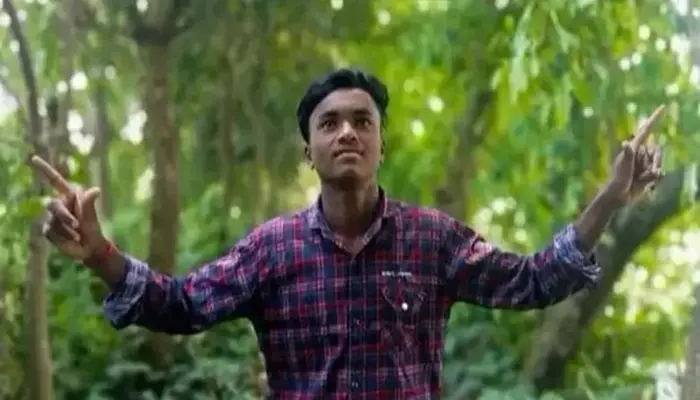
Case Summary
In the Badalpur village of Habiganj district, Bangladesh, an 18-year-old Hindu youth named Kamdev Das was found dead with visible strangulation marks on his body. According to reports, the Hindu youth, Kamdev Das, son of farmer Vishnupada Das and Durga Rani Das, had gone missing on 25 December 2025, after which his father lodged a complaint at Ajmiriganj police station. However, no serious search effort was undertaken by the police to locate the victim. Subsequently, on the morning of 27 December 2025, villagers discovered a body floating in a pond, which was later identified as that of Kamdev Das. Police recovered the body and sent it for post-mortem examination at Ajmiriganj hospital. Family members stated that there were visible marks of strangulation around the victim's neck, indicating murder. While the parents did not publicly name any individuals, villagers stated that Islamic fundamentalists were responsible for the murder. The incident generated panic and insecurity among Hindu families in Badalpur village, particularly as Habiganj district, despite having a Hindu population of around 15 per cent, had previously been considered relatively peaceful. The sense of vulnerability was further compounded by a separate incident reported from a village near Rangpur district town, where a group of Muslim men took a cow into the premises of a Hindu temple for slaughter; when Hindus objected, the group turned violent, slaughtered the cow within the temple and vandalised nearby Hindu households, reinforcing the climate of fear facing the Hindu community in the region. A fresh wave of anti-Hindu violence prevailed across Bangladesh following the death of Sharif Osman Bin Hadi. This escalation occurred against the backdrop of ongoing anti-Hindu violence that had persisted since the ouster of the Sheikh Hasina government in August 2024, during which Hindu homes, temples, and religious spaces were repeatedly attacked, and the Hindu community faced intimidation, arson, and mob attacks. In the aftermath of Hadi’s death, Hindu homes were selectively targeted and set ablaze in multiple localities by Muslim mobs, forcing families to flee and rendering many homeless. The violence was not sporadic but patterned, with Muslim mobs targeting Hindu neighbourhoods, properties, and religious symbols with impunity. One of the many victims of this wave of violence was a Hindu man named Dipu Chandra Das, who was brutally lynched by a Muslim mob over false allegations of blasphemy. Such targeting of innocent Hindus over fabricated charges illustrated the vulnerability of the Hindu minority under conditions of rising communal hostility. Posters and written materials calling for the extermination of Hindus were displayed in public spaces, signalling an alarming normalisation of genocidal rhetoric. Combined with acts of physical violence, arson, and vandalism, these developments demonstrated a coordinated campaign designed to terrorise the Hindu community and assert Islamic dominance. Notably, Sharif Osman Bin Hadi was a Muslim political activist and student leader known for his anti-Hindu and anti-India stance. He was actively involved in the political unrest that followed the fall of Sheikh Hasina’s government and was killed in Dhaka in December 2025 during clashes, after which Hindus were blamed and subsequently targeted.
Why it is Hate Crime ?
This case has been added to the tracker under the primary category- Attack resulting in death. The subcategory selected is- Attacked for Hindu identity. In several cases, Hindus are attacked merely for their Hindu identity without any perceived provocation. A classic example of this category of religiously motivated hate crime is a murder in 2016. 7 ISIS terrorists were convicted for shooting a school principal in Kanpur because they got ‘triggered’ seeing the Kalava on his wrist and tilak that he had put. In this, the Hindu victim had offered no provocation except for his Hindu religious identity. The motivation for the murder was purely religious, driven by religious supremacy. Such cases where Hindus are targeted merely for their religious identity would be documented as a hate crime. Under this category, cases where the attack led to the death of the Hindu victim/s would be documented. In this case, while the available details do not explicitly indicate a religious motive, the broader context cannot be ignored. When there is an ongoing ethnic cleansing based on religious identity, every crime in and of itself is assumed to be motivated by the same religious animosity, even if there is a lack of a specific religious marker in the immediate crime. During an ongoing ethnic cleansing, the dehumanisation of people based on their religious identity and the normalisation of religious hostility drive the crimes committed against them, even when there is a lack of stated religious motive. For the purpose of documenting the 2024 ethnic cleansing of Hindus in Bangladesh, the Hinduphobia Tracker is assuming religious motivation ab initio. If a case is specifically and beyond a reasonable doubt proven to be driven by motivations other than religious hostility, it will post-facto be removed from the hate crime database. The murder of 18-year-old Hindu youth Kamdev Das in Badalpur village, Habiganj district, fit squarely within this broader pattern of anti-Hindu violence. The Hindu youth disappeared on 25 December 2025 and was later found dead with visible strangulation marks, indicating murder. His body was recovered from a pond after no serious search effort was undertaken following the filing of a missing person report. The brutality of the killing, the vulnerability of the victim, and the prevailing climate of fear among Hindus in the region underscored the targeted nature of violence faced by the community. Furthermore, in this case, the villagers stated that the victim was killed by Islamic fundamentalists, indicating a religiously motivated nature of the attack This killing occurred against the backdrop of escalating persecution of Hindus across Bangladesh, marked by repeated incidents of mob violence, murders, temple vandalism, and desecration of religious spaces. The incident near Rangpur, where a cow was slaughtered within the premises of a Hindu temple and nearby Hindu households were vandalised after objections were raised, further illustrated the systemic hostility faced by Hindus. Taken together, the murder of Kamdev Das, the manner in which his body was disposed of, and the surrounding pattern of anti-Hindu aggression reinforced the conclusion that this case constituted an anti-Hindu hate crime. Therefore, this case has been added to the tracker.
Victim Details
Total Victim
1
Deceased
1
Gender
- Male 1
- Female 0
- Third Gender 0
- Unknown 0
Caste
- SC/ST 0
- OBC 0
- General 1
- Unknown 0
Age Group
- Minor 0
- Adult 1
- Senior Citizen 0
- Unknown 0


Case Status
Complaint filed


Perpetrators Details
Perpetrators
Muslim Extremists
Perpetrators Range
Unknown
Perpetrators Gender
unknown
 Sources




