Hindu residents resist conversion bid in Jaipur; locals confirm individuals being lured into converting their religion
 Jaipur, Rajasthan, India
  20 September, 2025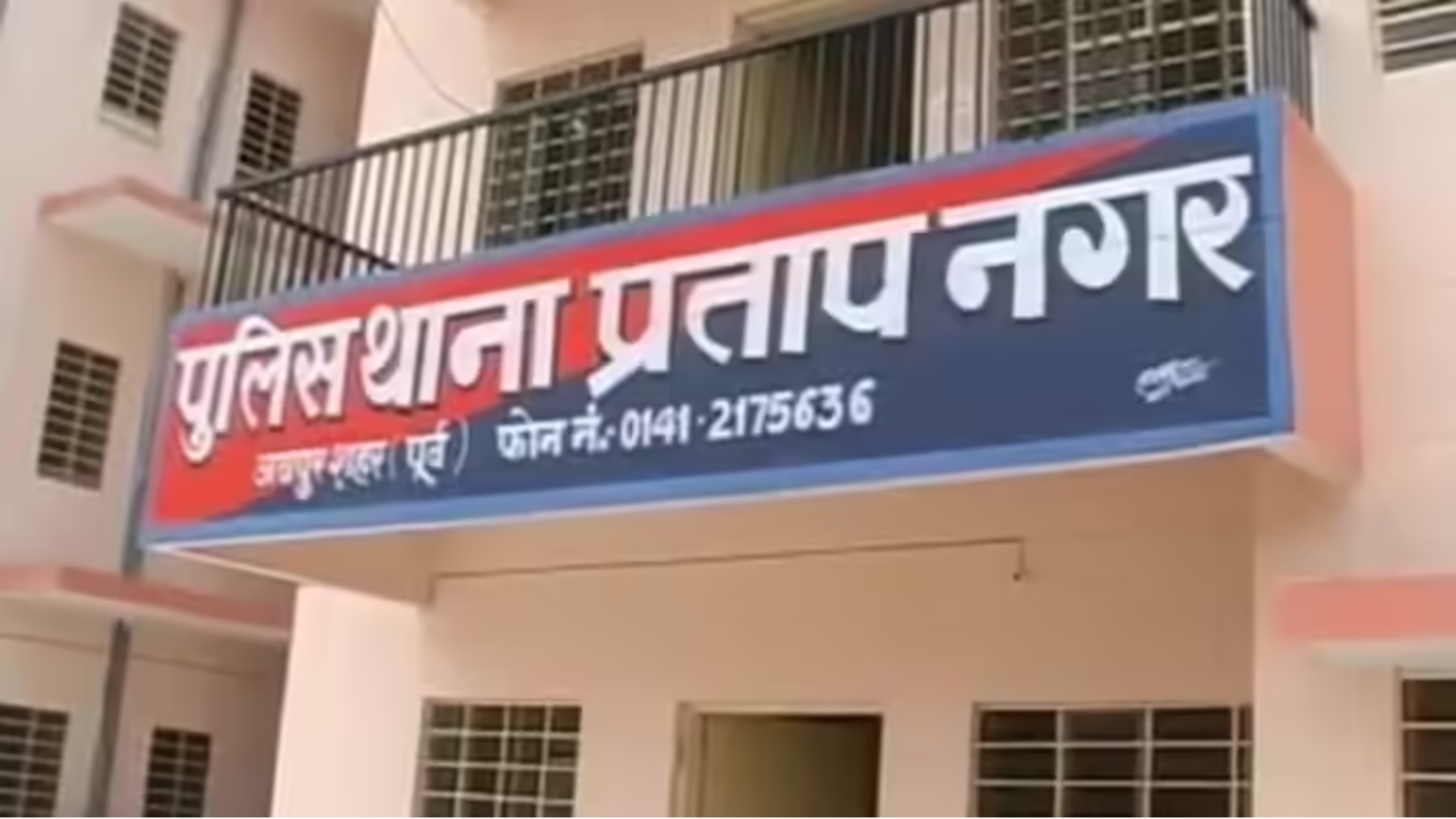
Case Summary
A religious conversion attempt was reported in Pratap Nagar, Jaipur, on September 21, 2025. According to witnesses, a crowd gathered around a house in Sector 8, suspecting that individuals were being lured into converting their religion. The issue escalated when people in the hall above the house began to come out, leading to a heated quarrel between the crowd and those inside the property. The crowd stated that the occupants of the house were attempting to influence and intimidate residents into changing their religion. The situation intensified as the news of a potential conversion attempt spread rapidly across social media platforms. By late evening, dozens of residents had congregated outside the Pratap Nagar police station, demanding intervention and clarity on the matter. Law enforcement officers, including Additional DCP Asharam Chaudhary, were deployed to manage the crowd and investigate the incident. Police confirmed that they were taking statements from both parties involved, but as of now, no verified case of religious conversion has been established. The incident occurred against the backdrop of the state government recently passing an anti-conversion bill in the legislative assembly. The new law, which is awaiting approval from the Governor and the President, is set to impose strict penalties, including life imprisonment, on those found guilty of forcibly converting individuals. Prior to the law coming into effect, several instances of alleged conversions have been reported, including indications of religious conversions in locations where the Enforcement Directorate recently investigated illegal financial transactions amounting to crores of rupees in Bikaner.
Why it is Hate Crime ?
The primary category in this case is: Predatory Proselytisation. The subcategory in this case is: Conversion/ attempts to convert by inducement. Predatory Proselytisation is not just limited to threat, harassment, force and violence, but it also has contours of stealth. In several cases, the Hindu victim is exploited to convert, with non-Hindus taking advantage of their poverty. In such cases, the Hindu victim who is suffering financially is offered monetary benefits, including lucrative offers for jobs, health treatment, education, etc, to induce the victim into changing his/her religion. In such cases, the religious identity of the victim and the aim to disenfranchise him from his faith form the heart of the crime. Also, taking advantage of and exploiting an individual’s economic vulnerabilities is widely acknowledged as exploitation, forms of which are often penalised by law. Such cases, therefore, are considered religiously motivated hate crimes since the victim’s religious identity forms the very heart of the crime itself. This case has been added to the tracker because it represents a clear example of Predatory Proselytisation, where attempts to convert Hindus are carried out through inducement and covert manipulation rather than open dialogue or genuine religious choice. The incident in Pratap Nagar, Jaipur, on 21 September 2025, reflects a pattern wherein gatherings in residential premises raise suspicion of coercive or deceptive methods being used to influence individuals to abandon their ancestral faith. The concerns voiced by local residents highlight how conversion activities are often cloaked in secrecy, relying on inducements or pressure rather than voluntary conviction. Although the police have not yet confirmed whether conversion took place in this particular case, the very act of suspicious gatherings in private spaces—linked with attempts to lure individuals into adopting another religion—aligns with well-documented tactics of targeting economically or socially vulnerable Hindus. In India, such inducement-based conversion attempts often exploit poverty, lack of education, or other vulnerabilities, offering promises of material assistance, employment, or social mobility. These practices do not treat the Hindu victim as an individual making an equal choice but as someone to be manipulated through dependency. This makes the crime explicitly religious in nature, since the victim’s identity as a Hindu forms the core of the attempt. Unlike general disputes or personal grievances, such efforts directly aim to disenfranchise Hindus from their faith, thereby constituting a religiously motivated hate crime.


Case Status
Complaint filed


Perpetrators Details
Perpetrators
Unknown
Perpetrators Range
Unknown
Perpetrators Gender
unknown
 Sources




