Idols of Hindu goddess desecrated by miscreants ahead of Durga Puja celebrations in Bangladesh
 Gazipur District, Bangladesh
  16 September, 2025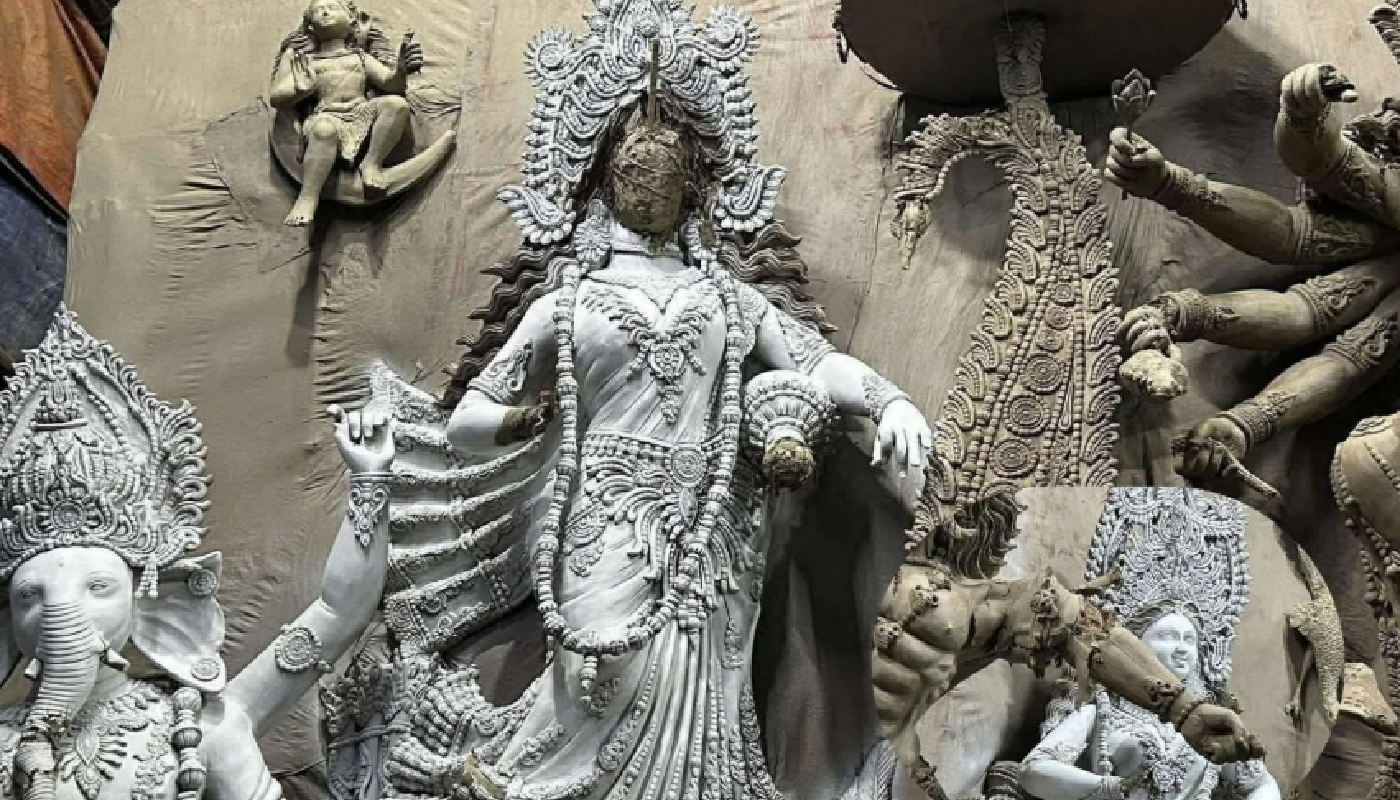
Case Summary
In Gazipur Metropolitan, Bangladesh, several idols of Goddess Durga at the Kashimpur cremation temple were desecrated by unidentified miscreants. According to media reports, the attack took place around 4 PM on 17th September 2025, when idols being prepared for the upcoming Durga Puja were found in ruins. Five to six idols were vandalised, with the hands of the goddess and the ears of the vahana horse smashed, leaving sacred sculptures scattered across the temple grounds. Local priests and worshippers who arrived shortly after the incident were devastated. Community leaders declared that this was not an isolated event but part of a growing pattern of assaults on Hindu temples, idols, and festivals in Bangladesh. One devotee stated that “this is not just about broken Murtis, this is about breaking our spirit,” adding that Hindu existence in the country was under threat. The Hindu community reacted with outrage and grief, accusing the state of failing to provide adequate protection. The police confirmed the incident and launched an investigation, with Officer-in-Charge Moniruzzaman of Kashimpur police station promising that those responsible would face justice. Yet many Hindus doubted whether accountability would be ensured, citing repeated cycles of impunity in past attacks. The timing of the desecration, just days before Durga Puja, left organisers fearful of further violence. Rights groups and civil society activists called upon the government to provide stronger security and harsher punishments for communal crimes. They warned that continued inaction would embolden extremists and destabilise fragile interfaith relations. The attack drew widespread international condemnation. The Hindu American Foundation described it as a “blatant violation of religious freedom and human dignity” and urged global monitoring. Human Rights Watch South Asia noted that recurring assaults on Hindu temples exposed the vulnerability of minorities in Bangladesh. Diaspora organisations in India, the United States, and Europe raised similar concerns, with the Global Hindu Forum calling it a systematic attempt to erase Hindu heritage and urging the United Nations to intervene. This case serves as a stark reminder of the continued persecution of Hindus in Bangladesh, which has only increased manifold since the fall of Sheikh Hasina’s Awami League government on August 5, 2024. After her violent ouster, Bangladesh plunged into chaos as Islamist extremists took advantage of the political turmoil to unleash a wave of terror and violence against the Hindu community. The Islamist mobs have attacked Hindu homes, burned them to the ground, and abducted women in a horrific descent into anarchy. Several temples have been destroyed in various parts of the Islamic country in a major crackdown on Hindus. Reports have exposed how Muslim students forced around 60 Hindu teachers, professors, and government officials to resign. Exiled Bangladeshi activist Asad Noor has also revealed that the minority Hindu community is now being coerced into joining ‘Jamaat-e-Islami’. Hindu religious events have been repeatedly targeted. On 6th September, a procession carrying Lord Ganesha’s idol was attacked in Chittagong. Ahead of Durga Puja, multiple incidents of idol vandalism occurred, including attacks in Mymensingh, Pabna, Rajshahi, Kishoreganj, and Dhaka. On 29th November, a violent Muslim mob attacked three temples in Patharghata, Chittagong, immediately after Jumma Namaz. The crackdown on Hindu voices has also escalated. On 30th November, Hindu journalist Munni Saha was arrested in Dhaka. Muslim mob attacks have increased in Bangladesh, for example, on 22nd May 2025, a Muslim mob carried out arson attacks selectively on Hindu homes in Dahar Mashihati village in Abhaynagar upazila in Jessore district of Bangladesh. Even ISKCON leader Chinmoy Krishna Das Prabhu and his aides have been targeted, and attempts have been made to ban ISKCON and suppress Hindu protests through sedition charges. These arbitrary actions point to a systematic pattern of persecution under Muhammad Yunus’s interim government.
Why it is Hate Crime ?
The primary category in this case is: Attack on Hindu religious representations. The first subcategory under this is: Attack on Temples. In Hinduism, a temple is the abode of the Deity. The Deity in the Temple is consecrated, thereby, making it a real, breathing entity. Hindus believe that not just the Deity but the temple premises itself are sacred to Hindus since Hindus hold the faith that the entire Temple space is an amalgamation of the divine energy of the deity. Given the central significance of Temples in Hindu Dharma, any attack against a Hindu Temple or its peripheral premises is an attack on the faith itself and is born out of animosity towards the faith, of which, the Temple is a central tenet. Any manner of attack against a Temple and/or its premises would therefore be considered a religiously motivated hate crime. The second subcategory under this is: Desecration of Hindu religious symbol. Icons and symbols or a religious representation of a spiritual ideal are widely revered in Hinduism. Iconography is of vital significance in the Hindu milieu. It helps connect people’s spiritual beliefs with the real world. Iconography within the Hindu faith takes several shapes and forms. Murtis are of most significance to Hindus, to which daily rituals, prayers and offerings are done. Besides the murtis, there are several other symbols which have deep significance in the Hindu faith – the Om and Swastika for example. Since these Hindu religious symbols hold paramount importance in Hinduism, any desecration of symbols, icons, murtis, religious representations and manifestations, is driven by animosity towards the faith itself which manifests itself through these murtis, icons and symbols. Therefore, any desecration of these Hindu religious symbols and representations is considered religiously motivated hate crimes under this category. This case has been added to the Hinduphobia Tracker because it represents not merely the physical destruction of sacred artefacts but a direct assault on the faith, identity, and security of Hindus in Bangladesh. The vandalism of several idols of Goddess Durga at the Kashimpur cremation temple in Gazipur is emblematic of a deep-rooted animosity that manifests itself through repeated attacks on temples and religious symbols. In the Hindu worldview, the temple is not a passive structure but the abode of the deity, a consecrated space that embodies divine energy. To strike at this space, or to desecrate its consecrated icons, is to assault the faith itself. The damage to idols and the desecration of the temple premises were therefore not incidental acts of mischief but religiously motivated crimes designed to terrorise the Hindu community and delegitimise their right to practice and preserve their faith. This attack cannot be seen in isolation. It is part of an increasingly visible pattern where Hindu temples in Bangladesh are targeted, idols are destroyed, and festivals are disrupted. Such incidents have grown in frequency and intensity, particularly after the ouster of Sheikh Hasina’s government, which has created a vacuum of authority and emboldened Muslim extremist elements. The desecration in Gazipur is one among many recent incidents that show how law enforcement’s response is either reactive, delayed, or ultimately inconsequential, thereby creating an environment of impunity. The deliberate timing of the vandalism, just days before Durga Puja, underscores the calculated nature of the assault. Durga Puja is the most significant Hindu festival in Bangladesh, a time when temples and pandals are prepared with immense devotion. Attacks on Durga idols at such a juncture are not random but deliberately intended to demoralise Hindus, disturb preparations, and instil fear during a sacred occasion. By shattering the goddess’s form, the perpetrators seek not only to desecrate religious icons but to symbolically fracture the collective spirit of the Hindu population. The words of the devotee who described it as “breaking our spirit” reflect this deeper reality—that each broken idol represents an attempt to extinguish the continuity of Hindu life in the region. The international response also reinforces why this case belongs in the tracker. Condemnations by the Hindu American Foundation, Human Rights Watch South Asia, and diaspora organisations highlight that this is not an isolated incident but part of a systemic effort to erase Hindu presence and heritage in Bangladesh. These organisations identified the recurring and predictable pattern of temple attacks, underscoring the vulnerability of the Hindu minority. The Global Hindu Forum’s statement describing the vandalism as a systematic attempt to erase Hindu heritage further establishes that the incident was not an isolated aberration but a reflection of an entrenched hostility towards Hinduism and the Hindu community. In this incident, although the perpetrators remain unidentified, the act was clearly motivated by religious hostility towards Hindus and their faith. Consequently, this case has been added to the hate crime database of the Hinduphobia Tracker.


Case Status
Complaint filed


Perpetrators Details
Perpetrators
Unknown
Perpetrators Range
Unknown
Perpetrators Gender
unknown
 Sources




