Hindu religious festival insulted: Lord Ganpati's posters torn, shops vandalised over refusal to play music
 Surat, Gujarat, India
  20 August, 2025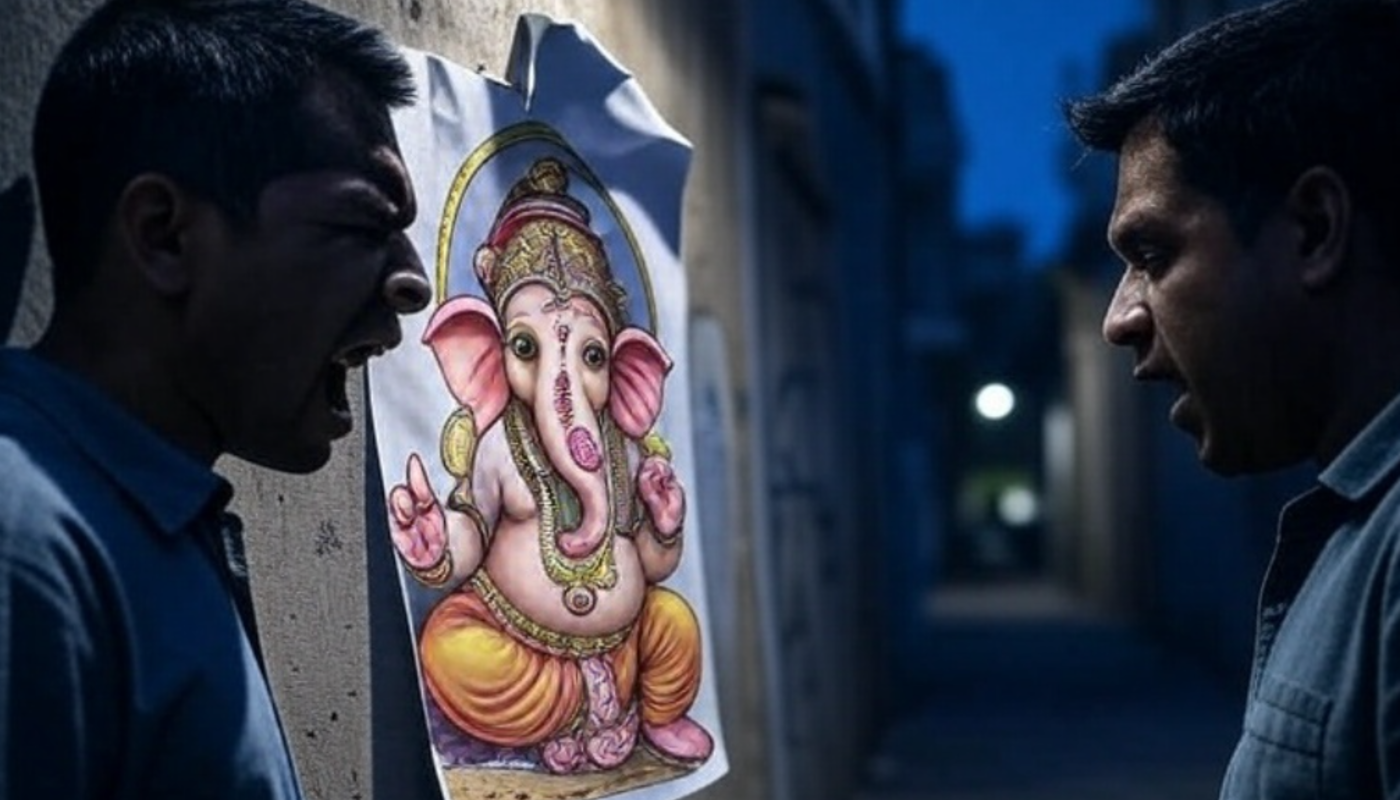
Case Summary
Two men vandalised Ganpati posters in Surat, Gujarat, and went on a rampage, damaging shops, vehicles, and CCTV cameras after their song requests were not played during Ganpati celebrations. The incident happened on the night of 21 August 2025 at Dr Hedgewar Nagar society in Vesu, where a Ganpati group had organised a welcome programme with music and a DJ. The event, delayed until 9.30 pm, had to be stopped soon after because of the 10 pm DJ curfew. Angered that their chosen songs were not played, the accused later returned to unleash violence. Around 2:00 am, the men, identified as Shiva Nahak and Shailesh Baria, tore down Ganpati posters, smashed the windows of two cars, damaged local shops, and broke CCTV cameras. They also threatened complainant Dhanraj Gawai, a member of the Ganpati group. Vesu police arrested them and booked the duo under sections 298, 324(2), 351(2), and 54 of the Bharatiya Nyaya Sanhita for damaging a place of worship, property destruction, and criminal intimidation.
Why it is Hate Crime ?
The primary category in this case is: Attack on Hindu religious representations. The subcategory under this is: Desecration of Hindu religious symbol. Icons and symbols or a religious representation of a spiritual ideal are widely revered in Hinduism. Iconography is of vital significance in the Hindu milieu. It helps connect people’s spiritual beliefs with the real world. Iconography within the Hindu faith takes several shapes and forms. Murtis are of most significance to Hindus, to which daily rituals, prayers and offerings are done. Besides the murtis, there are several other symbols which have deep significance in the Hindu faith – the Om and Swastika for example. Since these Hindu religious symbols hold paramount importance in Hinduism, any desecration of symbols, icons, murtis, religious representations and manifestations, is driven by animosity towards the faith itself which manifests itself through these murtis, icons and symbols. Therefore, any desecration of these Hindu religious symbols and representations is considered religiously motivated hate crimes under this category. The case from Surat has been added to the Hinduphobia Tracker under the category Attack on Hindu religious representations, with the subcategory Desecration of Hindu religious symbols. The actions of the accused extended beyond ordinary vandalism of property. By tearing down Ganpati posters during an ongoing festival, the men deliberately attacked a symbol central to Hindu worship. In Hinduism, religious iconography holds profound meaning. Whether in the form of idols, symbols such as Om and Swastika, or posters and images of deities, these representations are not decorative objects but sacred manifestations that connect the devotee to the divine. To desecrate such an image is to injure the spiritual fabric of the community and to strike at the faith itself. The Ganpati poster in this case was not a mere piece of paper on a wall. It was a religious representation associated with the celebration of Lord Ganesha, to whom prayers, offerings, and devotion were being directed. By targeting it, the perpetrators crossed the line from a dispute over music into the realm of religious hostility. The vandalism also took place within hours of a Ganpati celebration, which amplified its meaning as an affront to the sentiments of Hindus gathered in devotion. The harm in this case is not measured only by the material damage to posters, vehicles, and shops. It lies in the deliberate violation of what Hindus hold sacred. Lord Ganesha is one of the most venerated deities in the Hindu pantheon, and Ganesh Chaturthi is celebrated with reverence across India. Attacking a representation of Ganesha during this time amounts to a direct assault on the belief of millions of Hindus across the globe. This case, therefore, is not merely a matter of public disorder or mischief. It demonstrates how acts of iconoclasm against Hindu representations are employed to disrupt celebrations, mock devotion, and cause injury to religious sentiments. For this reason, the Surat incident has been added to the Hinduphobia Tracker as part of a continuing record of hate crimes directed at Hindu religious symbols and expressions.


Case Status
Arrested


Perpetrators Details
Perpetrators
Others
Perpetrators Range
From 2 To 5
Perpetrators Gender
male
 Sources




