Hindu community denied right to organise religious fairs during Durga Puja in Bangladesh; Home Advisor publicly denigrates Hindu rituals
 Bangladesh
  7 September, 2025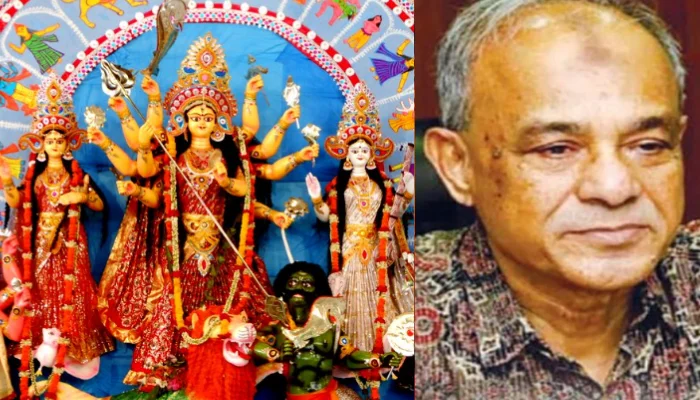
Case Summary
In Bangladesh, the Hindu community was barred from organising religious fairs during Durga Puja in pandals. This order was issued by Bangladesh's Home Advisor, Mohammad Jahangir Alam Chowdhury. The Home Advisor also made denigrating remarks on Hindu rituals and fairs, describing them as “gatherings of liquor and drugs.” According to media reports, during a preparatory meeting ahead of Durga Puja, Jahangir stated, “This time, fairs will not be permitted. However, one or two shops may be allowed, but only with the permission of puja celebration committees". When asked if committees had expressed concerns, he claimed they had not and that they were optimistic the Puja festival would be celebrated peacefully. Following this, Jahangir further denigrated Durga Puja fairs by saying, “During Puja, fairs are often arranged around mandaps where alcohol and drugs are consumed.” This drew condemnation from the Bangladeshi Awami League. On their official X handle, they stated: “The Home Affairs Adviser of the illegitimate Yunus government has shattered the spirit of Bangladesh’s Liberation War by making a vile remark against Hinduism. In his recent statement, Hindu faith was scorned and religious rituals were degraded as nothing more than ‘gatherings of liquor and drugs.’” Awami League added: “Such words are not only deeply disrespectful but also clear evidence of a dangerous attempt to incite religious hatred. Worship means devotion, prayer, joy, and celebration – yet the Adviser insulted the nation’s spiritual heritage by suggesting it is synonymous with drunkenness and addiction. This was not just an insult to one religion – it was an affront to the entire nation.” This case serves as a stark reminder of the ongoing persecution of Hindus in Bangladesh. Since the fall of Sheikh Hasina’s Awami League government on August 5, 2024, Bangladesh has plunged into chaos as Islamist extremists have taken advantage of the political turmoil to unleash a wave of terror and violence against the Hindu community. The Islamist mobs have attacked Hindu homes, burned them to the ground, and abducted women in a horrific descent into anarchy. Several temples have been destroyed in various parts of the Islamic country in a major crackdown on Hindus. Reports have exposed how Muslim students forced around 60 Hindu teachers, professors, and government officials to resign. Exiled Bangladeshi activist Asad Noor has also revealed that the minority Hindu community is now being coerced into joining ‘Jamaat-e-Islami’. Hindu religious events have been repeatedly targeted. On 6th September, a procession carrying Lord Ganesha’s idol was attacked in Chittagong. Ahead of Durga Puja, multiple incidents of idol vandalism occurred, including attacks in Mymensingh, Pabna, Rajshahi, Kishoreganj, and Dhaka. On 29th November, a violent Muslim mob attacked three temples in Patharghata, Chittagong, immediately after Jumma Namaz. The crackdown on Hindu voices has also escalated. On 30th November, Hindu journalist Munni Saha was arrested in Dhaka. Muslim mob attacks have increased in Bangladesh, for example, on 22nd May 2025, a Muslim mob carried out arson attacks selectively on Hindu homes in Dahar Mashihati village in Abhaynagar upazila in Jessore district of Bangladesh. Even ISKCON leader Chinmoy Krishna Das Prabhu and his aides have been targeted, and attempts have been made to ban ISKCON and suppress Hindu protests through sedition charges. These arbitrary actions point to a systematic pattern of persecution under Muhammad Yunus’s interim government.
Why it is Hate Crime ?
The primary category selected in this case is- Restriction/Ban on Hindu practices. The subcategory selected in this is- Administration restricting religious practice. In several cases, it is seen that the administration/state disallows a religious practice owing to prejudicial orders and concerns, targeted specifically against the Hindu community. Such restriction/prohibition would be considered documented as a hate crime because the orders are often a result of pressure by groups that harbour animosity towards Hinduism and Hindus. Often, the restriction by the authorities is driven by bias, hostility, or prejudice against the specific community being stopped from holding a religious practice, by pressure groups that harbour animosity towards Hindus, intrinsic to their faith. Since practices are intrinsic to the faith of the Hindus, such prejudicial restriction is considered a curtailing of the fundamental rights of the Hindu community. In several cases, for example, the authorities ban a Hindu religious practice due to pressure from groups opposed to the religion. In other instances the prohibition is selectively enforced against one religious group (Hindus) while others are allowed to proceed. There are still other cases where the authorities preemptively restrict a religious practice by Hindus because those who hold animosity towards Hindus may get “provoked” leading to them being violent, thereby assuaging the sentiments of those who hold animosity towards Hindus by curtailing the religious rights of Hindus. Such acts and orders are prejudiced, indicating discriminatory motives owing to the capitulation to groups that harbour animosity towards Hindus and therefore, would be categorized as a religiously motivated hate crime since the original pressure leading to the order itself is a result of hatred/bias/prejudice/religious hate against Hindus. Another primary category relevant in this case is- Hate Speech against Hindus. The subcategory selected is- Anti-Hindu slurs, mocking faith. Anti-Hindu slurs and the deliberate mocking of the Hindu faith owing to religious animosity involve the usage of derogatory terms, stereotypes, or offensive references to religious practices, symbols, or figures. One of the common anti-Hindu slurs used against Hindus is “cow-worshipper” and “cow piss drinker”. The intention of using this term is to demean and mock Hindus as a group and their religious beliefs since Hindus consider the cow holy. Additionally, some symbols and the slurs attached to them have a historical context that exacerbates the insult, hate, stereotyping, dehumanisation and oppression against Hindus. Cow worship has been used for centuries to denigrate Hindus, insult their faith and oppress Hindus specifically as a religious group. There has been overwhelming documentation about how cow slaughter has been used to persecute Hindus with cow meat being thrown in temples and places of worship. There has also been overwhelming documentation where cow meat (beef) has been force-fed to Hindus to either forcefully convert them to Islam or denigrate their faith. Apart from cow worship, the Swastika – which holds deep religious significance for the Hindus – has also been misinterpreted and distorted to use as a slur against Hindus. Similarly, the worship of the Shivling has been used by supremacist ideologies and religions to denigrate Hindus owing to religious animosity. Such slurs and denigration stem out of inherent animosity and hate towards Hindus and their faith, therefore, it is categorised as hate speech targeted at Hindus specifically owing to their religious identity. Bangladesh is a country where the Hindu community has long faced religious persecution and systematic discrimination because of their identity. This case, in which Hindus were barred from holding traditional fairs during Durga Puja and their rituals were publicly insulted, fits squarely within the pattern of religiously motivated hate crimes against Hindus. The first element of this case is the state’s act of restricting Hindu religious expression. By prohibiting Hindu fairs during Durga Puja, the authorities suppressed a core aspect of the festival and sought to erase its vibrant, public expression. Such suppression denied the Hindu community the visibility and dignity of practising its faith openly, reducing their religious identity to something confined and controlled. Hiding behind the pretext of making the celebrations “drug-free and alcohol-free,” the government in reality used this as a justification to single out Hindu spaces and traditions for restriction, portraying them as socially harmful. The second element lies in the demeaning and abusive language used by Home Advisor Mohammad Jahangir Alam Chowdhury. By describing Hindu religious fairs as nothing more than “gatherings of liquor and drugs,” he not only insulted one of the most sacred rituals for Hindus but also cast the entire community in a false and degrading light. His words vilified Hindu practices, misrepresented them as centres of vice, and spread the notion that Hindu religious identity is synonymous with immorality. This language dehumanised Hindus and legitimised discrimination against them. Together, these two elements — state-backed suppression of a religious festival and hate-filled rhetoric directed at Hindu rituals — demonstrate the hallmarks of a hate crime. The actions were targeted directly at the Hindu community, motivated by religious identity, and resulted in both the restriction of their rights and the public humiliation of their faith. Such conduct also exacerbates Hindu vulnerability in Bangladesh, a country where Hindus have repeatedly suffered violence, displacement, and systemic neglect. By associating Hindu rituals with drugs and alcohol, the state not only insulted a minority community but also fuelled narratives that make them more susceptible to mob violence and further state-sanctioned repression. This was not a neutral policy decision; it was a calculated, religiously motivated assault on the Hindu community. By barring Hindus from observing their traditions in full and degrading their religious practices, the Bangladeshi authorities committed an act that meets all the parameters of a religiously motivated hate crime. It was an organised attempt to erase and humiliate Hindus in public life, deepen their marginalisation, and stigmatise their identity. Therefore, this case is being added to the hate crime database in the Hinduphobia Tracker.


Case Status
Unknown


Perpetrators Details
Perpetrators
State and Establishment
Perpetrators Range
One Person
Perpetrators Gender
male
 Sources




