Minor Hindu boy falsely accused of blasphemy, threatened and targeted by members of Muslim community in Bangladesh; father attacked and shop looted
 Pirojpur District, Bangladesh
  15 May, 2025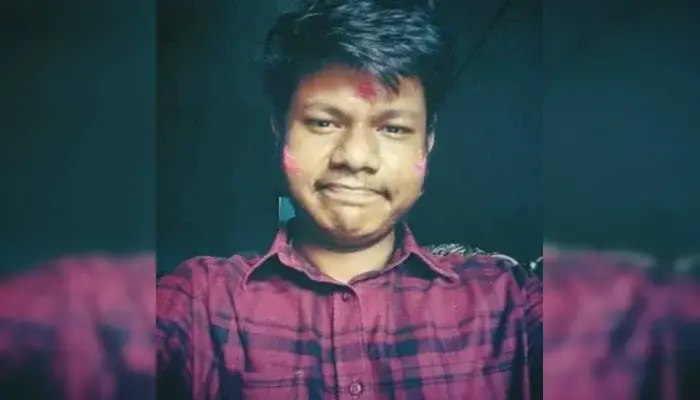
Case Summary
In Pirojpur district of Bangladesh, a 17-year-old Hindu boy named Kaushik Saha was given death threats after being falsely accused of blasphemy by members of the local Muslim community. Kaushik Saha was the son of Subrata Saha, a cloth merchant from Jagatpotti village in Ward No. 7 of Swarupkathi municipality. He was accused of posting blasphemous comments about the Prophet Muhammad on Facebook. Mohammad Abul Kalam Azad, the local leader of the Jamaat-e-Islami, called for the strictest punishment for anyone who insulted the Prophet. Local Muslims gathered and protested, demanding Kaushik’s immediate arrest and exemplary punishment. They also threatened and attacked his father, Subrata Saha, and looted his shop. Subrata Saha stated that he was unaware of the status Kaushik had posted, but said that Kaushik had replied to someone else’s post. Under pressure from both the community and authorities, he surrendered his son to the police. The officer in charge of Nesarabad police station, Mohammad Boni Amin, confirmed that Kaushik had been detained at the station and that legal proceedings and investigation were ongoing. The incident created unrest in the area, and police acted swiftly to maintain order. This incident is one of the several incidents of the continued persecution of Hindus in Bangladesh, which has only increased manifold since the fall of Sheikh Hasina’s Awami League government on August 5, 2024. After her violent ouster, Bangladesh has plunged into chaos as Islamist extremists have taken advantage of the political turmoil to unleash a wave of terror and violence against the Hindu community. The Islamist mobs have attacked Hindu homes, burned them to the ground, and abducted women in a horrific descent into anarchy. Several temples have been destroyed in various parts of the Islamic country in a major crackdown on Hindus. Reports have exposed how Muslim students forced around 60 Hindu teachers, professors, and government officials to resign. Exiled Bangladeshi activist Asad Noor has also revealed that the minority Hindu community is now being coerced into joining ‘Jamaat-e-Islami’. Hindu religious events have been repeatedly targeted. On 6th September, a procession carrying Lord Ganesha’s idol was attacked in Chittagong. Ahead of Durga Puja, multiple incidents of idol vandalism occurred, including attacks in Mymensingh, Pabna, Rajshahi, Kishoreganj, and Dhaka. On 29th November, a violent Muslim mob attacked three temples in Patharghata, Chittagong, immediately after Jumma Namaz. The crackdown on Hindu voices has also escalated. On 30th November, Hindu journalist Munni Saha was arrested in Dhaka. Muslim mob attacks have increased in Bangladesh, for example, on 22nd May 2025, a Muslim mob carried out arson attacks selectively on Hindu homes in Dahar Mashihati village in Abhaynagar upazila in Jessore district of Bangladesh. Even ISKCON leader Chinmoy Krishna Das Prabhu and his aides have been targeted, and attempts have been made to ban ISKCON and suppress Hindu protests through sedition charges. These arbitrary actions point to a systematic pattern of persecution under Muhammad Yunus’s interim government.
Why it is Hate Crime ?
This case has been added to the tracker under the primary category- Attack not resulting in death. Within this, the subcategory selected is- Attacked over 'Blasphemy'. Blasphemy essentially refers to the desecration of anything which is held sacred/holy to a group of people. However, for religious supremacist groups, the elements of ‘blasphemy’ are ever-changing, shifting and expanding – leading to infringement on the rights of other religious groups, freedom of speech and expression, threats and even physical violence. There are instances where blasphemy is also used as a dog whistle to target Hindus owing to intrinsic animosity towards Hinduism. There are several instances where stating truths as mentioned in the non-Hindu doctrine itself has led to unmitigated violence against Hindus. There have also been instances where non-Hindus have themselves created a ‘blasphemous’ situation, like placing a Quran in a temple, to use it as an excuse to attack Hindus. Essentially, Blasphemy charges are often made up and/or are used to shut down any form of criticism of non-Hindu faiths and as a tool to target Hindus. Any physical violence over Blasphemy charges against Hindus are foundationally based on animosity for Hindus and their faith owing to religious supremacist ideologies, therefore, such attacks would be documented as religious motivated hate crimes under this category. The other sub-category relevant here is: - Attacked for Hindu identity. In several cases, Hindus are attacked merely for their Hindu identity without any perceived provocation. A classic example of this category of religiously motivated hate crime is a murder in 2016. 7 ISIS terrorists were convicted for shooting a school principal in Kanpur because they got ‘triggered’ seeing the Kalava on his wrist and tilak that he had put. In this, the Hindu victim had offered no provocation except for his Hindu religious identity. The motivation for the murder was purely religious, driven by religious supremacy. Such cases where Hindus are targeted merely for their religious identity would be documented as a hate crime under this category. This case has been added to the tracker because a minor Hindu boy and his father were directly targeted with death threats, assault, and looting by a Muslim mob in Bangladesh over unsubstantiated blasphemy charges. Often in such cases, the accusations are merely a pretext to incite communal violence and assert Islamic dominance over a vulnerable Hindu minority. Such incidents are not isolated but occur within a broader context of systematic discrimination and violence against Hindus in Bangladesh. The use of blasphemy allegations to incite mob violence and demand extreme punishments disproportionately affects religious minorities, particularly Hindus, and serves to intimidate and suppress them and their faith. This case, therefore, is not an isolated episode but part of a deeply entrenched pattern of religiously motivated hate and persecution of the Hindu community in Bangladesh. From Kanpur in India’s northern plains to the southern metropolis of Bengaluru, from Kolkata in the east to Hyderabad in the south, protests in the name of blasphemy have erupted in almost every corner of the country as Islamists took to the streets, running amok and shouting “Sar Tan Se Juda” chants over the perceived belief of blasphemy against the Prophet. The most recent example of Muslims resorting to beheading threats and street violence in the name of 'blasphemy' is that of ex-BJP leader Nupur Sharma. This tactic of intimidation aims to silence dissent and suppress freedom of expression, particularly in religious discourse. It aims to instil fear in the broader community. Islamists use this tactic to settle personal scores with Hindu and Christian families by levelling fabricated charges of blasphemy against them, which causes outrage and paints a target behind them. The misuse of blasphemy laws in Muslim-majority countries like Pakistan and Bangladesh has long been documented, and this trend is increasingly visible in India too, where Islamist mobs exploit the charge to settle scores with Hindus. The disproportionate targeting of Hindus is not accidental but stems from deep-rooted religious prejudice, with blasphemy allegations serving as an instrument of social control and communal suppression. Even in this case, no due process was followed, no evidence was examined, and yet the minor boy was arrested, and his father was violently attacked. The mob’s verdict replaced the rule of law. Beyond religious animosity, economic suppression was also at play, as shown by the looting of the father’s shop. This reflected how Hindu livelihoods are systematically undermined in Bangladesh, where communal hostility often overlaps with material gain. The administrative bias was equally visible. The police detained the minor boy solely based on unverified claims. This indicates not only a failure of justice but also a deep institutional prejudice against Hindus in Bangladesh. This case, therefore, is not an isolated episode but part of a deeply entrenched pattern of religiously motivated hate and persecution of Hindus in Bangladesh. Therefore, this case is being added to the hate crime database. Disclaimer: The Hinduphobia Tracker records incidents based on when the victim’s ordeal began. In this case, the ordeal began with the blasphemy accusations and the subsequent arrest of Kaushik Saha. Therefore, for documentation purposes, the date of the incident has been recorded as May 16, 2024, the day on which he was arrested.
Victim Details
Total Victim
2
Deceased
0
Gender
- Male 2
- Female 0
- Third Gender 0
- Unknown 0
Caste
- SC/ST 0
- OBC 0
- General 0
- Unknown 2
Age Group
- Minor 1
- Adult 1
- Senior Citizen 0
- Unknown 0


Case Status
Arrested


Perpetrators Details
Perpetrators
Muslim Extremists
Perpetrators Range
Unknown
Perpetrators Gender
unknown
 Sources




