Hindu customs defiled; Hindu villagers fed chicken biryani on Janmashtami by Muslim Pradhan in Farrukhabad
 Farrukhabad, Uttar Pradesh, India
  15 August, 2025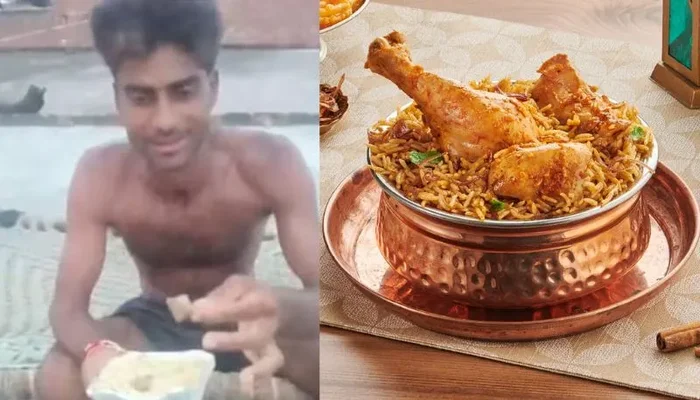
Case Summary
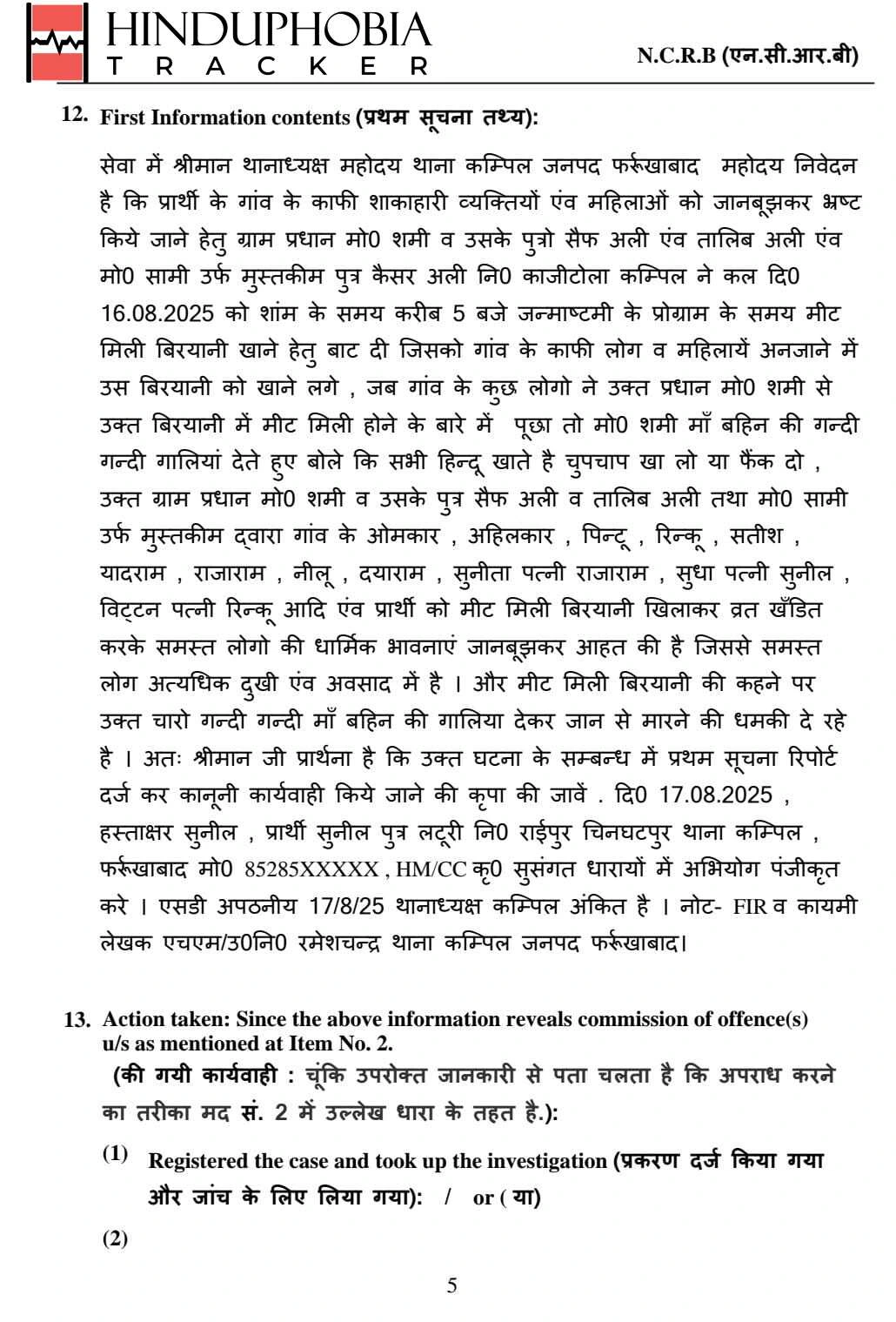
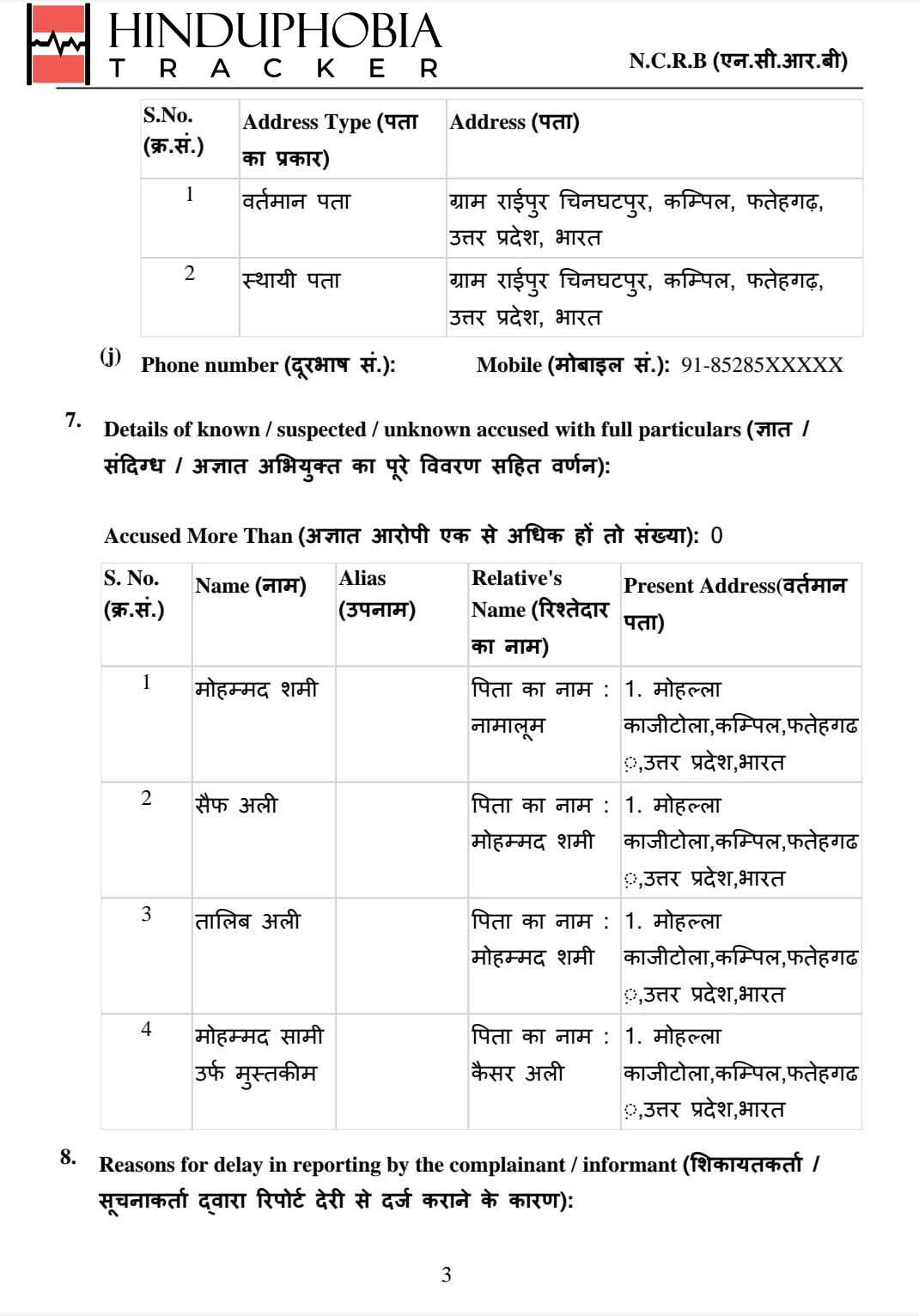
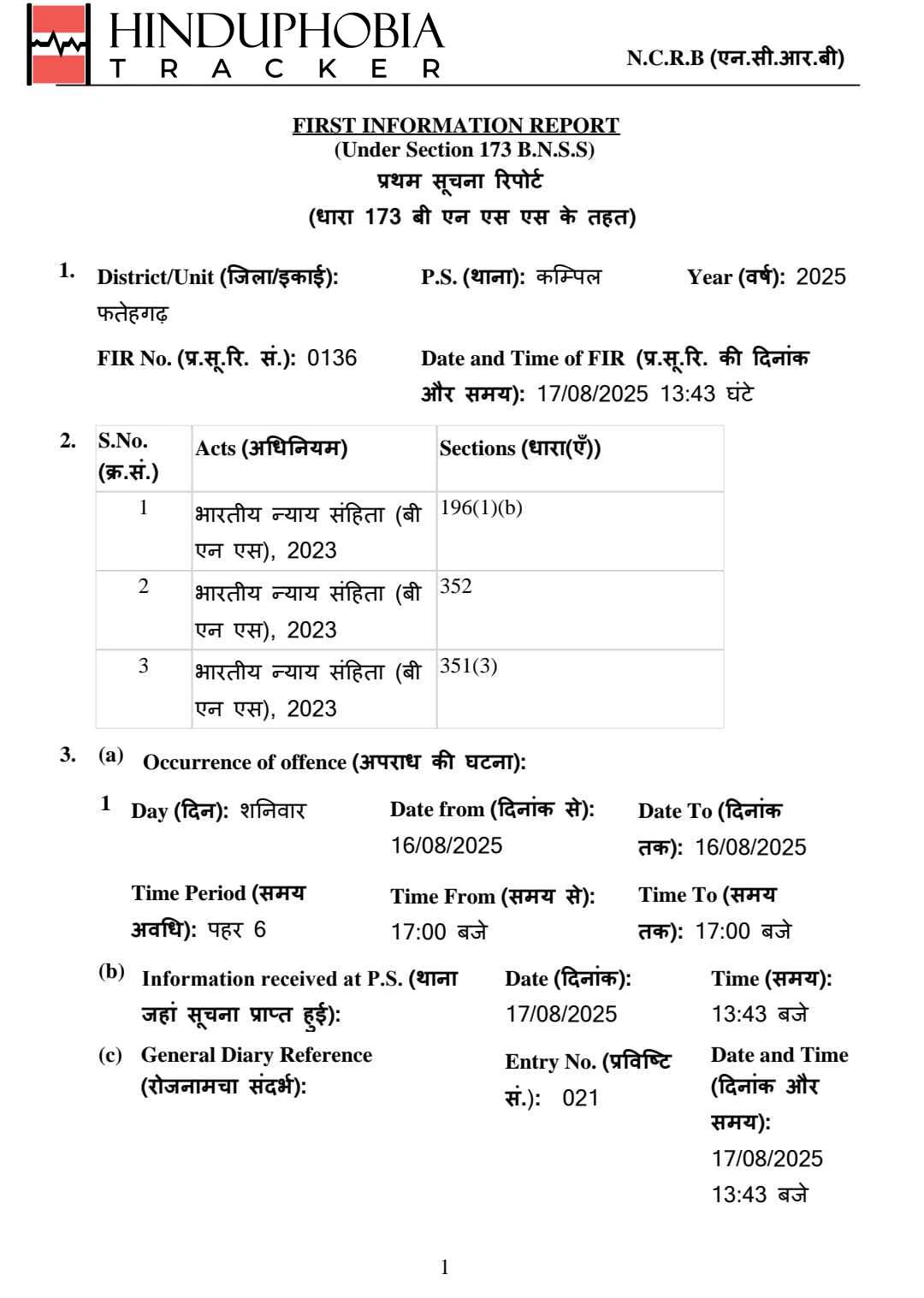
In Chinghatpur village of Farrukhabad district, Uttar Pradesh, Hindu religious sentiments were insulted when multiple Hindu villagers were deceptively given chicken in food packets in the name of flood relief by a Muslim man named Mohammad Shami, who was also the Pradhan of the village. According to reports, due to the Ganga river flowing 20cm above the danger mark, about 50 villages near the Farrukhabad district were flooded, including Chinghatpur village. During this time, Gram Pradhan Shami Mohammad distributed food packets to the villagers in the name of floor relief. The distribution coincided with Janmashtami, when most Hindu villagers were fasting. However, it was discovered that some of the packets given to Hindu villagers contained meat and chicken. Some villagers who began eating the food discovered pieces of chicken and bones in the biryani. One of the Hindu villagers, named Sunil, recorded a video of the biryani, highlighting the presence of meat and bones in the packets and posted it on social media. The video quickly went viral, drawing the attention of Hindu organisations. Hindu Mahasabha, Bajrang Dal and VHP workers staged protests outside Kampil police station and lodged complaints regarding the incident. Following this, police registered a case under sections 196 (promoting hatred between religions, castes or communities), 352 (breach of peace) and 351 (criminal intimidation) of the IPC against Shami Mohammad, his sons Saif and Talib, and Mohammad Sami alias Mustafa, and arrested them. Many Hindu villagers described how the distribution of meat on a Hindu festival disrupted their fasts and caused anger and distress within the community. Some villagers expressed that the act was deliberate with the intention to corrupt their religious observances. Furthermore, when some villagers went to confront the Pradhan about the situation, he became aggressive and abused them, telling them to eat either the food or throw it away. Pradhan’s wife, Husnuma Begum, claimed that her husband had only intended to help flood-affected people and did not anticipate facing legal action. She claimed that her husband was being deliberately framed. On the other hand, multiple villagers stated that they were receiving threats to withdraw the case. Police claimed that non-vegetarian biryani had been prepared for the Muslim-majority village of Eklahra and soybean biryani for the Hindu-majority Raipur Chinghatpur village, but the non-vegetarian packets were mistakenly delivered to Raipur Chinghatpur. Despite these findings, tension remained high in the village, and police were deployed to prevent any further disturbance.
Case Images
Why it is Hate Crime ?
This case has been added to the tracker under the primary category of - Attack on Hindu religious representations. Within it, the sub-category selected is - Defiling religious customs. Sanatan Dharma is not a religion of one book, which is to say that while it has religious scriptures that form the central tenets of the faith, there are several traditions followed through thousands of years, mostly passed from generation to generation orally. There are several such customs and traditions that are followed by various Hindus and Hindu sects. Defiling of these traditions and customs is a breach of an individual or group’s religious practices. Such practices can range from dietary restrictions like not eating non-vegetarian food for a certain period of the year, not eating non-vegetarian food at all, not eating beef since the cow is considered holy in Hinduism, the sanctity of religious customs followed in the house (like many ISCKON devotees), etc. Any malicious action leading to the breach of such traditions or defilement of these traditions owing to animosity towards the faith or for the sake of activism stems not only from the lack of faith in the religion itself but also from disregard for the faith of the devotees who follow the customs/traditions and implicit bias against the faith, the tradition itself. Since these specific traditions are central to the faith of the devotees of that specific sect of Hindus, any non-compliance with these traditional rules would be considered a religiously motivated hate crime. The second primary category selected here is - Attack not resulting in death. Within it, the sub-category selected is - Attacked for opposing radicals or trying to save victim. In several cases, Hindus are attacked for opposing religiously motivated crimes being committed against a fellow Hindu or simply for voicing an opinion opposing radical elements, who either have in the past or continue to persecute Hindus. In such cases, the initial attack against the victim, against which the Hindu was trying to defend the victim, would also need to be classified as a religiously motivated hate crime. Since the initial crime itself was religiously motivated and the subsequent crime of attempting to save the victim or speaking against the radical elements ends up inviting a violent attack, it would also be classified as a religiously motivated hate crime under this category. This case has been added to the tracker because Hindu villagers were fed meat during Janmashtami by the Muslim perpetrators. Janmashtami is one of the most important Hindu festivals, celebrated as the birth of Lord Krishna. On this day, Hindus observe strict fasts, refraining from even basic foods, let alone non-vegetarian items, as an act of devotion and purity. To deliberately distribute meat on this occasion was therefore an act of targeted religious violation and a calculated hate crime against Hindus. The intent was to religiously defile Hindu villagers’ religious observances, making it a clear act of Hinduphobia. Such deliberate defilement of Hindu customs is not a neutral act but was driven by conscious disregard and contempt for Hindu religious belief. When sacred customs are deliberately defiled by non-Hindu perpetrators, the act symbolises not only personal insult but can also be considered a direct assault on the Hindu faith itself. The accused was not a random person or an outsider; he was the Pradhan of the village, a man who would have known the demography and religious identity of the villagers very well. Such an oversight, as police later suggested, could not have happened in reality. His position of authority indicates knowledge of the sensitivities of the occasion, and his actions reflected implicit bias and religious intolerance aimed at humiliating and provoking Hindus by attacking their sacred observances. This pattern has been seen time and time again, where Muslim perpetrators have deliberately used meat as a tool to insult and defile Hindu traditions and customs. Since many Hindu sects strictly abstain from meat—especially during festivals—forcing meat on them is not only an attack on individuals but a direct assault on Hindu religious identity and sentiment. It amounts to symbolic violence, in which the act of feeding meat becomes a weapon to desecrate the spiritual sanctity of a community. Furthermore, when villagers confronted the Pradhan, he did not apologise or attempt to rectify the situation. Instead, he reacted aggressively, abused them, and told them to either eat the food or throw it away. This hostile reaction further proved the act was deliberate rather than a mistake. Since such actions stem from religious animosity towards the Hindu faith, this case has been added to the tracker. In the Chinghatpur case of Farrukhabad, where Hindu villagers were given chicken biryani on the occasion of Janmashtami fasts, the police were quick to dismiss the matter as an “accidental mix-up” of packets. They said that the non-vegetarian biryani prepared for a Muslim-majority village was mistakenly delivered to the Hindu-majority village. However, despite this official version, local Hindu residents confirmed that the distribution of meat-laden packets on the very day of Janmashtami — when most villagers were fasting — is deliberate and deeply insulting. Many testified that when they confronted the Pradhan, instead of clarifying or apologising, he abused them and told them to eat or throw away the food. This naturally raises doubts about the “mistake” theory. The police, in many such cases, where the motive behind the crime is obvious but not explicitly mentioned, deny that the crime committed was in any way motivated by a religious bias or say that there was ‘no communal angle’ to the crime. Several factors are generally at play here. Many a time, the police downplay incidents of low-level communal crime because it is their jurisdiction comes under question. The police also often say that there was ‘no communal angle’ to a crime when there was one because they wish to ensure that, owing to the crime already committed, there is no further flare-up in the area. Likewise, the Left media and the leftist elite are also inclined to emphasise this "no communal angle" trope, especially wherever the victim of the crime is a Hindu. However, only a police statement or a media report, for instance, cannot be enough to determine whether there is a communal angle present in the crime that has been committed. In fact, to determine whether the crime is communal in nature or not, we need to give emphasis to the ground realities. For example, in the case of Rinku Sharma, the Bajrang Dal activist who was mercilessly stabbed in his house in front of his family members in Delhi’s Mangolpuri area in the year 2021, the leftist media and the leftist ecosystem had tried to peddle that there was no communal angle to the crime. Even the police denied that the crime was communal in nature. However, Opindia spoke to several people who are on the ground with the family of Rinku Sharma, and we were told that the communal tension in the area is palpable. The family of Rinku Sharma has said that the Muslims of the area held a grudge against Rinku ever since he celebrated the Ram Mandir verdict Like the case of Rinku Sharma, those cases where even if the police have denied a communal angle or the leftist media have gone on an overdrive to peddle the ‘no communal angle’ trope, the ground reality, like the victim’s family or relative's testimonies, make it clear that there was an obvious religious bias that led to the crime, will be documented in this tracker. Therefore, despite the police claim of an “accidental mix-up,” the testimonies of the locals, the timing of Janmashtami, and the aggressive behaviour of the Pradhan point to a clear communal targeting of Hindus, and this case has rightly been included in the hate tracker.


Case Status
Case sub-judice


Perpetrators Details
Perpetrators
Muslim Extremists
Perpetrators Range
From 2 To 5
Perpetrators Gender
male
 Sources




