Hindu man murdered over relationship with a Muslim girl; accused publicly slit victim's throat near a mosque
 Koppal, Karnataka, India
  2 August, 2025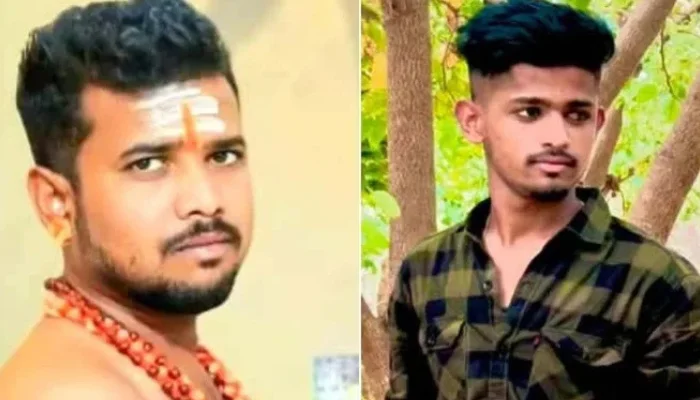
Case Summary
In Koppal, Karnataka, a Hindu Dalit man named Gavi Siddappa Nayak was brutally murdered by a Muslim man named Sadiq Kolkar. The accused killed the victim because he was in a relationship with a Muslim girl. The accused had committed the heinous crime in full public view, near a mosque. The accused was supported by his four unidentified accomplices. According to media reports, the incident took place in Ward Number 3 of Koppal city at around 8 pm. Sadiq Kolkar attacked Gavi Siddappa Nayak with a machete. He was waiting for Gavi Siddappa near a mosque. When Gavi arrived on a motorcycle via Bahaddur Bandi Road, Sadiq launched a vicious attack, slitting his throat and killing him on the spot. Eyewitnesses and local residents remarked that such a level of targeted violence was unprecedented in the city’s history. Reports also confirmed that Sadiq had uploaded an intimidating video to his Instagram status, brandishing a machete just hours before the attack. As per media reports, the deceased victim, Gavi, had been in a relationship with a Muslim girl for the past two years. Their relationship had been the subject of several community meetings and panchayats. Despite social pressures and religious differences, the couple maintained their relationship, defying repeated opposition from the woman’s family and community. Sadiq himself had previously been in a relationship with the same girl. After their relationship ended, she began dating the deceased victim, Gavi, which greatly enraged Sadiq. There had been multiple confrontations between Sadiq and Gavi, yet neither the community leaders nor law enforcement took preventive measures. Ultimately, Sadiq resorted to killing Gavi. After the murder, Sadiq voluntarily surrendered at the city police station, where he confessed to the crime. A complaint was registered against him and four others under Section 103(1) of the Bharatiya Nyaya Sanhita (BNS) 2023 and Section 3(2)(v) of the SC/ST (Prevention of Atrocities) Act, 1989. Police recovered two machetes from the crime scene. However, investigators stated that Sadiq did not act alone. They stated that at least two other youths were involved in the attack, and a search was underway to apprehend them. SP Dr Ram Arasiddy and Ballari IGP Varthika Katiyar visited the scene. This incident further heightened communal tensions in the area.
Why it is Hate Crime ?
This case has been added to the tracker under the primary category- Men attacked for being associated with non-Hindu women. Within this, the subcategory selected is- Attacked/killed for being associated or suspicion of being associated with Muslim woman. There have been several cases documented of Hindu men/boys being attacked specifically by Muslim groups/mobs for merely being associated or suspected of being associated or being seen with a Muslim woman in public. In most such cases, the Hindu man is not in a relationship with the Muslim woman; however, the mob proceeds to threaten and/or assault the Hindu man for merely being associated with the Muslim woman in any capacity. The rise of such crimes stems from a particularly sinister campaign run by several Muslim ideologues and activists. The campaign claims that Hindu men are attempting to ‘lure’ Muslim women into relationships to ensure that Muslim women leave their faith and follow Hinduism. The propaganda has been spearheaded with the help of WhatsApp groups and the extensive use of social media, without evidence of the same. In many cases, pamphlets were fabricated to lend credence to this campaign. The root of this campaign lies in the fact that several cases of sectarian crimes against Hindu women in relationships with Muslim men have been documented. In such cases, Hindu women have often been forced/pressured to convert to Islam, assaulted, threatened and even murdered specifically owing to their religious identity and their refusal to give up that religious identity to adopt Islam. To delegitimise the suffering of Hindu women when such sectarian crimes are committed against them, the theory of ‘Bhagwa Love Trap’ was floated by sections of the Muslim community. As this theory gained traction, Muslim mobs started targeting Hindu men who were seen with Muslim women. In several such cases, the Hindu man was assaulted merely for offering to drop a Muslim woman in his vehicle or for being friends. The differentiating factor between such cases and legitimate cases of Hindu women being targeted while in a relationship with Muslim men is that there is no sectarian violence, and force/pressure to convert. The nature of sectarian violence against Hindu women is not about two adults in a consensual relationship, working together, studying together, or even marrying each other, where religious considerations are declared. In this category of crimes, it is pertinent to remember that in none of these cases is there an element of the Hindu man masking his identity or forced religious conversion. Such cases are driven by specific religious motivations and against the religious identity of the victim and are therefore qualified as hate crimes. In this case, a Hindu man, Gavi, was brutally killed by a Muslim man named Sadiq for having a relationship with his former Muslim girlfriend. Since the motive for the crime isn't laid out explicitly, people may argue that it is possible that the crime was not motivated by religion, and as such, it should not be included in this tracker. Therefore, at this point, it becomes essential to understand why then, we have added this case to the hate crime database. In this case, two primary factors establish that it was a religiously motivated hate crime. The first component is that the Hindu youth was in a relationship with a Muslim girl. This even had caused conflicts and tensions in the village and among the respective communities of the Hindu deceased and the Muslim girl. Second, this case should be included in this database because the victim is no longer alive, and there is a precedent of such cases turning out to be hate crimes against Hindu men. In several cases where a Hindu man is in a relationship with a Muslim woman, the family of the Muslim woman or some members of the Muslim community end up assaulting or murdering the Hindu man because of their disapproval of the relationship. In such cases, the relationship is consensual, and the man and woman are with each other, knowing each other’s identity fully well. Such cases are often called ‘honour killings’ and are seen in associations across religions, castes, economic strata, etc. In several such cases, the motivations for the violence or murder are stated and clear. For example, in some cases, the perpetrators would clearly mention what their main motivation to commit the crime was, whether it was because the partner was economically weaker, from a different caste or religion. In some cases, however, the motives are not stated and/or reported. To determine whether such cases are religiously motivated hate crimes, in the absence of a clearly stated motive, one has to understand what could possibly be the main factor that could lead the Muslim perpetrator to kill the Hindu man. For the purpose of this tracker, we would only be looking at cases where one of the determining factors of the crime is religion, which is to say that the man belongs to the Hindu faith and the woman to a non-Hindu faith. In such cases, even if the motivation is not stated, it can be said that the determining factor or at least one of the main considerations, leading to the crime, would be the religious identity of the Hindu man, especially if the woman in the relationship is a Muslim. In the Islamic faith, a marriage or a relationship is deemed illegitimate if the non-Muslim partner does not convert to Islam. For those who practice the faith, a Muslim girl dating a Hindu man becomes the main point of religious animosity. Because of the ingrained element of religious supremacy in Islam, even if the motivations are not explicit, it can reasonably be concluded that one of the determining factors of the assault or murder committed by the Muslim perpetrator against a Hindu man is religious animosity. In this case, the brutal killing of Gavi by the Muslim accused demonstrated that the disproportionate level and intensity of violence was far beyond a mere dispute over a relationship. It was, in fact, a premeditated attack on a Hindu victim for being involved with a Muslim girl. Further, reports stated that the accused acted with the support of several accomplices and had posed with his machete on Instagram just hours before committing the crime. By brazenly filming himself with the murder weapon hours before the murder and uploading it on social media, Sadiq openly glorified the impending act. This signals that he saw it not as a crime, but as a ‘heroic’ communal duty. Furthermore, executing the killing right outside a mosque, in full public view, further underscores how he wished to make a bold spectacle of the act, not conceal it. His public surrender and lack of remorse reflect a radicalised mindset, emboldened by the belief that such violence carried not punishment but community endorsement, suggesting he was confident of support from his own people rather than fearing any repercussions. The calculated nature of the violence, coupled with the symbolic display of weaponry, highlights the deep-rooted hostility behind the crime. Gavi’s life was cruelly taken not only as a result of personal vengeance but as a manifestation of communal hatred. As this case is a clear demonstration of a crime motivated by religious animosity, it is being added to the hate crime database. Disclaimer: Media reports do not mention the identities of the perpetrator's accomplices involved. The Hinduphobia Tracker records crimes committed by non-Hindus against Hindus. Therefore, a conservative estimate has been used, and the perpetrator count is recorded as '1', referring to Sadiq alone. The report would be updated whenever the identity of the other accused is revealed.
Victim Details
Total Victim
1
Deceased
1
Gender
- Male 1
- Female 0
- Third Gender 0
- Unknown 0
Caste
- SC/ST 1
- OBC 0
- General 0
- Unknown 0
Age Group
- Minor 0
- Adult 1
- Senior Citizen 0
- Unknown 0


Case Status
Case sub-judice


Perpetrators Details
Perpetrators
Muslim Extremists
Perpetrators Range
One Person
Perpetrators Gender
male
 Sources




