Muslim man impersonates Hindu saint in Shamli, Uttar Pradesh, caught after residing as temple priest for 10 years
 Shamli, Uttar Pradesh, India
  3 August, 2015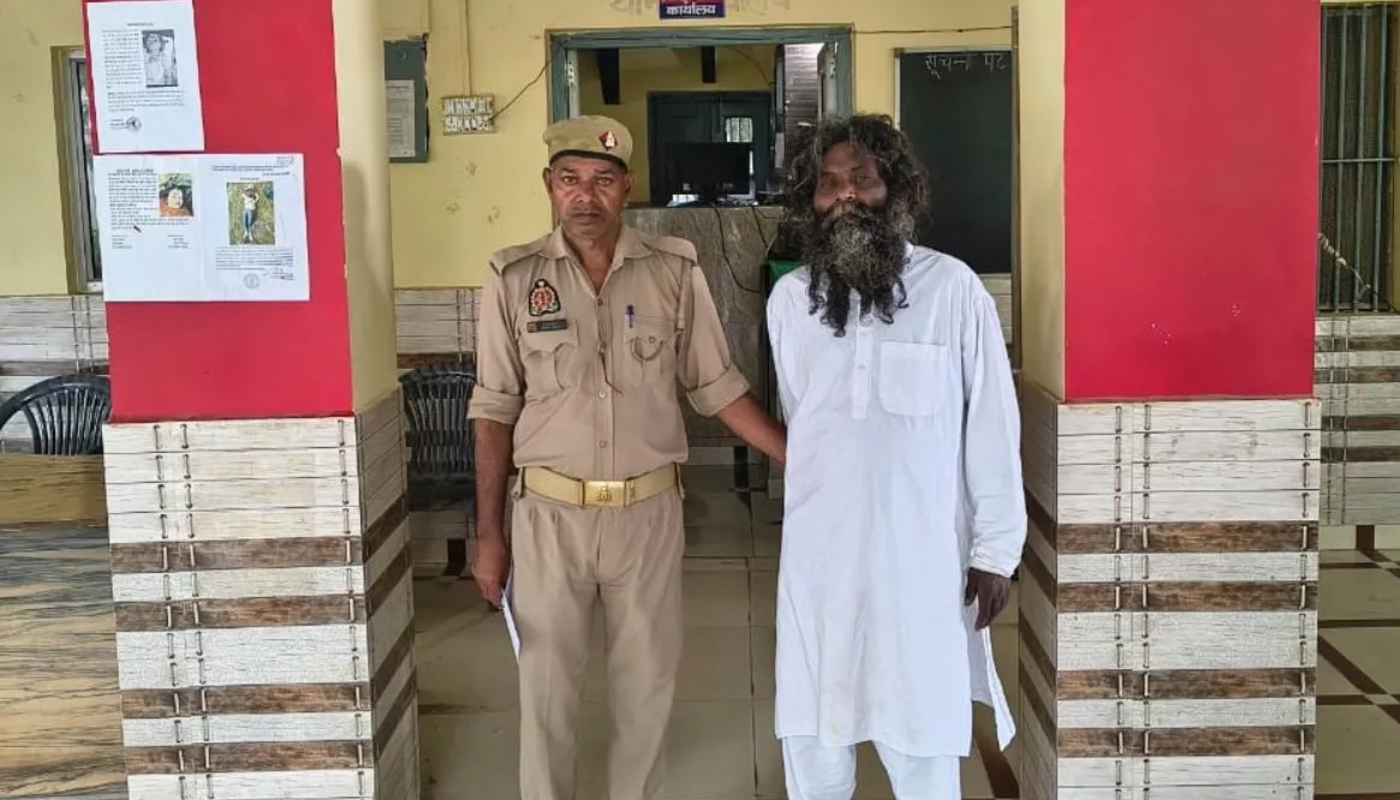
Case Summary
A Muslim man named Imamuddin Ansari, originally from Alipurduar district in West Bengal, was arrested in Manti Hasanpur village, Shamli, Uttar Pradesh, after living there for two years while pretending to be a Hindu Mahatma under the name "Baba Bengalinath." The man had previously resided in Saharanpur, Uttar Pradesh, since 2015, using a fake identity and Aadhaar card to pose as a Hindu ascetic. His deception extended to multiple locations, including Nakur and later Manti Hasanpur, where he built a hut in a local field, reportedly smoked it to perform rituals, and began collecting donations to construct a Shani Dev temple. The village head had granted him land based on his request for temple construction. Suspicion arose when some villagers noted that Baba frequently visited West Bengal. Upon investigation, the police found two Aadhaar cards and an identity card, one in the name of "Baba Bengalinath" and the other identifying him as Imamuddin Ansari, son of Mohammad Ansari from West Bengal. During questioning, he admitted to being a Muslim and revealed that he had married a Muslim woman in Bengal, with whom he had a son. Despite this, he continued to publicly identify as a Hindu monk named Vijay or Bengalinath. Authorities confirmed that Imamuddin had created a fraudulent identity and misled locals about his religion and background. The Intelligence Bureau (IB) was alerted and was involved in the investigation. West Bengal Police also initiated a probe to verify his identity and background. Following his arrest, Imamuddin Ansari was presented before a court and sent to jail.
Why it is Hate Crime ?
The primary category in this case is: Attack on Hindu religious representations. The first subcategory under this is: Defiling religious customs. Sanatan Dharma is not a religion of one book, which is to say that while it has religious scriptures that form the central tenets of the faith, there are several traditions followed through thousands of years, mostly passed from generation to generation orally. There are several such customs and traditions that are followed by various Hindus and Hindu sects. Defiling of these traditions and customs is a breach of an individual or group’s religious practices. Such practices can range from dietary restrictions like not eating non-vegetarian food for a certain period of the year, not eating non-vegetarian food at all, not eating beef since the cow is considered holy in Hinduism, the sanctity of religious customs followed in the house (like many ISCKON devotees), etc. Any malicious action leading to the breach of such traditions or defilement of these traditions owing to animosity towards the faith or for the sake of activism stems not only from the lack of faith in the religion itself but also from disregard for the faith of the devotees who follow the customs/traditions and implicit bias against the faith, the tradition itself. Since these specific traditions are central to the faith of the devotees of that specific sect of Hindus, any non-compliance with these traditional rules would be considered a religiously motivated hate crime. The second subcategory under this is: Breaking rules of places of worship. Sanatan Dharma is not a religion of one book, which is to say that while it has religious scriptures that form the central tenets of the faith, there are several traditions followed through thousands of years, mostly passed from generation to generation orally. One of these oral traditions or written traditions is the rules of specific temples. Certain temples have rules which are traditional rules, dependent on the worship of the presiding deities. These rules and traditions have been followed for thousands of years whether they find scriptural mention or not. Such traditions are based on the nature and rules of worship of the presiding deity of that temple. Any non-compliance of these traditions owing to animosity towards the faith or for the sake of activism stems not only from the lack of faith in the presiding deity but also disregard for the faith of the devotees of that deity/temple and implicit bias against the faith, the tradition and the deity itself. Since these specific traditions are central to the faith of the devotees of that specific temple and presiding deity, any non-compliance with these traditional rules would be considered a religiously motivated hate crime. Here, the Muslim accused's prolonged impersonation of a Hindu saint under the name "Baba Bengalinath" constitutes a direct desecration of both the sanctity of Hindu religious customs and the long-preserved norms governing places of worship. His actions were not simply deceitful in a civic or legal sense; they represent a deliberate violation of foundational Hindu traditions that safeguard the authenticity of spiritual life and worship. In Sanatan Dharma, religious roles, particularly that of a saint or priest, are not merely positions but sacred obligations. These roles carry responsibilities rooted in millennia of orally transmitted traditions and scriptural disciplines. Only individuals genuinely initiated into these traditions, often through lineage or lifelong study and personal commitment to spiritual discipline, are accorded the honour to lead rituals or accept religious offerings. Imamuddin, a practising Muslim man, neither belonged to this tradition nor bore its values. By assuming the garb and title of a Hindu saint, constructing a hut for religious use, performing rituals, and even collecting donations to build a Shani Dev temple, he deliberately misrepresented himself within a sacred framework that expressly forbids such misappropriation. Temples and sacred spaces in Hinduism often operate under highly specific codes that derive their legitimacy not from statutory law but from ancient consensus and devotional continuity. The right to perform rituals or even reside within temple grounds is contingent upon strict adherence to those traditional boundaries. A non-Hindu occupying the role of a Hindu priest is not merely a breach of etiquette but an act of intrusion into a deeply sanctified space. This is a gross transgression of the implicit rules of places of worship, where only those aligned in Hindu faith and practice may officiate or lead worship. Moreover, his fraudulent assumption of a Hindu identity amounts to the defiling of Hindu religious customs. Hinduism does not require rigid theological allegiance but demands honesty of spirit and a sincere adherence to its ritual integrity. For a Muslim man to appropriate the outward appearance and duties of a Hindu saint without belief in the presiding deities or fidelity to the tradition is a calculated affront to the religious sensibilities of the Hindu community. It reduces their sacred symbols, practices, and rituals to props in a deceitful performance, carried out under the guise of devotion but with no intention of reverence. This deliberate disguise reflects sheer disdain for Hindu traditions, as it treats the sanctity of Hindu customs as something that can be faked, manipulated, and profaned for personal gain. Such impersonation is rooted in a deeper contempt for the Hindu religion, reducing its rituals and symbols to props in an elaborate fraud, thereby violating the spiritual trust of devotees and displaying a mentality that fundamentally disrespects Hindu beliefs and institutions. For these reasons, this incident warrants inclusion in the Hinduphobia Tracker. Disclaimer: It is important to note that while the individual began impersonating a Hindu saint in 2015, none of the media sources have mentioned the exact date on which the act of religious impersonation or temple involvement first occurred. Since the fraudulent activity continued over several years and precise dates are unverified—and given that the incident was reported in the media on August 4, 2025—we have, for documentation purposes, used a placeholder date of August 4, 2015 (i.e., ten years before the report date), to represent the start of the impersonation, as the Hinduphobia Tracker records the incident based on when the ordeal began, not when it was reported.


Case Status
Arrested


Perpetrators Details
Perpetrators
Muslim Extremists
Perpetrators Range
One Person
Perpetrators Gender
male
 Sources




