Pahalgam Hindu massacre denied: Indian politicians deny religious profiling, push false narratives
 Delhi, India
  1 August, 2025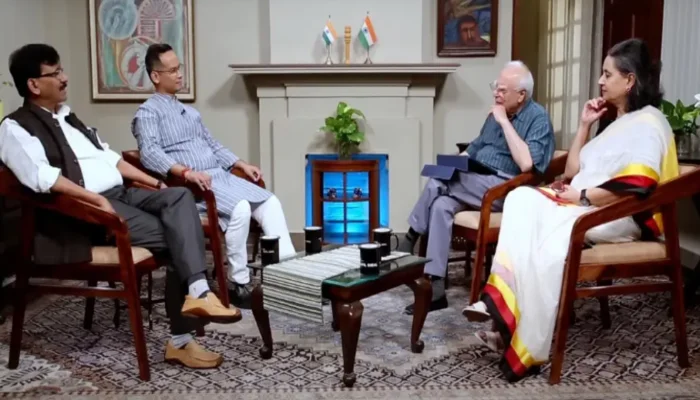
Case Summary
In an interview podcast uploaded on the YouTube channel "Dil se with Sibal", four prominent Indian public figures - Kapil Sibal, Sagarika Ghose, Gaurav Gogoi, and Sanjay Raut—deliberately downplayed the Pahalgam Hindu massacre and spread a false narrative, denying the religious nature of the attack. In a horrific act of terror in the Baisaran Valley of Pahalgam, Anantnag district, Jammu and Kashmir, Islamic terrorists systematically identified and targeted Hindu victims. The assailants demanded names and religious identities, inspected ID cards, coerced tourists to recite the Kalma, and even forcibly pulled down their pants to check for circumcision—all to single out non-Muslims. Once identified, the Hindus were shot at point-blank range. The attack, carried out by operatives of The Resistance Force, a proxy of the Pakistan-based terror group Lashkar-e-Taiba (LeT), claimed the lives of 24 Hindus and left 16 others critically injured. Despite the overwhelming evidence of the religion-based targeting, all of the panellists present in the podcast proceed to deny the act. All of them dismissed the terror attack as a non-religious, and labelled it as a politically exploited event. They framed the massacre as a random terror attack and accused the Narendra Modi administration of using the incident for political mileage. In doing so, they not only undermined the survivors’ testimonies and disrespected the victims but also supported Pakistan in its narrative of denying cross-border terrorism. Furthermore, Rajya Sabha MP Sanjay Raut stated during the podcast that he had personally spoken to several victims and claimed that none of them mentioned any religious targeting. The other panellists echoed his sentiments, asserting that many family members of the victims had also denied that the attack was religiously motivated. They selectively quoted one of the survivors, Himanshi Narewal, who said she did not wish to get involved in Hindu-Muslim issues. By cherry-picking such statements and ignoring the overwhelming testimonies of religious profiling, the panellists attempted to cast doubt on the communal nature of the massacre and further distort the public perception of the incident. Their narrative directly contradicts the statements given by the survivors, like Asavari Jagdale and Sujatha Bhushan, who described harrowing accounts of the religious profiling that preceded the murders. The terrorists responsible - Suleman alias Faizal Jatt, Hamza Afghani, and Zibran - were confirmed Pakistani nationals affiliated with Lashkar-e-Taiba. Following an exhaustive manhunt involving the IB, CRPF, Army, and J&K police, all three were eliminated in Dachigam during Operation Mahadev. Forensic analysis, matched weapons, eyewitness testimonies, Pakistani documents, and goods recovered from the site conclusively proved their identities and motives. This pattern of deliberate denialism and political gaslighting served to shield Pakistan from accountability and embolden Islamist perpetrators by demonstrating that certain sections of India’s political class will always support them just so they can make political gains. By downplaying Islamist terror and recasting it as a government ploy, these individuals acted as ideological enablers of Islamic extremism.
Why it is Hate Crime ?
This case is categorised under the primary category- Hate Speech against Hindus. Under that, the relevant sub-category is- Denial or mocking of genocide/large-scale persecution. Denial or mocking of genocide/large-scale persecution/ethnic cleansing refers to the act of denying or minimizing the fact of the ethnic cleansing and/or genocide and/or religious persecution of Hindus. This often involves denying the scale, mechanisms, religious intent, or even the occurrence of the ethnic cleansing and/or genocide and/or religious persecution of Hindus. Hate speech of this kind involves the dissemination of falsehoods that deny or distort established historical facts or mock the suffering of Hindus by saying that they deserved the persecution, motivated by Hinduphobia. Denying such atrocities is not only about the denial of facts or rewriting/revising history, but it also delegitimises the religiously motivated persecution of Hindus, the religious hate/motivation/animosity that led to the persecution, and dehumanises Hindus as a religious group. Such denial of ethnic cleansing and/or genocide and/or religious persecution of Hindus not only denies the suffering but also paves the way for future/present atrocities and hate speech, inciting prejudice and violence against Hindus. It also provides a justification for violence by delinking religious animosity from religiously motivated crimes committed against Hindus. Since such denial and/or mocking of genocide/ethnic cleansing/atrocities motivated by religious animosity leads to present and future ramifications of creating more hate speech, violence, dehumanisation and delegitimisation, it would be considered hate speech under this category. The other sub-category relevant is- Anti Hindu subversion and prejudice, and within it, the tertiary category selected is- Anti-Hindu Fake News or Downplaying. Hate speech is defined as any speech, gesture, conduct, writing, or display that is prejudicial against a specific individual and/or group of people, which is leading to or may lead to violence, prejudicial action or hate against that individual and/or group. Media plays a specific and overarching reach in perpetuating prejudicial attitudes towards a community owing to unfair, untrue coverage and/or misrepresentation/misinterpretation, selective coverage and/or omission of facts of/pertaining to issues affecting a specific religious group. This type of bias can dehumanise the victim group, making it easier for others to justify harmful actions against them, which aligns with the objectives of hate speech laws aimed at preventing such harm. It is often observed that the media takes a prejudicial stand against the Hindu community driven by their need to shield the aggressor community which happens to be a numeric minority, however, is the one perpetrating violence against Hindus. For example, the media is often quick to contextualise religiously motivated crimes against Hindus, omit or misrepresent facts that point towards religiously motivated hate crimes, justify and/or downplay religiously motivated hate crimes or simply present fake news to stereotype Hindus. Such media bias leads to the denial of persecution and is often used to dehumanise Hindus, leading to justification for violence against them. For example, the media covered several fake allegations of Hindus targeting Muslims and forcing them to chant Jai Shree Ram. Most of these cases were proved false and fabricated after police investigation. These fake news reports were subsequently never retracted or clarified. Such fake news led to the justification of violence and dehumanisation of Hindus based on the argument that since Hindus targeted Muslims and forced them to chant Jai Shree Ram, the dehumanisation of Hindus and violence against them was par for the course and merely a retaliation. Such media bias leads to prejudicial portrayal of Hindus and offers a justification for violence against them and therefore, is considered hate speech under this category. This case qualifies as a hate crime as it involves the denial and distortion of facts surrounding a terror attack that specifically targeted Hindus. By dismissing the religious motive behind the Pahalgam Hindu massacre, in which survivors confirmed that the Islamic terrorists identified the victims’ religion before killing them, the statements made in the podcast by the panellists erase the targeted nature of the violence. This amounts to the denial of religious persecution and serves to delegitimise the suffering of the Hindu victims. It should be noted that these were not random individuals making casual remarks. These were respected lawmakers, MPs, and former Union ministers. They knew exactly what they were saying. Their statements cannot be attributed to ignorance or misinterpretation; their political experience and social stature make clear that the denial was intentional and calculated. Their motive was not to seek clarity or truth but to shift the narrative away from Islamist religious hatred and toward partisan political blame against the Narendra Modi administration. Such remarks create a false narrative that hides the religious motive behind the violence and wrongly blames the state. These kinds of statements, especially when they come from such respected members of society, can encourage more such religiously motivated attacks in the future. Such denials also set a precedent that religiously motivated attacks against Hindus can be denied, downplayed, or politically reframed without consequence. Sharing such views in public or political spaces fuels dangerous stereotypes, which is why it qualifies as a hate crime and warrants inclusion in the Hinduphobia Tracker. Furthermore, it is important to note here that the panellists stated they had spoken to victims' family members who denied any religious profiling and even referred to Himanshi Narewal, who said she didn’t want to get into Hindu-Muslim issues. But such generalisations ignore the fact that every individual has a different way of dealing with grief and trauma. Many survivors and families consciously avoid engaging with the religious angle, not because it didn’t happen, but because reliving the horror is too painful or overwhelming. Many simply do not want to relive the pain or may even suppress certain aspects to protect their emotional well-being. In some cases, the denial of religious motivation by victims or families may even reflect a form of coping mechanism. It is quite similar to Stockholm Syndrome, where the victim of abuse or captivity develops positive feelings, empathy, or even loyalty and affection toward their abuser, sometimes to the point of defending or protecting them. In such circumstances, it is not uncommon for people to emotionally detach or rationalise events in a way that helps them cope. In such cases, evidence needs to be looked at, which in this case was plenty, including eyewitness accounts, forensic reports, and even the terrorists’ own actions. This deliberate misrepresentation and dissemination of falsehoods fall squarely within the framework of hate speech. It dehumanises Hindus by denying the targeted nature of their suffering and provides ideological cover for those who commit or justify such violence. Such statements align with a broader pattern of anti-Hindu prejudice and subversion, wherein religiously motivated crimes against Hindus are denied, rationalised, or erased from public discourse. By deflecting accountability from Islamist perpetrators and Pakistan, despite clear evidence, their remarks act as both justification and incitement for further violence and hate against Hindus. These kinds of remarks are part of a broader trend wherein acts of terrorism against Hindus are reframed, denied, or justified, often to shield the aggressor community from scrutiny. This tendency stems from a deep-seated ideological contempt for Hindus and their faith. As a result, incidents where Hindus are threatened, assaulted or coerced by Islamist elements are either ignored or distorted to fit a narrative of Hindu guilt and Muslim victimhood. This narrative engineering is not accidental but rooted in an intrinsic hostility towards Hindu identity, which is viewed by such media as something that must be delegitimised, mocked, and weakened in order to uphold their so-called secular or progressive credentials. Over time, this pervasive hate has normalised the demonisation of Hindus while rationalising Islamist excesses as either justified or beyond criticism. The Hinduphobia Tracker has documented several such cases, and the denial of the Pahalgam Hindu massacre is one of the most brazen examples.


Case Status
Complaint not filed


Perpetrators Details
Perpetrators
Others
Perpetrators Range
From 2 To 5
Perpetrators Gender
both
 Sources




