Hindu heritage targeted: sacred Sri Surya Pahar encroached, renamed ‘Kudratpur’ by Muslim community in Assam
 Goalpara, Assam, India
  22 July, 2025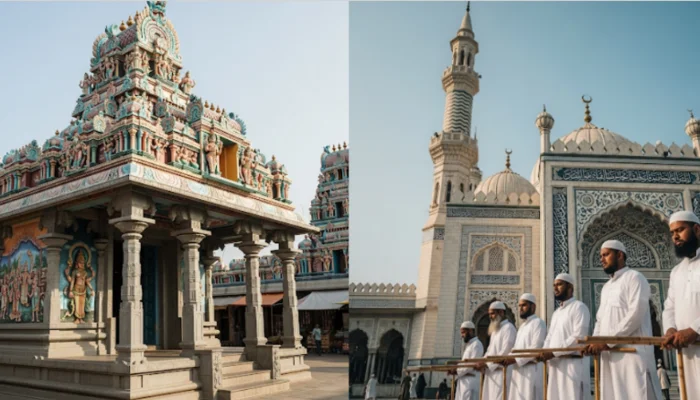
Case Summary
In Assam’s Goalpara district, the sacred Hindu site of Sri Surya Pahar was subjected to illegal encroachment and religious subversion by members of the Muslim community. They deliberately renamed the area as ‘Kudratpur’. Alongside this renaming, mosques and madrassas have been constructed adjacent to the ancient Surya temple. The Sri Surya Pahar is home to several rock-cut Shivlings, stupas and relics belonging to Hinduism, Buddhism and Jainism. However, the illegal occupation of land around the temple by Muslim groups raised serious concerns about the preservation of this ancient heritage. Encroachers have also established a 'Hafiza Madrassa' in the area, named after Hazrat Sheikh Alauddin. A local Hindu woman reported that at least 40 Muslim families are currently residing illegally on the land belonging to Sri Surya Pahar. The continued encroachment poses a direct threat to the existence of the ancient Surya temple and undermines efforts to safeguard this vital Hindu pilgrimage site.
Why it is Hate Crime ?
This case has been added to the tracker under the primary category of: Attack on Hindu religious representations. Within it, the sub-category selected is: - Attack on temples. In Hinduism, a temple is the abode of the Deity. The Deity in the Temple is consecrated, thereby, making it a real, breathing entity. Hindus believe that not just the Deity but the temple premises itself are sacred to Hindus since Hindus hold the faith that the entire Temple space is an amalgamation of the divine energy of the deity. Given the central significance of Temples in Hindu Dharma, any attack against a Hindu Temple or its peripheral premises is an attack on the faith itself and is born out of animosity towards the faith, of which, the Temple is a central tenet. Any manner of attack against a Temple and/or its premises would therefore be considered a religiously motivated hate crime. The other sub-category relevant here is: - Encroachment or illicit takeover of temple land/land near temple In Hinduism, a temple is the abode of the Deity. The Deity in the Temple is consecrated, thereby, making it a real, breathing entity. Hindus believe that not just the Deity but the temple premises itself are sacred to Hindus since Hindus hold the faith that the entire Temple space is an amalgamation of the divine energy of the deity. Not only the Temple but the Temple premises in its entirety are considered sacred by Hindus. In several cases, the premises of the Temple and/or religious centre are illicitly taken over by institutions belonging to other faiths – like the Waqf board or the Church. Other times, the temple property, land or the property of religious centres are illicitly encroached by non-Hindu groups. Any illicit take over or encroachment is a crime an initio, however, when non-Hindu groups illicitly take over or encroach the sacred land of Hindus, it is an affront to the Hindu community and is therefore classified as a religiously motivated hate crime under this category. Sri Surya Pahar is not merely an archaeological site—it is a living Hindu sacred space with active religious significance. It houses ancient rock-cut Shivlings and serves as a centre of Hindu worship and pilgrimage. Any physical encroachment, renaming of the sacred site, or construction of religious structures of another faith within its periphery is an affront to Hindu Dharma. The deliberate renaming of the area as ‘Kudratpur’ and the construction of mosques and madrassas adjacent to the temple amount to an act of religious subversion that seeks to displace the Hindu religious identity of the region. Since the temple and its premises are considered the abode of the Deity and imbued with divine presence, any action that undermines, alters, or disturbs this sanctity is a direct attack on the Hindu faith itself. The intent behind such actions—particularly when carried out by members of a non-Hindu community—is demonstrably rooted in religious animosity and is therefore recorded as a religiously motivated hate crime. The presence of at least 40 Muslim families illegally residing on temple land and the construction of a Hafiza Madrassa near the ancient Surya temple constitute a clear case of illicit encroachment. In Hindu belief, not just the temple structure but the entire surrounding premises are sacred, infused with the Deity’s divine energy. Encroaching upon such land, especially by constructing institutions of a different religion, is not only a legal violation—it is a spiritual violation and an attempt to dilute or erase the Hindu identity of the sacred site. When members of a non-Hindu group encroach upon Hindu temple land and rename the area to reflect their own religious identity, it reflects an intent to subjugate and displace the existing Hindu religious presence. This act, therefore, is not simply an encroachment—it is a targeted hate crime against the Hindu community, motivated by the intent to dominate, alter, or replace their religious space and symbols. Disclaimer: It is important to clarify that the report does not specify the exact date when the encroachment began. Therefore, for documentation purposes, we have recorded the date based on when the incident was reported in the media.


Case Status
Unknown


Perpetrators Details
Perpetrators
Muslim Extremists
Perpetrators Range
Unknown
Perpetrators Gender
both
 Sources




