Attack on Hindu religious sentiments: Muslim man masquerades as Hindu priest; desecrates temple rules and misuses donations
 Meerut, Uttar Pradesh, India
  23 July, 2024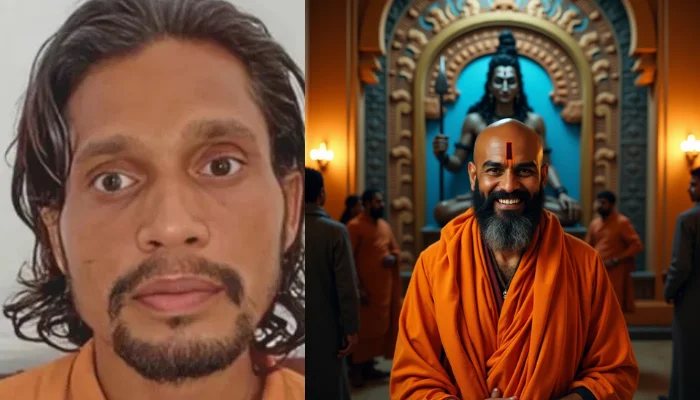
Case Summary
In Dadri village, located in the Meerut district of Uttar Pradesh, the religious sentiments of the Hindu community were deliberately hurt by a Muslim man named Mohammad Qasim. He posed as a Hindu named Krishna and became the priest of a Shiva temple. Following this, he desecrated the temple rules and also misused the temple funds for his benefit. According to reports, Mohammad Qasim is from Bihar, and his father is a Maulvi. About a year ago, in 2024, he arrived in the village and introduced himself as Krishna, son of Santosh, resident of Delhi. He requested permission from the Hindu villagers to stay in the Shiva temple. As there was no one to look after the temple, the villagers allowed him to stay. He conducted regular prayers and performed all religious activities. He also spoke to people about astrology, which led the villagers to regard him as a religious person. Over time, some villagers began to notice peculiarities in his speech and behaviour. When asked to produce an identity card, he evaded the request and then suddenly disappeared from the village for 15 days. Later, he returned and started staying at the temple once again. A few days after his return, during a feast organised at the temple, he began removing some items from one of the temple rooms. Those present in the temple stopped him and started questioning him. As suspicions intensified, the villagers called the police. During police questioning, the accused revealed his true identity and said that his name is Mohammad Qasim. He also admitted that he is from Bihar and that his father is a Maulvi. He also confessed to using donations received at the temple for personal use. SP City, Ayush Vikram Singh, stated that the Muslim accused had exploited the religious sentiments of the people by residing at the temple under a false identity. A case was registered against him on charges of concealing his religious identity, fraud, and misappropriation of temple funds, and he was sent to jail. Subsequently, the police contacted the Bihar Police to investigate Qasim’s background. The authorities were also investigating whether this was part of a larger conspiracy or simply an act of personal fraud.
Why it is Hate Crime ?
This case has been added to the tracker under the primary category- Attack on Hindu religious representations. Within this, the subcategory selected is- Defiling religious customs. Sanatan Dharma is not a religion of one book, which is to say that while it has religious scriptures that form the central tenets of the faith, there are several traditions followed through thousands of years, mostly passed from generation to generation orally. There are several such customs and traditions that are followed by various Hindus and Hindu sects. Defiling of these traditions and customs is a breach of an individual or group’s religious practices. Such practices can range from dietary restrictions like not eating non-vegetarian food for a certain period of the year, not eating non-vegetarian food at all, not eating beef since the cow is considered holy in Hinduism, the sanctity of religious customs followed in the house (like many ISCKON devotees), etc. Any malicious action leading to the breach of such traditions or defilement of these traditions owing to animosity towards the faith or for the sake of activism stems not only from the lack of faith in the religion itself but also from disregard for the faith of the devotees who follow the customs/traditions and implicit bias against the faith, the tradition itself. Since these specific traditions are central to the faith of the devotees of that specific sect of Hindus, any non-compliance with these traditional rules would be considered a religiously motivated hate crime. The other subcategory selected is- Breaking rules of place of worship. Sanatan Dharma is not a religion of one book, which is to say that while it has religious scriptures that form the central tenets of the faith, there are several traditions followed through thousands of years, mostly passed from generation to generation orally. One of these oral traditions or written traditions is the rules of specific temples. Certain temples have rules which are traditional rules, dependent on the worship of the presiding deities. These rules and traditions have been followed for thousands of years whether they find scriptural mention or not. Such traditions are based on the nature and rules of worship of the presiding deity of that temple. Any non-compliance of these traditions owing to animosity towards the faith or for the sake of activism stems not only from the lack of faith in the presiding deity but also disregard for the faith of the devotees of that deity/temple and implicit bias against the faith, the tradition and the deity itself. Since these specific traditions are central to the faith of the devotees of that specific temple and presiding deity, any non-compliance with these traditional rules would be considered a religiously motivated hate crime. This incident is a clear case of a hate crime against Hindus and their religious beliefs. The very act of Mohammad Qasim posing as a Hindu and becoming the priest of a Shiva temple directly violated the sanctity and traditions of Hindu places of worship. In Hindu religious practice, only those who genuinely profess the Hindu faith and observe its customs may undertake priestly duties, as the role demands strict adherence to centuries-old rituals and traditions. By concealing his identity and background, Qasim undermined a fundamental principle of Hindu worship, which is maintained to preserve the purity of the rituals performed in the temple. Furthermore, Qasim’s deception extended to the deliberate breaking of essential rules that govern the conduct within Hindu temples. Places of Hindu worship are held in the highest regard by Hindu devotees, and the appointment of a priest requires trust, faith, and conformity to the traditions of the temple. By fabricating his identity and intentions, Qasim broke this sacred trust, violating not only temple protocol but also the trust of the Hindu community. His presence as a non-Hindu in a role reserved exclusively for Hindus constituted a direct defilement of religious customs and deeply hurt the religious sentiments of the devotees. Such acts showcase that the Muslim perpetrator had no respect for Hindu religious practices or the sanctity of Hindu temples. In addition to violating religious sanctity and breaking temple rules, Qasim misused the temple’s funds for his personal gain. This act of misappropriating resources meant for worship, community service, and temple maintenance exacerbated the harm caused to the Hindu community. The misdirection of sacred donations signalled a deeper intent to undermine the faith and well-being of the devotees and the temple’s mission. Taken together, these actions: deception, the defilement of the Hindu temple and its practices, and the exploitation of temple resources, point to a concerted attempt to undermine Hinduism. Such acts are not random or merely criminal, but are manifestations of religious hostility, aimed directly at eroding the confidence and religious customs of the Hindu community. Since this case meets the parameters of a religiously motivated crime, it is being added to the hate crime database. Disclaimer: Media reports do not specify the exact date on which the Muslim perpetrator began his deception; they only state that it started approximately a year ago, in 2024. The media covered this case on 24th July 2025. Therefore, for documentation purposes, we are using an indicative date of 24th July 2024. Hinduphobia Tracker records the date when the crime began, rather than the date it was reported in the media.


Case Status
Arrested


Perpetrators Details
Perpetrators
Muslim Extremists
Perpetrators Range
One Person
Perpetrators Gender
male
 Sources




