Senior journalist vilifies Chhatrapati Shivaji Maharaj, equates Hindu icon with Mughal tyrants in hate-filled rant
 India
India  16 July, 2025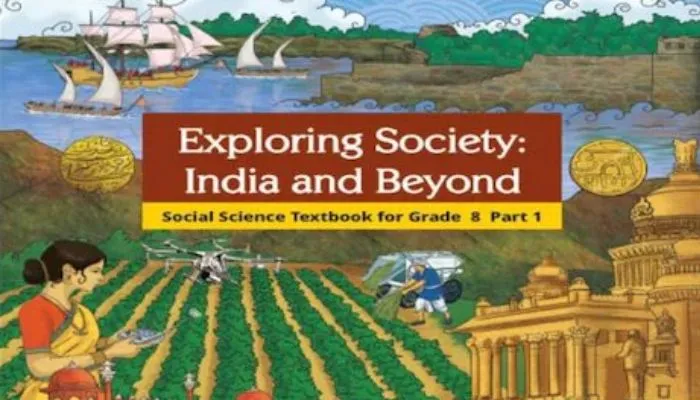
Case Summary
Senior journalist Rajdeep Sardesai made baseless and offensive claims about Chhatrapati Shivaji Maharaj, one of the greatest Hindu icons of resistance and statecraft. During a recent episode of Democratic Newsroom on India Today, Sardesai, visibly agitated by the NCERT’s updated history textbooks set to be introduced from the 2025–26 academic year, launched into a historically inaccurate tirade. In an effort to defend the discredited, Mughal-centric version of Indian history, he shockingly equated Shivaji Maharaj with the Mughal rulers and went so far as to represent him as a dacoit, claiming his forces had “wreaked havoc” in Bengal. The timing and nature of Sardesai’s remarks reveal a deeper anxiety within the left-liberal intelligentsia, many of whom have vocally opposed the revised NCERT syllabus. The new textbooks mark a significant shift from earlier, whitewashed narratives that romanticised the Mughals and downplayed the traumatic realities of Islamic conquests in Bharat. For the first time, school children will be taught about the jihadist brutality, temple destruction, and religious persecution carried out by tyrants like Akbar and Aurangzeb, not just their court art or architectural patronage. The updated Class 8 Social Science textbook, for instance, presents Akbar’s reign as a complex mixture of brutality and political strategy. It openly discusses the massacre of 30,000 civilians at Chittorgarh and highlights Akbar’s own words about demolishing temples and enforcing Islamic supremacy. It does not shy away from documenting Aurangzeb’s bans on Hindu practices, his reimposition of the humiliating jizya tax on non-Muslims, and the destruction of temples at Kashi, Mathura, and Somnath. Crucially, the revised syllabus also restores balance by giving due recognition to indigenous resistance. It highlights Chhatrapati Shivaji Maharaj not merely as an efficient administrator, but as a devout Hindu king, a brilliant strategist, and a restorer of desecrated temples who stood up to Mughal tyranny. His campaigns are described as defensive and civilizational in nature, aimed at protecting native religious and cultural life from foreign aggression. This shift towards historical accuracy has triggered a meltdown in sections of the media and academia, long used to monopolising historical interpretation. Sardesai’s remarks are emblematic of a deeper malaise: the inability of the secular-left ecosystem to acknowledge the crimes of Islamic invaders and to accept the legitimacy of Hindu resistance.
Why it is Hate Crime ?
This case has been added to the tracker un the primary category of - Hate speech against Hindus. The sub-category selected here is - Mocking/denigrating Hindu leaders. Hate speech is defined as any speech, gesture, conduct, writing, or display that is prejudicial against a specific individual and/or group of people, which is leading to or may lead to violence, prejudicial action or hate against that individual and/or group. Religious leaders are often seen as representatives of the community, especially, the community’s religious faith and beliefs. Mocking or denigrating a religious leader specifically owing to his religious identity and/or the religious rituals he observes can be considered hate speech because the motivating factor of the speech is animosity and/or dislike for what he represents – the religious beliefs and faith of the community. It is important to note that mere insulting words against an individual do not constitute hate speech. It is entirely possible that insulting words are used for an individual, however, the specific speech is not the result of religious hate and/or animosity towards the professed faith of the religious leader, but the individual himself. For the speech to be considered hate speech, the speech itself or the motivating factor behind the speech has to be religious in nature. Such speech which denigrates Hindu religious leaders specifically owing to animosity towards the faith they profess and the community faith they represent will be treated as hate speech under this category. The other sub-category selected is - Anti-Hindu slurs, mocking faith. Anti-Hindu slurs and the deliberate mocking of the Hindu faith owing to religious animosity involve the usage of derogatory terms, stereotypes, or offensive references to religious practices, symbols, or figures. One of the common anti-Hindu slurs used against Hindus is “cow-worshipper” and “cow piss drinker”. The intention of using this term is to demean and mock Hindus as a group and their religious beliefs since Hindus consider the cow holy. Additionally, some symbols and the slurs attached to them have a historical context that exacerbates the insult, hate, stereotyping, dehumanisation and oppression against Hindus. Cow worship has been used for centuries to denigrate Hindus, insult their faith and oppress Hindus specifically as a religious group. There has been overwhelming documentation about how cow slaughter has been used to persecute Hindus with cow meat being thrown in temples and places of worship. There has also been overwhelming documentation where cow meat (beef) has been force-fed to Hindus to either forcefully convert them to Islam or denigrate their faith. Apart from cow worship, the Swastika – which holds deep religious significance for the Hindus – has also been misinterpreted and distorted to use as a slur against Hindus. Similarly, the worship of the Shivling has been used by supremacist ideologies and religions to denigrate Hindus owing to religious animosity. Such slurs and denigration stem out of inherent animosity and hate towards Hindus and their faith, therefore, it is categorised as hate speech targeted at Hindus specifically owing to their religious identity. The other sub-category selected is - Denial or mocking of genocide/large-scale persecution. Denial or mocking of genocide/large-scale persecution/ethnic cleansing refers to the act of denying or minimizing the fact of the ethnic cleansing and/or genocide and/or religious persecution of Hindus. This often involves denying the scale, mechanisms, religious intent, or even the occurrence of the ethnic cleansing and/or genocide and/or religious persecution of Hindus. Hate speech of this kind involves the dissemination of falsehoods that deny or distort established historical facts or mock the suffering of Hindus by saying that they deserved the persecution, motivated by Hinduphobia. Denying such atrocities is not only about the denial of facts or rewriting/revising history, but it also delegitimises the religiously motivated persecution of Hindus, the religious hate/motivation/animosity that led to the persecution, and dehumanises Hindus as a religious group. Such denial of ethnic cleansing and/or genocide and/or religious persecution of Hindus not only denies the suffering but also paves the way for future/present atrocities and hate speech, inciting prejudice and violence against Hindus. It also provides a justification for violence by delinking religious animosity from religiously motivated crimes committed against Hindus. Since such denial and/or mocking of genocide/ethnic cleansing/atrocities motivated by religious animosity leads to present and future ramifications of creating more hate speech, violence, dehumanisation and delegitimisation, it would be considered hate speech under this category. The other sub-category relevant is- Anti Hindu subversion and prejudice, and within it, the tertiary category selected is- Anti-Hindu Fake News or Downplaying. Hate speech is defined as any speech, gesture, conduct, writing, or display that is prejudicial against a specific individual and/or group of people, which is leading to or may lead to violence, prejudicial action or hate against that individual and/or group. Media plays a specific and overarching reach in perpetuating prejudicial attitudes towards a community owing to unfair, untrue coverage and/or misrepresentation/misinterpretation, selective coverage and/or omission of facts of/pertaining to issues affecting a specific religious group. This type of bias can dehumanise the victim group, making it easier for others to justify harmful actions against them, which aligns with the objectives of hate speech laws aimed at preventing such harm. It is often observed that the media takes a prejudicial stand against the Hindu community driven by their need to shield the aggressor community which happens to be a numeric minority, however, is the one perpetrating violence against Hindus. For example, the media is often quick to contextualise religiously motivated crimes against Hindus, omit or misrepresent facts that point towards religiously motivated hate crimes, justify and/or downplay religiously motivated hate crimes or simply present fake news to stereotype Hindus. Such media bias leads to the denial of persecution and is often used to dehumanise Hindus, leading to justification for violence against them. For example, the media covered several fake allegations of Hindus targeting Muslims and forcing them to chant Jai Shree Ram. Most of these cases were proved false and fabricated after police investigation. These fake news reports were subsequently never retracted or clarified. Such fake news led to the justification of violence and dehumanisation of Hindus based on the argument that since Hindus targeted Muslims and forced them to chant Jai Shree Ram, the dehumanisation of Hindus and violence against them was par for the course and merely a retaliation. Such media bias leads to prejudicial portrayal of Hindus and offers a justification for violence against them and therefore, is considered hate speech under this category. In this case, Rajdeep Sardesai attempted to draw a false equivalence between Chhatrapati Shivaji Maharaj, one of Bharat’s most revered Hindu icons, and the Mughal tyrants who ravaged the subcontinent with religious persecution and cultural destruction. Sardesai not only claimed that all medieval rulers, including Shivaji, were equally driven by political motives, but shockingly went a step further, representing that Shivaji was a “dacoit” whose forces wreaked havoc in Bengal. This statement is not only historically inaccurate and factually baseless, but also deeply insulting to the Hindu community, which holds Shivaji Maharaj in the highest regard. Chhatrapati Shivaji Maharaj was far more than a mere regional ruler—he was a civilizational sentinel, a defender of Hindu dharma, and a brilliant military strategist who revived Hindu sovereignty at a time when the Mughal tyrants were imposing Muslim orthodoxy through jizya, temple destruction, and religiously motivated violence. He actively restored desecrated temples, protected the honour of women, and envisioned a swarajya rooted in dharma. His legacy is inseparable from Hindu cultural pride and civilizational resurgence. To represent such a heroic figure as a dacoit is not merely an insult—it is a deliberate act of civilizational denigration. In sharp contrast, the Mughal tyrants—especially Babur, Akbar, and Aurangzeb—were invaders and imperialists, whose military campaigns were driven not just by political ambition, but by a clear religious agenda. The newly revised NCERT Class 8 Social Science textbook rightfully documents the Jihadist brutality of the Mughals: the massacre of 30,000 civilians in Chittorgarh under Akbar, the destruction of Hindu temples in Kashi, Mathura, and Somnath, and the re-imposition of the humiliating jizya tax on Hindus. These rulers actively sought to erase Hindu identity and establish Muslim dominance—this was not mere politics, but religiously motivated oppression. Comparing them to Chhatrapati Shivaji Maharaj is not only ahistorical, but morally and civilisationally perverse. Sardesai’s comments amount to hate speech against Hindus on multiple grounds. By denigrating Chhatrapati Shivaji Maharaj—a sacred cultural and religious symbol for Hindus—he mocked the faith, pride, and civilizational memory of the community. His attack is not on a historical character alone, but on what Chhatrapati Shivaji Maharaj represents: Hindu resistance, temple protection, and dignity in the face of Mughal oppression. The motive behind Sardesai’s remarks is rooted in ideological animosity toward Hindu icons, making it an expression of religious prejudice, not historical inquiry. It directly violates the dignity of a religious community and seeks to delegitimise their heroes and their lived historical trauma. Furthermore, Sardesai’s defence of the old Mughal-centric version of history and his criticism of the new NCERT revisions reveal a disturbing intent to whitewash Mughal atrocities and downplay the scale of religious persecution suffered by Hindus. The new textbook highlights, with historical references, the true nature of Mughal rule—including idol-breaking, enslavement of Hindu women and children, and religious humiliation through taxation and forced conversion. Sardesai’s response, however, has been to discredit these facts and justify the actions of the aggressors by painting them as mere political actors. This not only denies the lived experiences of Hindu ancestors but also serves to perpetuate present-day Hinduphobia by undermining legitimate historical grievances. His remarks are also emblematic of a wider anti-Hindu bias in the media, where Hindus are constantly told to forget their history, while the atrocities of Muslim rulers are sanitised or justified. To represent Chhatrapati Shivaji Maharaj, a temple-restorer, protector of Hindu women, and builder of a Hindu kingdom, a criminal, and at the same time defend Mughal tyrants who carried out acts of civilizational genocide, is a grotesque inversion of historical truth. It is not only a lie but an ideological assault on the Hindu community’s right to remember and honour its heroes. Hence, Rajdeep Sardesai’s remarks qualify as a hate crime against Hindus because they are not merely personal opinions or historical critiques—they are deliberate falsehoods aimed at mocking a revered Hindu icon, distorting the truth of Hindu resistance, and whitewashing the atrocities committed by Muslim invaders.


Case Status
Unknown


Perpetrators Details
Perpetrators
Others
Perpetrators Range
One Person
Perpetrators Gender
male
 Sources




