Hindus restricted from practicing their faith as court imposes restrictions on performing rituals in sacred Mawjymbuin Cave
 East Khasi Hills, Meghalaya, India
  10 July, 2025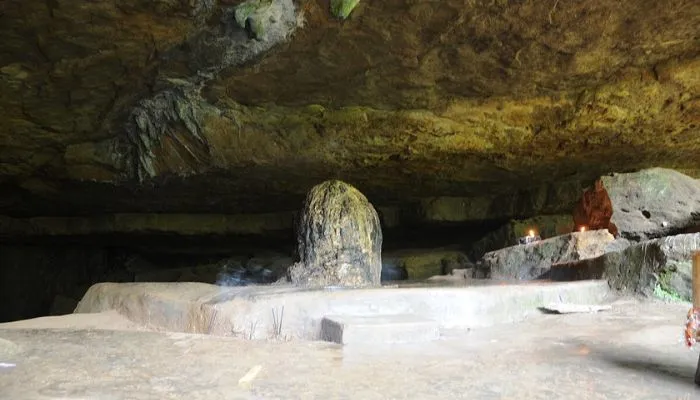
Case Summary
In the East Khasi Hills district of Meghalaya, Hindu religious practices at Mawjymbuin Cave in Mawsynram were restricted by the Meghalaya High Court. Devotees are not allowed to perform puja or bring traditional ritual items, such as flowers and incense sticks. At the same time, Hindu devotees have also been restricted from pouring water on the naturally formed Shivling at the Mawjymbuin Cave. Only a ‘symbolic sprinkling’ of water will be allowed during the pilgrimage. The Mawjymbuin Cave holds religious significance for Hindus due to the naturally formed Shivling, which had developed through weathering, calcium carbonate deposition, and the dripping of mineral-enriched water. During the month of Shravan, large numbers of Hindu pilgrims from across the country visited the cave as part of the Kanwar Yatra, a sacred Hindu pilgrimage. Lakhs of devotees would visit the cave and offer their respects to the Shivling. However, the Meghalaya High Court has imposed serious restrictions on the free practice of the Hindu faith at this sacred site. While it allowed a 'symbolic pilgrimage' from Mahadev Khola Dham in Shillong to the Mawjymbuin Cave, the court laid down strict conditions effectively curbing core aspects of Hindu worship. The decision came after the Dorbar Shnong of Mawsynram village, which claims to be the custodian of the Mawjymbuin Cave, submitted an undertaking supporting the pilgrimage under these conditions. It was the Dorbor Shnong that had also objected to the pouring of water on the Shivling within the Mawjymbuin Cave. Notably, in 2024, the Dorbar Shnong had also imposed a ban on Hindu worship at the site. The Dorbar Shnong is a traditional village council system in Meghalaya, serving as a form of local self-governance. It comprised all adult Khasi inhabitants of a village and played a crucial role in maintaining social order, resolving disputes, and making collective decisions on matters concerning the local community. In January 2024, a spokesperson for the Dorbar Shnong stated, “Since the beginning and till date, we have not allowed any group to come and perform religious rituals inside the cave.” He further warned, “Any individual or group may visit the cave, but they must respect the rules of the Dorbar Shnong, which strictly prohibit worship inside the cave or the conversion of the cave into a mandir or temple, as it is designated as a tourist spot.” The spokesperson of the Dorbar Shnong also mocked Hindu practices at the site, stating, “In the past, they have poured milk and burned incense and flowers, which has led to the 'dirtying' of the cave and its surroundings.” The Dorbar Shnong officially banned Hindu worship at the Mawjymbuin Cave in August 2024 by garnering support from churches and ministers in the Meghalaya government. The executive committee of the Dorbar Shnong had announced that no group would be permitted to develop a place of worship at the site. This decision followed the announcement by the Hindu Yatra Pilgrimage group of their plan to conduct worship on 10th and 11th August 2024. The Hindu group had initially sought permission from the East Khasi Hills Deputy Commissioner, RM Kurbah, which was denied. They then approached the Dorbar Shnong, which expressed surprise at being bypassed in the initial request. The ban prompted protests by Hindu groups not only in Meghalaya but also in neighbouring Assam. The Kutumba Surakshya Parishad (KSP), a Hindu organisation based in Assam, threatened to block roads leading to Meghalaya if the ban was not revoked. KSP President Sanjay Ranjan Borah accused social organisations and Christian missionaries in Meghalaya of conspiring to undermine Hindu faith and culture. The local student groups, such as the Khasi Students’ Union (KSU) South West Khasi Hills District and the KSU Lawbah Border Area Circle, supported the ban on Hindu prayers at the site. In a joint statement, student leaders declared, “We will not accept any attempt to use force to establish a place of worship in defiance of the Mawsynram Dorbar Shnong.” The ruling National People’s Party also supported the ban on Hindu puja at the cave. Tourism Minister Paul Lyngdoh stated, “The decision is logical and reasonable, as the cave is a major tourist attraction. Allowing a particular religion to establish a place of worship could negatively impact tourism in the area.” He added, “People from across the globe visit Mawjymbuin. A secular country like India cannot promote a place of worship at a tourist destination.”
Why it is Hate Crime ?
This case has been added to the tracker under the primary category- Restriction on expression of Hindu identity. Within this, the subcategory selected is- Restriction on expression of Hindu identity. An example of the state-affected prejudicial and targeted orders against the Hindu community would be a government denying the right of a Hindu or a group of Hindus to hold a religious procession owing to the animosity of non-Hindu groups. Denial of the religious right of the Hindus to assuage the non-Hindu group which harbours animosity to a point where it could lead to violence against Hindus is not only a failure of law and order but is a prejudicial order against Hindus, denying them their fundamental rights to express their religious identity. An example of a hate crime against Hindus by a non-Hindu would be a non-Hindu institution forcing its Hindu employees to abandon religious symbols that a Hindu would wear as an expression of faith owing to inherent prejudice against the faith professed by the victim or a non-Hindu group of people restricting a Hindu group from constructing a place of worship simply because the demography of the area in which the temple is being built is dominated by non-Hindus. Such actions are driven by religious animosity and/or prejudice against Hindus and their faith and would therefore be categorized as a hate crime. The other subcategory selected is- Administration restricting Hindu religious practice. In several cases, it is seen that the administration/state disallows a religious practice owing to prejudicial orders and concerns, targeted specifically against the Hindu community. Such restriction/prohibition would be considered documented as a hate crime because the orders are often a result of pressure by groups that harbour animosity towards Hinduism and Hindus. Often, the restriction by the authorities is driven by bias, hostility, or prejudice against the specific community being stopped from holding a religious practice, by pressure groups that harbour animosity towards Hindus, intrinsic to their faith. Since practices are intrinsic to the faith of the Hindus, such prejudicial restriction is considered a curtailing of the fundamental rights of the Hindu community. In several cases, for example, the authorities ban a Hindu religious practice due to pressure from groups opposed to the religion. In other instances the prohibition is selectively enforced against one religious group (Hindus) while others are allowed to proceed. There are still other cases where the authorities preemptively restrict a religious practice by Hindus because those who hold animosity towards Hindus may get “provoked” leading to them being violent, thereby assuaging the sentiments of those who hold animosity towards Hindus by curtailing the religious rights of Hindus. Such acts and orders are prejudiced, indicating discriminatory motives owing to the capitulation to groups that harbour animosity towards Hindus and therefore, would be categorized as a religiously motivated hate crime since the original pressure leading to the order itself is a result of hatred/bias/prejudice/religious hate against Hindus. In this case, the Meghalaya High Court's decision to restrict Hindu religious rituals at the Mawjymbuin Cave directly targeted the core practices of Hindu devotees. For generations, pilgrims had visited this sacred site to perform puja, pour water and milk on the Shivling, and offer flowers and incense as acts of devotion. These rituals are not mere formalities; they are highly revered and sacred rituals of the Hindu faith and reverence. By prohibiting these acts and reducing the pilgrimage to a “symbolic” visit, authorities effectively denied Hindus the right to practise their religion in a meaningful way. This restriction struck at the heart of their spiritual connection to the site, leaving Hindus feeling alienated and hurt. By imposing conditions that banned puja, ritual items, and even the pouring of water on the Shivling, the court’s order signalled a lack of respect for these essential rituals of Hindu worship. Such judicial actions are intended to marginalise the adherents of the Hindu faith. Additionally, the Dorbar Shnong, acting as the local authority, along with the backing of churches and ministers of the government, went beyond restrictions and imposed a complete ban on Hindu worship at the cave in 2024. By declaring itself the sole custodian and refusing to permit any group to develop a place of worship, the Dorbar Shnong denied Hindus the ability to honour their sacred traditions. This act was not just administrative; rather, it was a clear message that Hindu faith and its expressions were not welcome. Such actions are a result of deep-seated bias and hostility towards the Hindu faith and its adherents. Another point to highlight is that the representatives of the Dorbor Shnong mocked the pouring of milk and burning of incense as actions that “dirtied” the cave; they dismissed the sacredness of these practices and trivialised the faith of countless Hindu devotees. Such disparagement is a result of deep-rooted religious animosity and disdain for the Hindu community, their faith, and its religious rituals, making it a religiously motivated hate speech. Furthermore, the support extended by state authorities and student groups to the ban on Hindu rituals compounded the sense of exclusion. When government ministers and influential student unions endorsed the prohibition, it legitimised the marginalisation of Hindu practices. Their arguments, which framed the ban as necessary for tourism or environmental preservation, failed to acknowledge the emotional and spiritual loss experienced by Hindu devotees. Instead of seeking a balanced solution, the authorities chose to side with exclusion, reinforcing the marginalisation of the Hindu faith. Such actions are a result of deep-rooted prejudice and animosity towards the Hindu faith and its followers. In totality, the restriction of rituals by the High Court, the judicial endorsement of limitations, the outright ban by local authorities, the support from state and student groups, and the public disparagement of Hindu practices form a pattern of exclusion. These actions collectively denied Hindus the right to practise their faith, celebrate their traditions, and honour their heritage at a site of profound significance. Such systematic exclusion and disrespect are fundamentally anti-Hindu, as they undermine the religious freedom of the Hindu community. Further, every individual has the right to practice their religious faith and restricting someone from doing that can also be considered a prejudicial order denying the Hindu community its fundamental rights. Such arbitrary actions taken against Hindus are prejudicial to the rights of Hindus and stem from animosity and prejudice against Hindu beliefs, which is why this case is being categorised as a religiously motivated hate crime.


Case Status
Unknown


Perpetrators Details
Perpetrators
State and Establishment
Perpetrators Range
Unknown
Perpetrators Gender
unknown
 Sources




