Hindu woman lured into relationship and sexually exploited by Muslim man posing as Hindu
 Bijnor, Uttar Pradesh, India
  12 July, 2025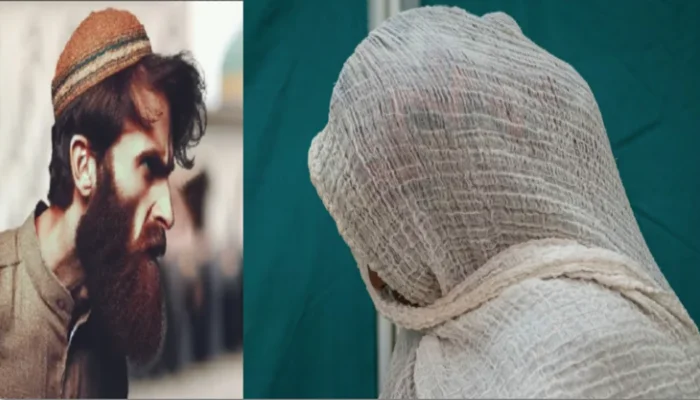
Case Summary
In Bijnor, Uttar Pradesh, a Hindu woman was lured into a relationship and sexually exploited by a Muslim man who concealed his identity and pretended to be Hindu. The accused, a resident of Shadipur village in Bijnor, was working as an auto-rickshaw driver in Chandigarh when he met the Hindu woman, a native of Gorakhpur. During this time, he introduced himself as a Hindu and entered into a relationship with her. Under the false pretext of marriage, he established a physical relationship with her, which eventually led to the birth of a child. Subsequently, the man returned to his native village and performed a Nikah with another woman, without informing the Hindu woman. When she came to know about the marriage, she went to his house, but his family members turned her away. The matter escalated when Hindu organisations intervened, raising concerns of deception and sexual exploitation. They gathered at the local police station and demanded strict action. The police took the accused into custody and initiated an investigation. The woman stated that the accused never disclosed his true religious identity during the course of their relationship. Following a conversation facilitated by the police, both individuals agreed to return to Chandigarh together. As of now, the police have reported that no formal dispute remains between them.
Why it is Hate Crime ?
This case has been added to the tracker under the primary category of: - Crimes against women in relationships and other sexual crimes. Within it, the sub-category selected is: - Man pretends to be Hindu, with the tertiary category being: - Name changed. When a non-Hindu man pretends to be a Hindu to deceive a Hindu woman into a relationship, the act is seen as triggered by malafide intentions. In some cases, the woman eventually accepts the man’s original religious identity and converts after the man’s identity is revealed. These cases could be argued as cases of religious brainwashing and a result of the pressure a woman feels after getting into a relationship with a man. The woman, it can be argued, also changed her religious identity because of the stigma she believes she might face if she chooses to walk out of a deceptive relationship. However, for the purpose of documenting hate crimes, the cases in this subcategory are limited to those where there is explicit violence aimed at religious conversion against the wishes of the victim (force-feeding beef, blackmailing with intimate videos, rape on refusal to convert, etc), or if the woman herself complains of the man’s religious deception. In such cases, it is established that the deception of the non-Hindu man had a specific aim of religious conversion or targeting of the victim due to her Hindu religious identity, therefore, making it a religiously motivated hate crime. This case has been added to the tracker because a Hindu woman was lured into a relationship and sexually exploited by a Muslim man who pretended to be Hindu. The perpetrator deliberately concealed his religious identity to initiate and sustain a relationship with a Hindu woman. This itself is a clear manifestation of bias and malicious intent towards the victim's religion. By concealing his true identity, he exploited her trust, targeting her under false pretences. This indicates a premeditated intent to manipulate her based on her religious background. In cases like these, the tactic of adopting a false Hindu identity to manipulate and "ensnare" a Hindu individual is not just an act of personal betrayal, but can also be interpreted as an expression of disdain or disregard for Hinduism and its customs that reflects a deeper animosity towards Hindus and their beliefs. Furthermore, the Muslim accused also attempted to marry another, which also establishes that he was never interested in a genuine relationship with a Hindu woman; instead, his only goal was the sexual exploitation of a Hindu woman. This deception reflects a larger pattern where Hindu women are specifically singled out using false identities, often with coercion or religious conversion in mind. Such targeted victimisation based on religion not only demonstrates a fundamental disregard for Hinduism but also exposes a deeper animosity toward Hindus and their beliefs. This is why this case has been included in the tracker, as it exemplifies a clear instance of religiously motivated crime. In the Bijnor case, the police intervened and facilitated a private resolution between the Hindu woman and the Muslim man who had deceived her by hiding his religious identity, sexually exploiting her, and later abandoning her after performing Nikah with another woman. By stating that “no formal dispute remains,” the police effectively downplayed the serious nature of the crime, particularly the deception based on religious identity and sexual exploitation of a Hindu woman by a Muslim man, which constitutes a pattern seen repeatedly in similar cases across the country. The police, in many such cases, where the motive behind the crime is obvious but not explicitly mentioned, deny that the crime committed was in any way motivated by a religious bias or say that there was ‘no communal angle’ to the crime. Several factors are generally at play here. Many a time, the police downplay incidents of low-level communal crime because it is their jurisdiction that comes under question. The police also often say that there was ‘no communal angle’ to a crime when there was one, because they wish to ensure that, owing to the crime already committed, there is no further flare-up in the area. Likewise, the Left media and the leftist elite are also inclined to emphasise this "no communal angle" trope, especially wherever the victim of the crime is a Hindu. However, only a police statement or a media report, for instance, cannot be enough to determine whether there is a communal angle present in the crime that has been committed. In fact, to determine whether the crime is communal in nature or not, we need to give emphasis to the ground realities. For example, in the case of Rinku Sharma, the Bajrang Dal activist who was mercilessly stabbed in his house in front of his family members in Delhi’s Mangolpuri area in the year 2021, the leftist media and the leftist ecosystem had tried to peddle that there was no communal angle to the crime. Even the police denied that the crime was communal in nature. However, Opindia spoke to several people who are on the ground with the family of Rinku Sharma, and we were told that the communal tension in the area is palpable. The family of Rinku Sharma has said that the Muslims of the area held a grudge against Rinku ever since he celebrated the Ram Mandir verdict. Like the case of Rinku Sharma, those cases where even if the police have denied a communal angle or the leftist media have gone on an overdrive to peddle the ‘no communal angle’ trope, the ground reality, like the victim’s family or relative's testimonies, make it clear that there was an obvious religious bias that led to the crime, will be documented in this tracker. The Bijnor incident clearly follows this pattern: a Hindu woman was lured under false religious pretences, exploited, and later discarded. The communal element here is not incidental — it is fundamental to the method of exploitation. Thus, even if the police seek to defuse the situation by denying the religious angle, the victim's testimony, and the mode of deception make the communal motive undeniable. Disclaimer: It is important to clarify that the report does not specify the exact date when the woman’s ordeal began. Therefore, for documentation purposes, we have recorded the date based on when the incident was reported in the media.
Victim Details
Total Victim
1
Deceased
0
Gender
- Male 0
- Female 1
- Third Gender 0
- Unknown 0
Caste
- SC/ST 0
- OBC 0
- General 0
- Unknown 1
Age Group
- Minor 0
- Adult 1
- Senior Citizen 0
- Unknown 0


Case Status
Complaint not filed


Perpetrators Details
Perpetrators
Muslim Extremists
Perpetrators Range
One Person
Perpetrators Gender
male
 Sources




