Donation box with funds stolen from Hindu temple, another box of different religion placed
 Garhwa, Jharkhand, India
  6 July, 2025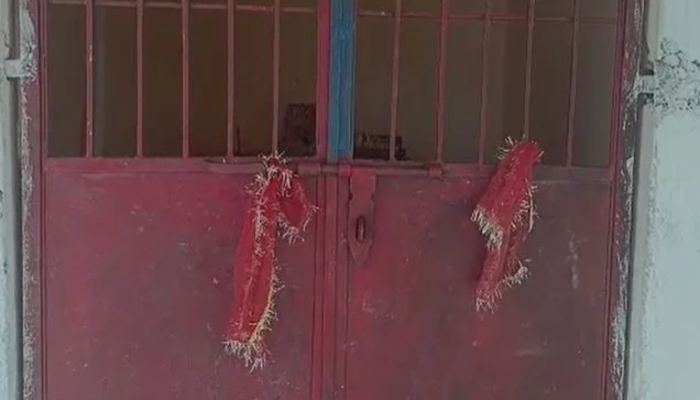
Case Summary
A donation box from a Hindu temple was stolen and replaced with one associated with another religious community in the Sondag Panchayat of Ranka block, triggering widespread tension in the area. The incident occurred at the Bhalaphari Devi Temple, where villagers, upon arriving for regular worship, were shocked to find the temple’s original donation box missing and a substitute box of alien religious affiliation placed in its place. Local residents immediately alerted the Ranka police, who reached the spot and calmed the agitated crowd. According to the villagers, around ₹20,000 had been taken from the stolen donation box. They asserted that the act was a deliberate attempt to offend Hindu sentiments and provoke communal unrest. Authorities, treating the matter with seriousness, stated that the replacement of the donation box appeared to be a calculated provocation aimed at disturbing social peace. A formal investigation was underway, and enhanced vigilance around the temple premises was promised by the administration.
Why it is Hate Crime ?
The primary category in this case is: Attack on Hindu religious representations. The first sub-category under this is: Attack on temples. In Hinduism, a temple is the abode of the Deity. The Deity in the Temple is consecrated, thereby, making it a real, breathing entity. Hindus believe that not just the Deity but the temple premises itself are sacred to Hindus since Hindus hold the faith that the entire Temple space is an amalgamation of the divine energy of the deity. Given the central significance of Temples in Hindu Dharma, any attack against a Hindu Temple or its peripheral premises is an attack on the faith itself and is born out of animosity towards the faith, of which, the Temple is a central tenet. Any manner of attack against a Temple and/or its premises would therefore be considered a religiously motivated hate crime. The second sub-category in this case is: Desecration of Hindu religious symbol. Icons and symbols or a religious representation of a spiritual ideal are widely revered in Hinduism. Iconography is of vital significance in the Hindu milieu. It helps connect people’s spiritual beliefs with the real world. Iconography within the Hindu faith takes several shapes and forms. Murtis are of most significance to Hindus, to which daily rituals, prayers and offerings are done. Besides the murtis, there are several other symbols which have deep significance in the Hindu faith – the Om and Swastika for example. Since these Hindu religious symbols hold paramount importance in Hinduism, any desecration of symbols, icons, murtis, religious representations and manifestations, is driven by animosity towards the faith itself which manifests itself through these murtis, icons and symbols. Therefore, any desecration of these Hindu religious symbols and representations is considered religiously motivated hate crimes under this category. The incident at Bhalaphari Devi Temple in Sondag Panchayat of Ranka block qualifies as a religiously motivated hate crime against Hindus due to the targeted attack on a sacred Hindu institution and its associated practices. The theft of the temple’s donation box, a vessel integral to Hindu worship where devotees offer contributions as an act of devotion, constitutes a desecration of a religious symbol central to the Hindu faith. Despite this, if the case pertained to only the theft of the temple's donation box, we could have inferred that it might have been a crime of opportunity, though it could potentially be an instance of a religiously motivated hate crime. However, the subsequent replacement of this box with one affiliated with another religious community does not leave an iota of doubt that this was a deliberate effort to desecrate and supplant Hindu religious identity, thereby striking at the core of Hindu spiritual observance. The authorities’ recognition of the replacement as a calculated provocation aimed at disturbing social peace reinforces the conclusion that this act was executed with the purpose of humiliating and unsettling Hindus specifically for their adherence to their faith. This sequence of events establishes the crime as a purposeful expression of animosity towards Hindus, targeting their symbols and practitioners to incite communal discord.


Case Status
Complaint filed


Perpetrators Details
Perpetrators
Unknown
Perpetrators Range
Unknown
Perpetrators Gender
unknown
 Sources




