Hindu temple attacked: idol desecrated under pretext of 'tantric ritual' in Uttar Pradesh
 Muzaffarnagar, Uttar Pradesh, India
  7 July, 2025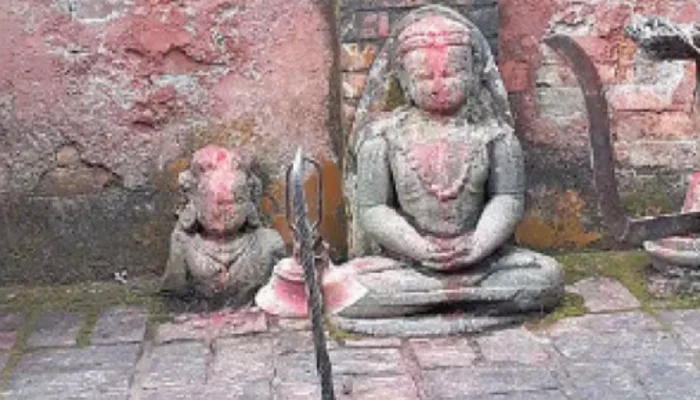
Case Summary
Tensions erupted in Ghissukheda village of Muzaffarnagar district, Uttar Pradesh, because a Hindu temple was vandalised and the idol of Guru Gorakhnath was damaged. According to reports, an individual entered the Baba Gorakhnath temple premises and desecrated the idol of Guru Gorakhnath Maharaj. When villagers discovered the damage the next morning, widespread anger and unrest erupted in the village. Thus, large numbers of villagers, along with the members of Hindu organisations, gathered at the temple to protest, demanding the immediate arrest and encounter of the perpetrator. Hindu organisations termed the incident a direct attack on Hindu faith and religious sentiments, urging the administration to deliver swift and severe punishment. Police registered an FIR under Sections 298 and 299 of the Bharatiya Nyaya Sanhita (BNS) and launched an investigation. Police promptly arrested 35-year-old Ompal Upadhyay, son of Shiaram and a resident of the same village. During interrogation, Ompal stated that he practises Tantra Kriya, and he desecrated the idol under the influence of Tantric knowledge. As of the date of writing this report, the accused was sent to jail, and further legal action was being taken. There was a heavy police presence in the area as the atmosphere remained tense. Police appealed for peace, while villagers had warned of intensifying the agitation if action was delayed.
Why it is Hate Crime ?
This case has been added to the tracker under the primary category of: - Attack on Hindu religious representations. Within it, the sub-category selected is: -Desecration of Hindu religious symbol. Icons and symbols or a religious representation of a spiritual ideal are widely revered in Hinduism. Iconography is of vital significance in the Hindu milieu. It helps connect people’s spiritual beliefs with the real world. Iconography within the Hindu faith takes several shapes and forms. Murtis are of most significance to Hindus, to which daily rituals, prayers and offerings are done. Besides the murtis, there are several other symbols which have deep significance in the Hindu faith – the Om and Swastika for example. Since these Hindu religious symbols hold paramount importance in Hinduism, any desecration of symbols, icons, murtis, religious representations and manifestations, is driven by animosity towards the faith itself which manifests itself through these murtis, icons and symbols. Therefore, any desecration of these Hindu religious symbols and representations is considered religiously motivated hate crimes under this category. The other sub-category relevant here is: - Attack on temples. In Hinduism, a temple is the abode of the Deity. The Deity in the Temple is consecrated, thereby, making it a real, breathing entity. Hindus believe that not just the Deity but the temple premises itself are sacred to Hindus since Hindus hold the faith that the entire Temple space is an amalgamation of the divine energy of the deity. Given the central significance of Temples in Hindu Dharma, any attack against a Hindu Temple or its peripheral premises is an attack on the faith itself and is born out of animosity towards the faith, of which, the Temple is a central tenet. Any manner of attack against a Temple and/or its premises would therefore be considered a religiously motivated hate crime. This case has been added to the tracker because a Hindu temple was vandalised, and the consecrated idol of Guru Gorakhnath Maharaj was deliberately damaged and desecrated. Gorakhnath is considered the most prominent figure in the Nath tradition. He is regarded as an incarnation or great devotee of Lord Shiva, often called Adi Nath (the first yogi). Moreover, in Hinduism, idols of Hindu deities are not just artistic representations but are deeply revered manifestations of the divine. Their desecration is seen as a direct affront to the religious sentiments of Hindus and an act of profound disrespect. Such acts of violence against Hindu temples and their idols are not just an attack on the temple property; it is an act of violence against the religious sentiments of the Hindu community that derives spiritual, cultural, and social meaning from that temple space. While the accused has stated that he carried out the act under the influence of Tantric practice, the fact remains that the act was premeditated, targeted, and executed within a consecrated religious space. Such acts are not neutral or isolated, but rather, they reflect a deeper hostility toward the core symbols of Hindu faith and its religious practices. In Hinduism, there is no scriptural or traditional basis for desecrating idols of worship as part of tantric practice. Such acts are a distortion of Hindu beliefs and should not be justified under the guise of tantra. Using tantra as an excuse for idol desecration is misleading and unacceptable. Thus, desecration by claiming the influence of tantric knowledge was more an excuse to hide a deeper hatred towards the Hindu faith and its sacred spaces or symbols. A temple is an institution that holds immense spiritual importance in the Hindu faith. For Hindus, temples are not mere physical structures; they are sanctified spaces that embody the divine presence of Hindu deities. Acts of violence against such spaces, or their consecrated deities, are not isolated incidents of destruction but reflect underlying hostility towards Hindu beliefs and identity. Furthermore, the psychological impact of such attacks is immense. Hindu devotees visit temples to seek solace, peace, and a sense of connection with the divine. When these sacred temples are targeted and desecrated, it shatters the sense of security and belonging that the Hindu community derives from its religious institutions. The pain caused by the desecration of the temple idols is not limited to the physical damage; it is a wound to the collective psyche of the Hindu community. Since this attack was directed at both the Hindu temple and the temple idols, it is classified as a religiously motivated hate crime against the Hindu community


Case Status
Arrested


Perpetrators Details
Perpetrators
Others
Perpetrators Range
One Person
Perpetrators Gender
male
 Sources




