Hindu woman deceived by Muslim man posing as Hindu, forced to eat beef and pressured to convert; threatened to be chopped like Shraddha Walkar
 Patna, Bihar, India
  8 May, 2025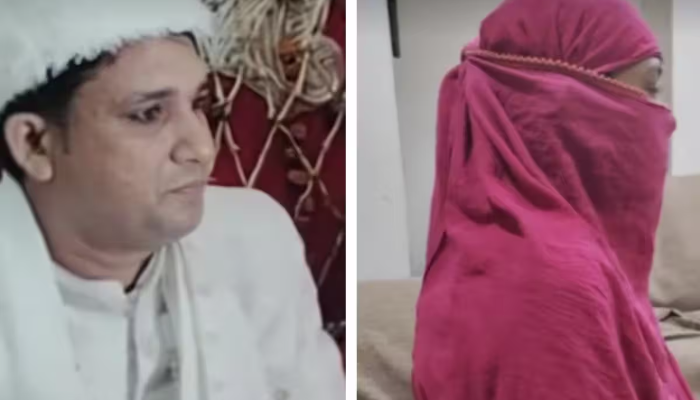
Case Summary
In Patna, Bihar, a 27-year-old Hindu woman was deceived by a Muslim man who concealed his identity and pretended to be a Hindu to lure her into a relationship. He took up a Hindu name, Sonu, to ensnare her and then sexually exploited her under the false promise of marriage. He pressured her to convert to Islam. She faced physical and mental abuse, was forced to consume beef and perform Islamic rituals, and was later threatened with dismemberment. The accused, Muhammad Siraj Ahmed, is from Gopalganj and is a postgraduate student residing at the hostel of Nalanda Medical College Hospital (NMCH). The victim met him three years ago when she visited the NMCH for medical treatment. A friendship gradually developed between them, which turned into a romantic relationship. The accused, Siraj, concealed his Muslim identity and introduced himself as a Hindu named Sonu. He pursued the victim persistently, winning her trust through repeated assurances of love. On the day of Chhath Puja, he even participated in religious rituals, including offering Arghya and accepting prasad, declaring that he wished to marry her and had performed the ritual for her. Moved by his apparent devotion, she committed herself fully to the relationship, and they began living together in a rented room. Around two years ago, she overheard him speaking to his friends in a religiously distinct manner, which aroused her suspicions. Her doubts were confirmed when she examined his documents. Upon confrontation, he admitted that he had concealed his identity intentionally, knowing she would not have entered into a relationship with him otherwise. Despite this, he continued to exploit her emotionally and physically under the false promise of marriage. After his identity was disclosed, the accused pressured her to convert to Islam, forced her to consume beef, perform namaz five times a day, observe roza, and recite six different kalmas. When she refused, he physically assaulted her. He took her to Sabzibagh and demanded religious compliance. Eventually, he abandoned her and returned home to marry another woman. When the victim objected, he mocked her, saying, “Four marriages are permissible in my religion; if you accept Islam, I will keep you too.” She went to his residence, but his family members assaulted her and reiterated that multiple marriages were acceptable in their faith. The victim also revealed that when she initially approached the women’s police station on 14th June, she was made to run from one police station to another for five days. It was only after she raised her complaint during the Janta Darbar attended by the Director General of Police (DGP) on 19th June that an FIR was registered at the women’s police station. The charges include rape, cheating, and kidnapping. She further disclosed that the accused attempted to abduct her on 9th May by calling her to a restaurant under the pretext of a meeting. He has continued to harass and threaten her, forcing her to change her residence repeatedly. In one of his threats, he warned her that she would meet a fate worse than Shraddha Walkar, stating he would dismember her into 25 pieces. Moreover, the police confirmed that the woman reported consistent harassment, physical and mental abuse, and repeated rape by the accused under the false pretext of marriage. In November 2022, the Delhi Police solved a six-month-old murder case and arrested the accused Aftab Amin Poonawalla for murdering his 28-year-old live-in partner Shraddha Walker on the 18th of May, 2022. The accused Aftab, chopped Shraddha’s body into 35 pieces and kept it in his refrigerator.
Why it is Hate Crime ?
This case has been added to the tracker under the primary category- Crimes against women in relationships and other sexual crimes. The sub-category relevant in this case is- Forced conversion before marriage, and within it tertiary categories selected are - Forced to eat beef, Forced to follow non-Hindu religious practices and Forced to do Nikah. In such cases, a non-Hindu man is in a relationship with a Hindu woman when the pressure to convert her religion begins to manifest. In such cases, typically, two patterns emerge. First, when the relationship is consensual, and the religious identity of the perpetrator is known to the Hindu woman in the relationship, however, at some point during the relationship, the non-Hindu man starts to force the victim to convert her religion and give up her Hindu religious identity. The second is when the woman gets into a marriage with the man pretending to share her faith. Later, when the truth is revealed, the man starts pressuring the woman to convert her religion and give up her religious identity. In both the situations, the methods used to force the victim to convert her religion often revolve around force-feeding beef, forcing her to wear hijab, forcing her to read the Kalma or even pressurizing the victim to do ‘Nikah’, which is marriage under Islamic law, with a prerequisite being conversion to Islam. Cases where a Hindu woman consensually converts to Islam in a relationship will be left out of the hate crime database, even though it could be argued in several cases that the conversion was a result of religious brainwashing. The other sub-category selected is - Man pretends to be Hindu, and within it, the tertiary category selected is - Name Changed. When a non-Hindu man pretends to be a Hindu to deceive a Hindu woman into a relationship, the act is seen as triggered by malafide intentions. In some cases, the woman eventually accepts the man’s original religious identity and converts after the man’s identity is revealed. These cases could be argued as cases of religious brainwashing and a result of the pressure a woman feels after getting into a relationship with a man. The woman, it can be argued, also changed her religious identity because of the stigma she believes she might face if she chooses to walk out of a deceptive relationship. However, for the purpose of documenting hate crimes, the cases in this subcategory are limited to those where there is explicit violence aimed at religious conversion against the wishes of the victim (force-feeding beef, blackmailing with intimate videos, rape on refusal to convert, etc), or if the woman herself complains of the man’s religious deception. In such cases, it is established that the deception of the non-Hindu man had a specific aim of religious conversion or targeting of the victim due to her Hindu religious identity, therefore, making it a religiously motivated hate crime. The other sub-category selected is - Brainwashed and/or Groomed. In our database, we have not added incidents where women have converted to another religion of their free will and no allegations of forced/involuntary conversion have been made. However, there are certain cases of conversion where the consent itself is a result of the brainwashing or grooming of a minor by the non-Hindu perpetrator trying to victimise a woman for her Hindu religious identity. The phenomenon of grooming points to non-Hindu perpetrators identifying their Hindu victims’ vulnerabilities and exploiting them over months and sometimes years, to extract the supposed ‘consent’ in order to convert their religion. In most cases of grooming, the victims are minors or the grooming started when the victim was a minor. In other cases of grooming, the non-Hindu perpetrator brainwashes and grooms a minor victim to extract their trust and then proceeds to rape them repeatedly with the intent of converting them to their faith. It is pertinent to understand here that when the victim is a minor, the ‘consent’ to convert or enter into a romantic relationship with an adult itself is redundant – addressed by POCSO. While every case of conversion of a minor and incidents of establishing a physical relationship with a minor by an adult is a crime, for the purpose of this database, a case would be considered a hate crime only if there is a distinct religious angle to the grooming. For example, in the UK, if a Hindu minor is targeted by Pakistani grooming gangs, it would be considered a hate crime because the victims are specifically targeted owing to their non-Muslim religious identity with the perpetrators being Muslim. In other cases, if a Hindu minor is brainwashed into entering a physical relationship with the non-Hindu adult perpetrator and the family alleges grooming/brainwashing of the minor to convert her religion, it would form a part of this database. If the victim is a Hindu adult, the case would form a part of this database only if the victim herself says that she was brainwashed/groomed to convert her religion. However, if the victim is deceased (murdered or otherwise), the case would form a part of this database if her family/friends provided testimony that the victim was brainwashed/groomed to convert her religion. Since these crimes have a distinct religious angle where the victim is being targeted owing to her Hindu religious identity, these cases are considered a hate crime. The other sub-category selected is - Assault or threat upon refusal to convert. When Hindu women are in a relationship with non-Hindu men, there are cases where the woman faces threats or assault after she refuses to convert and change her religious identity owing to pressure/force by the non-Hindu man. Such relationships may be consensual with the religious identity of the non-Hindu man known to the victim. Somewhere along the relationship, the non-Hindu man starts pressurizing the Hindu woman to convert to Islam and upon her refusal, assaults or threatens the victim. Such cases are driven by specific religious motivations and against the religious identity of the victim and are therefore qualified as hate crimes. Cases where the Hindu woman converts to Islam and does not file a complaint about the force or threat, are not considered a part of the hate tracker, even though, it may be argued that the woman was brainwashed or threatened to convert to Islam. The other sub-category selected is - Leaves Hindu partner upon refusal to convert. When Hindu women are in a relationship with non-Hindu men, there are cases where the woman faces pressure/threats/violence to convert and change her religious identity by the non-Hindu man. However, when the Hindu woman refuses to convert, the non-Hindu man ends the relationship or divorces the woman, as the case might be. Such relationships may be consensual with the religious identity of the non-Hindu man known to the victim. Somewhere along the relationship, the non-Hindu man starts pressuring the Hindu woman to change her religious identity and upon her refusal, ends the relationship. Cases where the Hindu woman converts to Islam and does not file a complaint about the force, or threat after she refuses to convert to Islam, are not considered a part of the hate tracker. The other sub-category selected is - Blackmailed to convert. When Hindu women are in a relationship with non-Hindu men, there are cases where the woman is blackmailed to convert her religion, owing to her religious identity of being a Hindu. Such relationships may be consensual with the religious identity of the non-Hindu man known to the victim, however, there could be cases where the relationship is not consensual and the non-Hindu man starts blackmailing a Hindu woman to convert her religion. In these cases, it is often seen that the Hindu woman is blackmailed with intimate photos and/or videos, threats of harm to her or her family, threats of violence etc. Such cases are driven by specific religious motivations and against the religious identity of the victim and are therefore qualified as hate crimes. This case exhibits multiple religious markers that clearly establish it as a religiously motivated crime specifically targeting a Hindu victim. Firstly, the accused, a Muslim man, deliberately concealed his religious identity to deceive the Hindu woman. This act itself demonstrates a clear bias and malicious intent towards the victim’s religion. By hiding his true identity, he manipulated her trust and targeted her under false pretences, indicating a premeditated effort to exploit her based on her religious background. One of the most striking examples of this calculated deceit was the accused's participation in Chhath Puja, a sacred Hindu festival. He went to the ghat, offered Arghya—a ritual of deep spiritual significance to Hindus—and accepted prasad, thereby performing symbolic acts that strongly affirmed his supposed Hindu identity. He then told the victim, “I have performed this Chhath for you. I wish to marry you.” These ritual acts were not out of respect for her religion but were used as tools of deception. By co-opting Hindu rituals to gain her trust and affection, the man weaponised religious symbols to emotionally manipulate the victim. This exploitation of sacred Hindu practices for deceitful purposes, followed by attempts at religious conversion, highlights the malafide intent behind his identity fraud. The woman herself has testified to this deception, which was clearly aimed at targeting her Hindu identity and coercing her into abandoning it, therefore qualifying it as a religiously motivated hate crime. Further, the woman was subjected to direct and repeated efforts by a Muslim man to abandon her Hindu identity and embrace Islam. These efforts included forcing her to consume beef, perform namaz five times daily, observe roza, recite six kalmas, and ultimately pressuring her to undergo Nikah (Islamic marriage), which requires conversion to Islam. One of the most egregious elements was the accused’s insistence that she consume beef, which is not just a dietary choice in Hinduism but a deeply sacred restriction. The cow is venerated as holy in the Hindu tradition. For Hindus, the act of eating beef is not merely taboo; it is spiritually polluting and an outright desecration of their values. The demand that the woman eat beef was a direct assault on her Hindu identity. It was not an act of casual force but a symbolic form of religious degradation—an attempt to make her violate her deepest religious convictions and thus psychologically detach her from her faith. Such coercion is emblematic of religiously motivated aggression, where the accused uses acts that are deeply offensive and incompatible with the victim’s beliefs in order to subjugate, humiliate, and break her religious will. In many cases of forced conversion, the imposition of antithetical practices, such as beef consumption, is a tool to weaken the victim’s attachment to their original faith. This deliberate imposition is not a cultural misunderstanding but religious dominance through abuse. Moreover, the pressure on the victim to perform namaz, observe roza, recite kalmas, and ultimately undergo Nikah underlines a coordinated effort to replace her Hindu identity with an Islamic one. These were not mere relationship dynamics but conditions imposed upon her to make her eligible, in the eyes of the perpetrator and his religious community, for inclusion through conversion. Her repeated refusals were met with assault and threats, showing the religious stakes of her resistance. Over the span of three years, the victim was gradually manipulated through emotional coercion, deception, and exploitation of her trust. What began as a seemingly affectionate relationship slowly turned into a campaign of religious pressure. The grooming was deliberate and prolonged. It started with emotional bonding and culminated in physical abuse, sexual exploitation, and demands for religious conversion. Although the victim is an adult, she has clearly stated that she was deceived and pressured to give up her religion, and that her trust was systematically misused. She did not enter this dynamic with full knowledge or consent, especially not of the man’s religious identity or his ultimate intentions. Her repeated statements indicate that the conversion efforts were neither voluntary nor ideological—they were the result of psychological manipulation and abuse, qualifying the case as one of religious grooming, and thereby a hate crime. The threats and assaults faced by the Hindu woman were a direct result of her refusal to abandon her religion and convert to Islam. After initially grooming her into a relationship, the accused began pressuring her to give up her Hindu identity and embrace Islamic practices. When she resisted, the abuse escalated into physical violence, isolation, and ultimately, death threats—not as random expressions of anger, but as strategic tools of terror aimed at forcing religious conversion. One of the most chilling aspects of the abuse was the perpetrator’s reference to the Shraddha Walkar case, in which a Hindu woman was brutally murdered and dismembered into multiple pieces by her Muslim partner. By invoking this specific case, the accused issued a calculated and symbolic threat: that the victim, too, would be “cut into 25 pieces” if she did not submit. This threat carried deep communal and psychological resonance, as it drew upon a high-profile case of gendered religious violence that shocked the entire nation. The reference was not arbitrary—it was intended to instil terror by recalling a real-life instance of brutal violence against a Hindu woman who had entered a relationship with a Muslim man and met a horrific end. This threat functioned as more than just intimidation; it served as a religious warning, laced with gendered and communal menace. It was meant to silence her, force her into compliance, and erase her will—all because she chose to remain Hindu. Therefore, the nexus between her religious refusal and the threat of mutilation establishes that the assault and intimidation were not simply acts of personal rage. They were religiously motivated tactics of control and punishment. Beyond threats and violence, the accused also employed psychological intimidation. His repeated warnings, threats of harm, and abusive behaviour were all tied to her religious identity. He blackmailed her emotionally by invoking religious law and entitlement to multiple wives. When she protested, he taunted her, offering conditional acceptance only if she converted. These manipulations, coupled with fear of social stigma, religious isolation, and even physical violence, constitute religious blackmail. This weaponisation of religion to control and suppress a Hindu woman forms the basis of religiously motivated coercion and makes it a hate crime by intent and outcome. After repeated efforts to convert the woman failed, the perpetrator abandoned her and returned home to marry another woman from within his religious community. This shift reflects that he was never interested in the Hindu victim per se, but he solely aimed to convert her to Islam. The moment she stood firm in her faith and resisted, the relationship ended. This sequence reinforces the religious nature of the relationship, where conversion was a prerequisite for continuity. It was not an interfaith relationship based on mutual respect but a conditional one designed to absorb her into another faith. Her Hindu identity became the very reason for rejection—an act rooted in religious intolerance, thereby qualifying it as a hate crime. Hence, this case is a religiously motivated hate crime because the victim was targeted specifically for being a Hindu woman. The deception through a false Hindu identity, the coercion to abandon her faith, the imposition of anti-Hindu practices like beef consumption, and the threats of brutal violence upon her refusal to convert—all point to a deliberate attempt to violate, erase, and subjugate her religious identity. The abuse was not random but rooted in hostility toward her Hindu beliefs, making it a clear act of religiously driven hate crime. Disclaimer: It is important to clarify that the report does not specify the exact date when the woman's ordeal began, but it mentions that the accused attempted to kidnap her on 9th May, 2025. Since this is the earliest date mentioned, we are considering this as when the victim's ordeal began and using this as the incident date. While media coverage of the incident emerged in June 2025, the Hinduphobia Tracker records the incident based on when the victim’s ordeal began, not when it was reported.
Victim Details
Total Victim
1
Deceased
0
Gender
- Male 0
- Female 1
- Third Gender 0
- Unknown 0
Caste
- SC/ST 0
- OBC 0
- General 0
- Unknown 1
Age Group
- Minor 0
- Adult 1
- Senior Citizen 0
- Unknown 0


Case Status
Complaint filed


Perpetrators Details
Perpetrators
Muslim Extremists
Perpetrators Range
One Person
Perpetrators Gender
male
 Sources




