Hindu temple attacked during idol installation in Delhi; Muslim official damages idols and insults deities
 South Delhi, Delhi, India
  11 June, 2025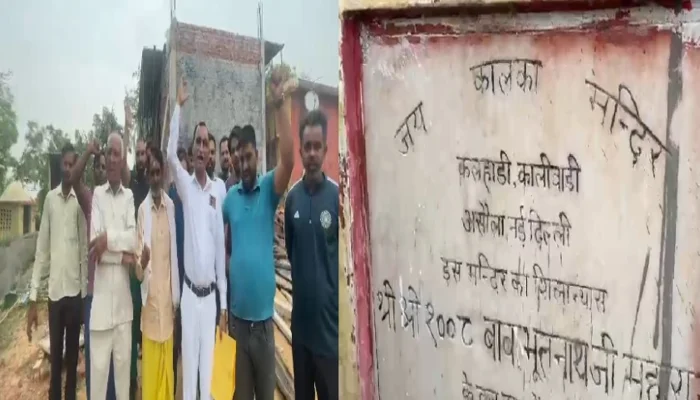
Case Summary
In the Chhatarpur area of Delhi, the Kalhadi Mata temple was vandalised, with its idols damaged by a Muslim man named Tajuddin Khan, who also used abusive language against Hindu deities. The Kalhadi Mata temple was established in 1988 and holds significant religious importance among the local Hindu community. During the installation of a new idol in the temple premises, Forest Department Deputy Ranger Tajuddin Khan entered the site and demanded ₹50,000 from the temple priest and devotees. When they refused, he proceeded to vandalise the temple without any legal basis. Furthermore, he used abusive language against the Hindu deities and also damaged the idols. The accused also issued direct threats, stating that he would demolish the entire temple. The attack had triggered outrage among the Hindu devotees and local residents. As of the date of writing this report, a complaint was filed against Tajuddin Khan. The Hindu community has demanded a fair investigation and strict legal action against the forest official responsible for the desecration.
Why it is Hate Crime ?
This case has been added to the tracker under the primary category of: - Attack on Hindu religious representations. Within it, the sub-category elected is: - Attack on Temple. In Hinduism, a temple is the abode of the Deity. The Deity in the Temple is consecrated, thereby, making it a real, breathing entity. Hindus believe that not just the Deity but the temple premises itself are sacred to Hindus since Hindus hold the faith that the entire Temple space is an amalgamation of the divine energy of the deity. Given the central significance of Temples in Hindu Dharma, any attack against a Hindu Temple or its peripheral premises is an attack on the faith itself and is born out of animosity towards the faith, of which, the Temple is a central tenet. Any manner of attack against a Temple and/or its premises would therefore be considered a religiously motivated hate crime. The other sub-category relevant here is: - Desecration of Hindu religious symbol. Icons and symbols or a religious representation of a spiritual ideal are widely revered in Hinduism. Iconography is of vital significance in the Hindu milieu. It helps connect people’s spiritual beliefs with the real world. Iconography within the Hindu faith takes several shapes and forms. Murtis are of most significance to Hindus, to which daily rituals, prayers and offerings are done. Besides the murtis, there are several other symbols which have deep significance in the Hindu faith – the Om and Swastika for example. Since these Hindu religious symbols hold paramount importance in Hinduism, any desecration of symbols, icons, murtis, religious representations and manifestations, is driven by animosity towards the faith itself which manifests itself through these murtis, icons and symbols. Therefore, any desecration of these Hindu religious symbols and representations is considered religiously motivated hate crimes under this category. The second primary category selected here is: - Hate speech against Hindus. Within it, the sub-category selected is: - Anti-Hindu slurs and mocking faith. Anti-Hindu slurs and the deliberate mocking of the Hindu faith owing to religious animosity involve the usage of derogatory terms, stereotypes, or offensive references to religious practices, symbols, or figures. One of the common anti-Hindu slurs used against Hindus is “cow-worshipper” and “cow piss drinker”. The intention of using this term is to demean and mock Hindus as a group and their religious beliefs since Hindus consider the cow holy. Additionally, some symbols and the slurs attached to them have a historical context that exacerbates the insult, hate, stereotyping, dehumanisation and oppression against Hindus. Cow worship has been used for centuries to denigrate Hindus, insult their faith and oppress Hindus specifically as a religious group. There has been overwhelming documentation about how cow slaughter has been used to persecute Hindus with cow meat being thrown in temples and places of worship. There has also been overwhelming documentation where cow meat (beef) has been force-fed to Hindus to either forcefully convert them to Islam or denigrate their faith. Apart from cow worship, the Swastika – which holds deep religious significance for the Hindus – has also been misinterpreted and distorted to use as a slur against Hindus. Similarly, the worship of the Shivling has been used by supremacist ideologies and religions to denigrate Hindus owing to religious animosity. Such slurs and denigration stem out of inherent animosity and hate towards Hindus and their faith, therefore, it is categorised as hate speech targeted at Hindus specifically owing to their religious identity. This case has been added to the tracker because the Kalhadi Mata temple was vandalised, and the sacred idol placed inside was damaged by a Muslim man named Tajuddin Khan. He misused his authority as a forest department officer to barge into the temple premises, abuse Hindu deities, and desecrate the sanctified space. In Hinduism, a Hindu temple is very sacred and is regarded as the abode of the deity. The temple and its presiding deity are highly revered and sacred, as it is believed that it is infused with divine energy, making it an essential part of the faith. Any act of aggression against a temple or its idols is not merely an act of vandalism but an attack on the religious identity of Hindus, rooted in animosity towards Hinduism. Thus, such attacks not only cause physical destruction of the religious site but also inflict profound wounds on the spiritual and cultural fabric of the Hindu community, as temples symbolise their faith and collective identity. The deliberate desecration of the murti by Tajuddin Khan, who not only physically damaged the idol but also used abusive language against Hindu deities, constitutes a religiously motivated hate crime. His actions show his immense hatred and disdain for Hindu religious representations. In Hinduism, an idol of a Hindu deity is not just an artistic representation but is also a deeply revered manifestation of the divine. Any sort of attack on idols of Hindu deities is seen as a direct affront to the religious sentiments of Hindus and an act of profound disrespect. The Muslim perpetrator deliberately vandalised the temple idol despite knowing that it holds significant importance for the local Hindu community. The incident at Kalhadi Mata temple involved not just physical vandalism of a sacred Hindu space but also verbal abuse directed at Hindu deities. The accused, Tajuddin Khan, used abusive and derogatory language specifically targeting Hindu deities. Moreover, he openly threatened to demolish the entire temple, which further portrays his deep-seated religious hostility toward Hindu institutions and sacred spaces. Mocking or insulting deities is not merely an act of personal disrespect—it is a symbolic attack on the community’s collective belief system. In Hindu dharma, the deity is not just a representation but a living divine presence in murti form. Hence, abusing a deity verbally is tantamount to abusing the followers of that faith, and doing so during an important ritual like idol installation magnifies the intent and impact of the act. It signals contempt for the sacred, and by extension, contempt for the religious group that holds it sacred. Historically and socially, such slurs and abuse have been used to dehumanise Hindus, strip them of dignity, and justify acts of violence and desecration. When these abuses are delivered by a person in power (in this case, a government official), they become even more threatening and intimidating for the religious community. Therefore, the verbal abuse against Hindu deities in this case is not simply offensive speech—it is hate speech, as it targets a group based on religious identity, intends to insult, demean, and mock their beliefs, and is part of a broader act of religiously motivated aggression.


Case Status
Complaint filed


Perpetrators Details
Perpetrators
Muslim Extremists
Perpetrators Range
One Person
Perpetrators Gender
male
 Sources




