Hindus falsely accused in fabricated firing plot; Muslim man orchestrates conspiracy to spark communal unrest
 Sambhal, Uttar Pradesh, India
  19 June, 2025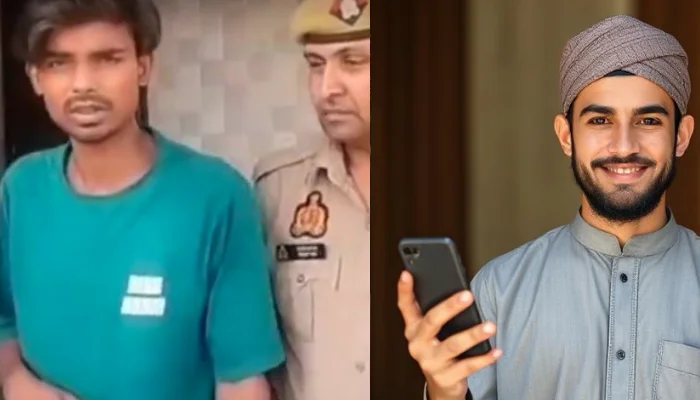
Case Summary
In Sambhal, Uttar Pradesh, a Muslim man falsely accused a Hindu man of a firing attack in an attempt to incite communal tension and malign the Hindu community. The accused, Shaan Mohammad, who ran a tea hotel on Badaun Road, called the police late Friday night and alleged that Hindu youths on motorcycles had fired at him. His false complaint began creating tension in the area. However, the police responded swiftly and took control of the situation before it escalated. Upon investigating the claim, including a review of CCTV footage and verification of the alleged Hindu man's location, the police found no evidence of any firing or his presence at the scene. When questioned, Shaan Mohammad admitted that he had fabricated the story out of animosity stemming from a previous personal dispute. He confessed that his intention was to provoke religious conflict by falsely implicating Hindus. Further investigation revealed that the tea hotel was illegally constructed on government land. Within 24 hours of filing the false FIR, authorities demolished the illegal structure using a bulldozer. Superintendent of Police Krishna Vishnoi stated, “Such acts aimed at disturbing communal harmony will not be tolerated. The accused has been jailed, and legal action is ongoing.”
Why it is Hate Crime ?
This case has been added to the tracker under the primary category- Hate Speech against Hindus. The subcategory selected in this is - Anti Hindu subversion and prejudice. Within it, tertiary category selected is - Anti-Hindu Fake News or Downplaying. Hate speech is defined as any speech, gesture, conduct, writing, or display that is prejudicial against a specific individual and/or group of people, which is leading to or may lead to violence, prejudicial action or hate against that individual and/or group. Media plays a specific and overarching reach in perpetuating prejudicial attitudes towards a community owing to unfair, untrue coverage and/or misrepresentation/misinterpretation, selective coverage and/or omission of facts of/pertaining to issues affecting a specific religious group. This type of bias can dehumanise the victim group, making it easier for others to justify harmful actions against them, which aligns with the objectives of hate speech laws aimed at preventing such harm. It is often observed that the media takes a prejudicial stand against the Hindu community driven by their need to shield the aggressor community which happens to be a numeric minority, however, is the one perpetrating violence against Hindus. For example, the media is often quick to contextualise religiously motivated crimes against Hindus, omit or misrepresent facts that point towards religiously motivated hate crimes, justify and/or downplay religiously motivated hate crimes or simply present fake news to stereotype Hindus. Such media bias leads to the denial of persecution and is often used to dehumanise Hindus, leading to justification for violence against them. For example, the media covered several fake allegations of Hindus targeting Muslims and forcing them to chant Jai Shree Ram. Most of these cases were proved false and fabricated after police investigation. These fake news reports were subsequently never retracted or clarified. Such fake news led to the justification of violence and dehumanisation of Hindus based on the argument that since Hindus targeted Muslims and forced them to chant Jai Shree Ram, the dehumanisation of Hindus and violence against them was par for the course and merely a retaliation. Such media bias leads to prejudicial portrayal of Hindus and offers a justification for violence against them and therefore, is considered hate speech under this category. In this case, a Muslim man deliberately fabricated a story that Hindu youths had fired at him, with the explicit intention of creating communal tension and targeting the Hindu community. During police interrogation, he confessed that his aim was to inflame Hindu-Muslim tensions by falsely framing Hindu individuals in a communal crime. This act was not only a criminal misuse of law enforcement resources but also a dangerous and calculated attempt to vilify Hindus and provoke religious disharmony. This case has been added to our tracker under the category Hate Speech Against Hindus, with the sub-category Anti-Hindu Subversion and Prejudice, and the tertiary category Anti-Hindu Fake News or Downplaying. In this sub-category, our tracker typically highlights anti-Hindu fake news propagated by media outlets. But there are many instances where Muslims have fabricated fake news with the intent to demonise Hindus. In this instance, although the media was not directly responsible for spreading the fake news, the fabrication itself was designed to portray Hindus as violent aggressors — a pattern seen in several other cases aimed at inciting hatred against the Hindu community. Hence, this case is documented in this sub-category. The deliberate spreading of fake news to paint Hindus as attackers is not an isolated lie — it is a form of hate speech that can lead to mob violence, deepen communal divisions, and place Hindu lives at risk. This method of falsely implicating Hindus in communal crimes reflects a clear pattern of religious animosity and is thus rightly documented as a religiously motivated hate crime against Hindus. Hence, this incident has been added to the tracker to highlight how anti-Hindu fabrications — even when not picked up by the media — contribute to Hindu hatred, serve to criminalise Hindus unjustly, and are a serious threat to social harmony and religious freedom.


Case Status
Arrested


Perpetrators Details
Perpetrators
Muslim Extremists
Perpetrators Range
One Person
Perpetrators Gender
male
 Sources




