Hindu woman deceived; Muslim man marries her as per Hindu rituals, later pressured for conversion and halala in Ghaziabad
 Ghaziabad, Uttar Pradesh, India
  11 March, 2025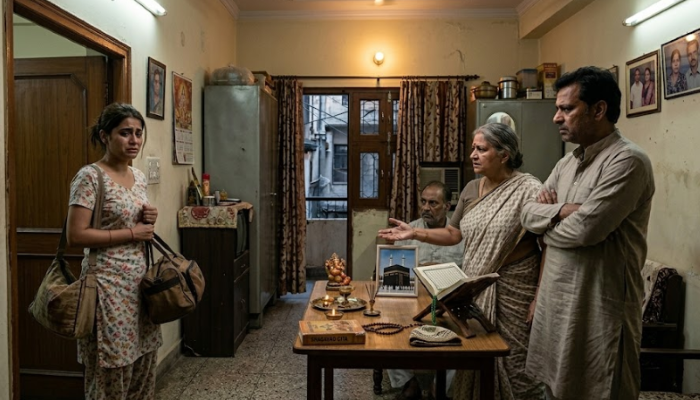
Case Summary
A Hindu woman from the Loni area of Ghaziabad, Uttar Pradesh, was forced into religious conversion and dowry harassment at the hands of her husband and his family. The Muslim perpetrator deceived her by hiding his religious identity and marrying her as per Hindu rituals. Later, the victim found out that her husband was actually a Muslim and had tricked her into the relationship. Once she moved into her marital home, the initial deception gave way to systemic abuse and relentless pressure to abandon her faith. The woman explained to the police that her husband, a resident of Maujpur, Delhi, presented himself as a Hindu and that her wedding took place in accordance with Hindu customs. Upon arriving at her new home, her in-laws forced her to do domestic work and treated her disrespectfully. The husband and his relatives demanded a dowry of five lakhs and a Suzuki Grand Vitara car, using these demands as a catalyst for repeated physical and mental harassment. The woman also accused her husband, who ran a beauty parlour business, of having an illicit relationship with his business partner and cousin. The situation escalated when the husband revealed he had already converted to Islam prior to their wedding and began a campaign to coerce her into doing the same. According to her testimony, he insisted she divorce him, undergo the practice of Nikah Halala, and then remarry him through a formal Islamic Nikah ceremony. The family forced her to wear a burqa and dictated that she accept these religious changes. The accused's family further forced her to sleep in the guest room, alone. The husband got pictures taken with several other women and posted them on social media. She was told that after conversion, she would be taken to Saudi Arabia. When she resisted the pressure to convert, the family responded by throwing her out of the house in September 2025. Left with no choice after being expelled from her home, the woman approached the authorities to hold her husband and his family accountable. Based on her detailed statement, the police registered a formal case against seven individuals, including the husband and several relatives. The charges encompass both dowry harassment and coercion for religious conversion. At the time of documenting this incident, local authorities confirmed that a full investigation into these grave allegations was underway.
Why it is Hate Crime ?
The primary category for this case is "Crimes against women in relationships and other sexual crimes". The sub-category here is "Man pretends to be Hindu". The tertiary category here is "marries as per Hindu rituals". When a non-Hindu man pretends to be a Hindu to deceive a Hindu woman into a relationship, the act is seen as triggered by malafide intentions. In some cases, the woman eventually accepts the man’s original religious identity and converts after the man’s identity is revealed. These cases could be argued as cases of religious brainwashing and a result of the pressure a woman feels after getting into a relationship with a man. The woman, it can be argued, also changed her religious identity because of the stigma she believes she might face if she chooses to walk out of a deceptive relationship. However, for the purpose of documenting hate crimes, the cases in this subcategory are limited to those where there is explicit violence aimed at religious conversion against the wishes of the victim (force-feeding beef, blackmailing with intimate videos, rape on refusal to convert, etc), or if the woman herself complains of the man’s religious deception. In such cases, it is established that the deception of the non-Hindu man had a specific aim of religious conversion or targeting of the victim due to her Hindu religious identity, therefore, making it a religiously motivated hate crime. Another sub-category here is "Forced conversion after marriage". The tertiary category here is "Forced Halala". In such cases, a non-Hindu man marries a Hindu woman, and the force/pressure to convert to any Abrahamic faith, like Islam, begins after marriage. In such cases, typically, two patterns emerge. First, when the relationship is consensual, and the religious identity of the perpetrator is known to the Hindu woman in the relationship. The marriage could be under the Special Marriages Act, where neither parties are required to convert their religion for the marriage to be considered legitimate. While the victim in such cases enters matrimony assuming that religious identity is not a barrier, the non-Hindu man starts to pressure the woman to convert her religion after marriage. The second is when the woman gets into a marriage with the man, pretending to share her faith. Later, when the truth is revealed, the man starts pressuring the woman to convert her religion and give up her religious identity. In both situations, there is application of force by the perpetrator, including the denial of the woman’s religious rights. Some of the means by which the woman is forced/pressured to convert include force-feeding beef, being forced to read the Kalma, being forced to wear a hijab, forced to undergo Halala, etc. There are several instances where, after marriage, the woman voluntarily converts to Islam. Such cases are often argued to be a result of religious brainwashing, however, for the purpose of documenting religiously motivated hate crimes, in the absence of the victim complaining of forced conversion, such cases do not form a part of the database. One other sub-category that this case qualifies for is "Leaves Hindu partner upon refusal to convert". When Hindu women are in a relationship with non-Hindu men, there are cases where the woman faces pressure/threats/violence to convert and change her religious identity by the non-Hindu man. However, when the Hindu woman refuses to convert, the non-Hindu man ends the relationship or divorces the woman, as the case might be. Such relationships may be consensual with the religious identity of the non-Hindu man known to the victim. Somewhere along the relationship, the non-Hindu man starts pressuring the Hindu woman to change her religious identity and upon her refusal, ends the relationship. Cases where the Hindu woman converts to Islam and does not file a complaint about the force, or threat after she refuses to convert to Islam, are not considered a part of the hate tracker. This case bears clear indicators of a religiously motivated hate crime because the victim, a Hindu woman, was deliberately deceived about her husband’s religious identity and subsequently subjected to sustained coercion aimed at forcing her to abandon her faith. The deception surrounding the man’s religious identity was not incidental but central to the circumstances of the marriage. The woman entered the relationship believing that she was marrying a fellow Hindu, and the wedding itself was conducted according to Hindu religious rituals. In Hindu tradition, marriage is not merely a legal arrangement but a sacred religious sacrament performed through specific rites and ceremonies. By presenting himself as a Hindu and participating in these rituals, the man exploited the sanctity of a Hindu religious institution to gain the woman’s trust and enter into a marriage that she would likely not have consented to had his true identity been known. The concealment of the man’s conversion to Islam therefore constituted a calculated misrepresentation designed to bypass the victim’s religious boundaries. This deception placed the woman in a vulnerable position where, after the marriage was completed, demands could be imposed upon her that directly targeted her religious identity. The sequence of events demonstrates that the initial deception was part of a broader pattern aimed at placing the victim in a situation where her Hindu faith could be challenged and ultimately erased through coercion. After the marriage, the woman faced persistent pressure from her husband and his family to convert to Islam. Conversion involves the renunciation of one’s inherited religious identity and the adoption of another faith. The repeated insistence that the woman abandon her Hindu beliefs therefore represented a direct attempt to strip her of her religious identity. The demands placed upon her made it clear that her acceptance within the marital household was contingent upon her willingness to renounce her Hindu faith and conform to a different religious framework. The coercion extended further through attempts to impose Islamic marital practices upon the victim. She was instructed that she would have to divorce her husband, undergo the practice of Nikah Halala, and subsequently remarry him through an Islamic Nikah ceremony. These practices are rooted in Islamic personal law and apply within the religious framework governing Muslim marriages. Imposing these practices on a Hindu woman who had not consented to adopt Islam represented an effort to force her to submit to a religious system that was entirely alien to her own faith. The demand that she undergo Halala before remarrying illustrated the extreme level of religious control being asserted over her personal life. Alongside the religious coercion, the woman was also subjected to sustained harassment within the household, including demands for a dowry of five hundred thousand rupees and a vehicle. This financial extortion intensified the pressure placed upon her and created a coercive environment in which both economic and religious forces were used simultaneously to break her resistance. The combined effect of religious pressure and domestic abuse deepened her vulnerability and reinforced the effort to compel her compliance. Ultimately, the woman was forced to leave the marital home after she refused to convert. Her expulsion from the household demonstrates that her refusal to abandon her Hindu faith resulted in her complete exclusion from the family structure. This outcome shows that the pressure to convert was not a casual suggestion but a condition for her continued acceptance within the household. The sequence of deception, coercion, imposition of religious practices, and eventual expulsion clearly indicates that the victim was targeted because of her Hindu identity. The abuse she endured was aimed at erasing that identity and replacing it with another religious framework against her will. Given that the case involves deliberate religious deception prior to marriage, sustained pressure to convert, attempts to impose Islamic marital practices such as Halala, and the punishment of the victim for refusing to abandon her faith, it displays clear markers of a religiously motivated hate crime. Accordingly, it has been recorded in the Hinduphobia Tracker database. Disclaimer: The exact date on which the Hindu victim’s ordeal began is not clearly specified in the available sources. The report confirms that the marriage between the Hindu woman and the Muslim man took place in May 2025, after the husband concealed his religious identity and presented himself as Hindu. However, the precise day of the marriage is not stated in the source material. For the purposes of documentation in the Hinduphobia Tracker, 12 May 2025 has been recorded as the indicative incident date. This date has been selected based on the point at which the complaint and details of the incident became publicly known through media reporting. The date is used solely for documentation purposes and does not necessarily represent the exact day on which the marriage or the subsequent coercive actions occurred. Disclaimer: The complaint filed by the Hindu victim names seven individuals as perpetrators, including her husband and six members of his family. The husband is identified as the primary perpetrator because he entered into the marriage with the Hindu woman after concealing his religious identity and subsequently subjected her to pressure for religious conversion and other coercive demands. The remaining six individuals are identified as additional perpetrators who are reported to have supported the husband and participated in the harassment and coercive conduct within the marital household. For the purposes of documentation in the tracker, the husband is recorded as the main perpetrator, while the six family members are recorded as additional perpetrators involved in supporting the primary perpetrator’s actions.
Victim Details
Total Victim
1
Deceased
0
Gender
- Male 0
- Female 1
- Third Gender 0
- Unknown 0
Caste
- SC/ST 0
- OBC 0
- General 0
- Unknown 1
Age Group
- Minor 0
- Adult 1
- Senior Citizen 0
- Unknown 0


Case Status
Complaint registered


Perpetrators Details
Perpetrators
Muslim Extremists
Perpetrators Range
From 5 to 10
Perpetrators Gender
both
 Sources




