Hindu sentiments outraged as Indian enterpreneur mocks Lord Ram on social media
 South Delhi, Delhi, India
  11 March, 2026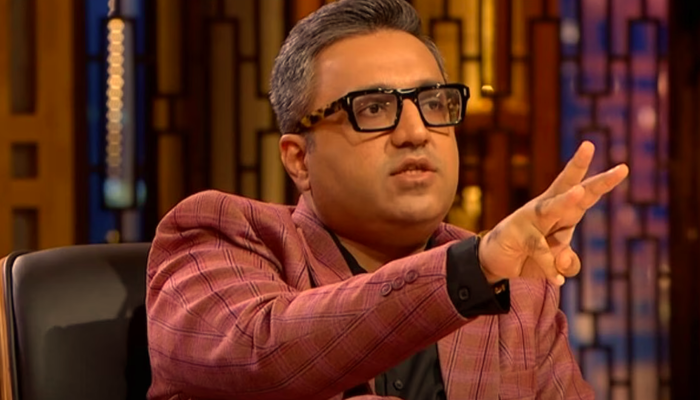
Case Summary
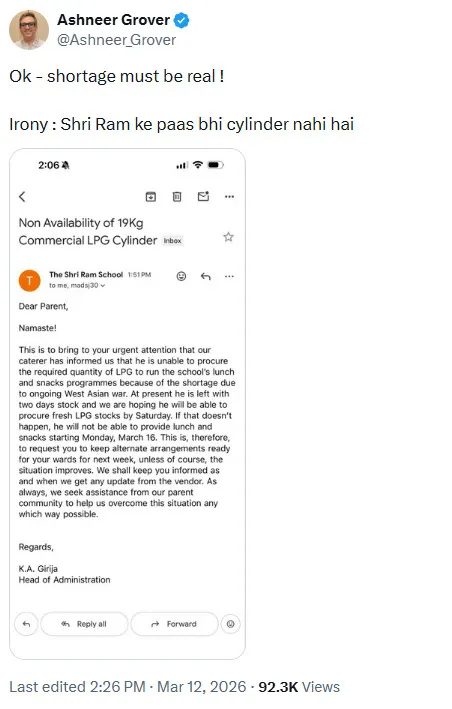
A derogatory social media post mocking Lord Ram, a revered Hindu deity, was made by a man named Ashneer Grover, an Indian entrepreneur, fintech expert, and former shark on Shark Tank India (Season 1). During the ongoing liquefied petroleum gas (LPG) cylinder crisis, he mocked Lord Ram. Grover shared a post on X on Thursday (12 March 2026) in which he mocked Lord Ram. He posted a comment on X along with the screenshot of an email, which referred to a school caterer not being able to maintain the LPG supply. The email was from the Shri Ram School in Gurgaon, which informed the parents of their students about the school’s lunch and snacks programme being suspended due to an LPG shortage. In the email, the school informed the parents that the school’s caterer faced a shortage of LPG and was working on procuring it. However, if that did not happen, the school would not be able to provide lunch and snacks to the students from Monday (16 March 2026) onwards. The school requested the parents to make alternate arrangements for their children. In the caption to the screenshot of the email, Grover mocked the name of the school, which is named after Lord Shri Ram, and said that even Lord Shri Ram did not have an LPG cylinder at this time. “Ok – shortage must be real! Irony: Shri Ram ke paas bhi cylinder nahi hai,” Grover wrote on X. Notably, the LPG shortage in India stemmed from disruptions in global supply chains due to the ongoing conflict in the Middle Eastern region. The conflict obstructed global trade movement through the Strait of Hormuz, a key shipping passage. Over 85% of India’s liquefied petroleum gas supply came through the Strait of Hormuz. The shipping disruptions in the region affected the delivery of goods across the world, including India.
Case Images
Why it is Hate Crime ?
This case has been added to the tracker under the primary category- Hate Speech against Hindus. The subcategory selected is- Anti-Hindu slurs, mocking faith. Anti-Hindu slurs and the deliberate mocking of the Hindu faith owing to religious animosity involve the usage of derogatory terms, stereotypes, or offensive references to religious practices, symbols, or figures. One of the common anti-Hindu slurs used against Hindus is “cow-worshipper” and “cow piss drinker”. The intention of using this term is to demean and mock Hindus as a group and their religious beliefs since Hindus consider the cow holy. Additionally, some symbols and the slurs attached to them have a historical context that exacerbates the insult, hate, stereotyping, dehumanisation and oppression against Hindus. Cow worship has been used for centuries to denigrate Hindus, insult their faith and oppress Hindus specifically as a religious group. There has been overwhelming documentation about how cow slaughter has been used to persecute Hindus with cow meat being thrown in temples and places of worship. There has also been overwhelming documentation where cow meat (beef) has been force-fed to Hindus to either forcefully convert them to Islam or denigrate their faith. Apart from cow worship, the Swastika – which holds deep religious significance for the Hindus – has also been misinterpreted and distorted to use as a slur against Hindus. Similarly, the worship of the Shivling has been used by supremacist ideologies and religions to denigrate Hindus owing to religious animosity. Such slurs and denigration stem out of inherent animosity and hate towards Hindus and their faith, therefore, it is categorised as hate speech targeted at Hindus specifically owing to their religious identity. This case exemplifies religiously motivated anti-Hindu hate speech, as the perpetrator, Ashneer Grover, a prominent entrepreneur and public figure, chose to mock Lord Ram, a revered Hindu deity, during an unrelated liquefied petroleum gas (LPG) crisis rather than focusing on policy critique. Lord Ram holds a central place in the Hindu faith as one of the most revered deities, regarded as the seventh avatar of Lord Vishnu and the embodiment of dharma, righteousness, and ideal conduct for millions of devotees. For Hindus, reverence towards Lord Ram was not optional but fundamental to their spiritual life, and any attempt to mock or denigrate him amounted to a direct affront to Hindu sentiments and the Hindu faith, making it a clear case of religiously motivated hate speech. In this case, the perpetrator had the option to express dissatisfaction with the LPG crisis in India or to criticise governance and policy decisions, but instead chose to drag Lord Ram into a completely non-religious issue by mocking his name in the context of a school named after him, which was facing LPG shortages. This showed that the focus was not on constructive criticism of the LPG crisis but on expressing inner animosity towards Hinduism, the Hindu faith, and Hindu deities, making it a clear instance of religiously motivated hate speech. Lord Ram is a deeply revered Hindu deity, and Hindus regard their deities with utmost devotion and sanctity. When mocking and denigrating remarks are made against Lord Ram, they don't remain casual jokes but strike at the emotional and spiritual core of millions of Hindu devotees, inflicting real hurt and distress and making this a clear case of anti-Hindu hate speech. Such speech undermined the dignity of Hindu worship and treated a central symbol of the faith as an object of ridicule, amounting to an attack on the religious identity of Hindus as a whole. Given Ashneer Grover’s social standing as a prominent entrepreneur and public figure, his decision to mock Lord Ram also risked normalising contempt for Hindu deities and encouraging others to imitate him by making similar derogatory remarks, memes, and jokes about Hindu gods, goddesses, and practices. This did not remain an isolated expression of disrespect but contributed to a wider environment of anti-Hindu prejudice and bias, where belittling Hinduism and its symbols became socially acceptable, making it a clear instance of anti-Hindu hate speech and part of a broader pattern of hate-driven targeting of the Hindu community. Given that this case met the parameters of hate speech, it is added to the Hate Crime database of the Hinduphobia Tracker.


Case Status
Unknown


Perpetrators Details
Perpetrators
Others
Perpetrators Range
One Person
Perpetrators Gender
male
 Sources




