40-day-old Hindu infant killed by his Muslim great-grandmother over his Hindu father's and Muslim mother's interfaith marriage
 Chikkaballapur, Karnataka, India
  23 December, 2025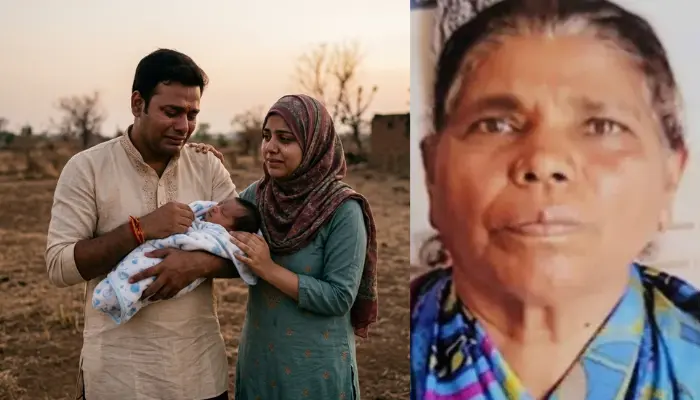
Case Summary
In Chelur town of Chikkaballapura district, Karnataka, a 40-day-old Hindu infant boy fell victim to a heinous murder by his Muslim great-grandmother, Mehboobi, who suffocated him to death over her disapproval of his Hindu father's interfaith marriage to his Muslim mother. This incident occurred on 24 December 2025 at Mehboobi's residence in Chelur town, where the innocent Hindu infant lived with his Muslim mother after childbirth. Mehboobi initially deceived family members by claiming the Hindu infant died from sudden breathing problems. She later insisted he succumbed to unexpected respiratory complications. The family, trusting her account, performed the last rites without suspicion. However, later, the infant's mother soon grew wary of the sudden death. She observed Mehboobi's suspicious behaviour and sensed foul play. She promptly approached the Chelur police station to file a complaint demanding a thorough investigation. Police launched an immediate inquiry based on her complaint. They secured permission to exhume the baby's body for post-mortem examination. Officials exhumed it and sent it for autopsy, with samples forwarded to the Forensic Science Laboratory for analysis. The Forensic Science Laboratory report confirmed the infant died from suffocation, not natural illness, exposing Mehboobi's deliberate crime. “After receiving the Forensic Science Laboratory report, it became clear that the child's death was not natural. The baby had been suffocated. During interrogation, Mehboobi gave conflicting statements, which strengthened our suspicion about her involvement,” a senior police officer stated. Police arrested Mehboobi after intense questioning and produced her in court, where she was remanded to judicial custody. Interrogation revealed her motive: seething anger and hatred towards her granddaughter's marriage to a Hindu man. Mehboobi's granddaughter had entered a love marriage with a Hindu youth against family wishes. Mehboobi vehemently opposed inter-religious unions and vented fury over the relationship and the child's birth. “Preliminary investigation indicates that the accused harboured strong resentment towards her granddaughter for marrying a Hindu man. She was unhappy with the marriage and the birth of the child from that relationship,” a police officer involved stated. Mehboobi suffocated the sleeping infant in the house, then fabricated a story of breathing issues to cover her tracks. Chelur residents reeled in shock at the brutality inflicted on such a defenceless Hindu child within a family. The infant's mother remained utterly devastated by the loss of her newborn. At the time of reporting, police continued investigating whether other family members knew of the crime or aided concealment. Chelur police registered a murder case, with probes into this shocking infanticide ongoing.
Why it is Hate Crime ?
This case is being added to the tracker under the primary category- Attack resulting in death. The subcategory selected is- Attacked for Hindu identity. In several cases, Hindus are attacked merely for their Hindu identity without any perceived provocation. A classic example of this category of religiously motivated hate crime is a murder in 2016. 7 ISIS terrorists were convicted for shooting a school principal in Kanpur because they got ‘triggered’ seeing the Kalava on his wrist and tilak that he had put. In this, the Hindu victim had offered no provocation except for his Hindu religious identity. The motivation for the murder was purely religious, driven by religious supremacy. Such cases where Hindus are targeted merely for their religious identity would be documented as a hate crime. Under this category, cases where the attack led to the death of the Hindu victim/s would be documented. Another primary category selected is- Men attacked for being associated with non-Hindu women. The subcategory selected is- Attacked by non-Hindu partner or/and her family. When Hindu men are in a relationship with non-Hindu women, there are cases where the man is forced to convert his religion and upon his refusal to do so, the partner or/and her family attacks the victim. Such relationships may be consensual with the religious identity of the non-Hindu woman known to the victim. Somewhere along the relationship, the non-Hindu woman or her family starts forcing/pressurizing the Hindu man to convert. In some of these cases, the association could be non-consensual as well or, the religious identity of the non-Hindu woman could be previously unknown to the Hindu victim. In such cases, the Hindu man is first forced/pressurized to change his religion by the non-Hindu woman or her family. The force/pressure could involve threats. The trigger for directing violence against the Hindu man is in these cases his refusal to comply and change his religion under threat and/or force. In other cases that have been documented, it is also seen that the Hindu partner is assaulted by the non-Hindu woman or her family simply for his relationship with the non-Hindu woman and by virtue of him following the Hindu faith and not the religion of the non-Hindu woman. In such cases, the relationship is consensual in most cases and the religion of both partners is known to the other. Often, in such cases, there is no direct force/pressure to convert either, however, the attack is a result of the Hindu man being in a relationship with the non-Hindu partner and not following her religion/following Hinduism specifically. Such cases are driven by specific religious motivations and against the religious identity of the victim and are therefore qualified as hate crimes. This case has been added to the tracker because a 40-day-old Hindu infant was brutally murdered by his Muslim great-grandmother over her disapproval of his Hindu father's interfaith marriage to his Muslim mother. Furthermore, the infant victim's family explicitly stated that the child was killed due to the grandmother's hatred of the union. Although official reports do not explicitly state a religious motive and some might dismiss the killing of this innocent minor as a mere 'honour killing', some might argue that it lacks religious motivation and should not feature in this tracker. It is therefore essential to examine why we included it in the hate crime database. Two primary factors confirm this as a religiously motivated hate crime against the vulnerable Hindu infant. First, the testimony of the deceased child's Hindu family underscores that the grandmother's actions stemmed from her rejection of the interfaith marriage between the Hindu father and Muslim mother, targeting the innocent baby as punishment. Second, this incident aligns with a documented pattern of violence against Hindu men and/or their defenceless family members, including children in interfaith relationships, particularly where a Muslim family member targets the Hindu partner's infant kin. The Muslim grandmother, as a direct relative of the Muslim mother, perpetrated this atrocity against the Hindu child in this context. In numerous cases involving a Hindu man and a Muslim woman, the woman's family resorts to assault or murder of the Hindu man or his family members, driven by disapproval of the relationship. These are often termed ''honour killings'' and occur across religions, castes, and economic strata, where the relationship is consensual, and both parties, Hindu man and Muslim woman, are fully aware of each other's identities. In many such instances, perpetrators openly state their motives, such as economic disparity, caste differences, or religious incompatibility. In others, motives remain unstated or unreported. To classify these as religiously motivated hate crimes, absent explicit motives, one must identify the core factor eroding the family's perceived honour that provokes the violence. For this tracker, we focus solely on cases where religion is a determining factor: specifically, the man adheres to the Hindu faith and the woman to a non-Hindu faith. In this case, even without articulated motives, the religious identity of the Hindu father emerges as a primary driver, especially when the woman is Muslim. In Islam, marriages involving a non-Muslim are deemed illegitimate unless the partner converts. For devout Muslim families, a Muslim woman's union with a Hindu man triggers profound disapproval rooted in religious difference. Islam's doctrinal emphasis on supremacy renders religion the pivotal objection, making it a reasonable conclusion as a key factor in assaults or murders by the Muslim family against the Hindu man or his kin. Similarly, here the Hindu infant was murdered because of his religious identity. This constituted a double-edged attack on both the Hindu father and his helpless son due to their shared Hindu identity, marking it as a hate-driven crime. Attacks on a Hindu child, culminating in his murder solely for his religious identity and his parents' interfaith relationship, reveal the Muslim perpetrator's intent to exact revenge and inflict punishment. By targeting the innocent infant, she sought to demonstrate her unyielding animosity towards Hindu identity, using the child's death as a brutal symbol of her rejection. These killings, driven by the victim's Hindu heritage or his parents' union across religious lines, expose profound religious animosity towards the Hindu community and faith. They transcend personal disputes, embodying a calculated effort to terrorise and diminish Hindus, which unequivocally qualifies as a religiously motivated hate crime. In this instance, although the Hindu father did not suffer any physical attack, the deliberate slaying of his Hindu infant son served as a vicious proxy to wound him deeply as a Hindu man and penalise him for his relationship with a Muslim woman. This tactic underscores the perpetrator's strategy of indirect assault, striking at the most vulnerable to amplify suffering. Such violence against Hindu men through the murder of their children in interfaith marriage contexts illustrates the extreme hostility rooted in the perpetrator's rejection of the father's religious identity and union. It cements the act as a hate crime propelled by entrenched religious animosity towards Hinduism and the broader Hindu community. Such murders of innocent Hindu infants by a Muslim woman's family member, as in this case, where the great-grandmother suffocated a 40-day-old boy, are steeped in religious disdain, rejection, and hatred towards the Hindu faith. This case, therefore, warrants inclusion in the hate crime database of the Hinduphobia Tracker. Disclaimer: In this case, the victims encompass not only the Hindu infant but also his Hindu father, as the attack targeted the child specifically to inflict maximum pain on the father. The victim count is therefore set at 2, accounting for both the murdered infant and his father. The Hinduphobia Tracker records incident dates based on the date the crime occurred, not when it is reported by mainstream media. In this case, the incident took place on 24 December 2025, and media coverage emerged on 11 March 2026. We are therefore recording the incident date as 24 December 2025.
Victim Details
Total Victim
2
Deceased
1
Gender
- Male 2
- Female 0
- Third Gender 0
- Unknown 0
Caste
- SC/ST 0
- OBC 0
- General 0
- Unknown 2
Age Group
- Minor 1
- Adult 1
- Senior Citizen 0
- Unknown 0


Case Status
Case sub-judice


Perpetrators Details
Perpetrators
Muslim Extremists
Perpetrators Range
One Person
Perpetrators Gender
female
 Sources




