Dalit Hindu woman deceived, threatened and assaulted by Muslim man impersonating as Hindu in Varanasi, Uttar Pradesh
 Varanasi, Uttar Pradesh, India
  8 March, 2026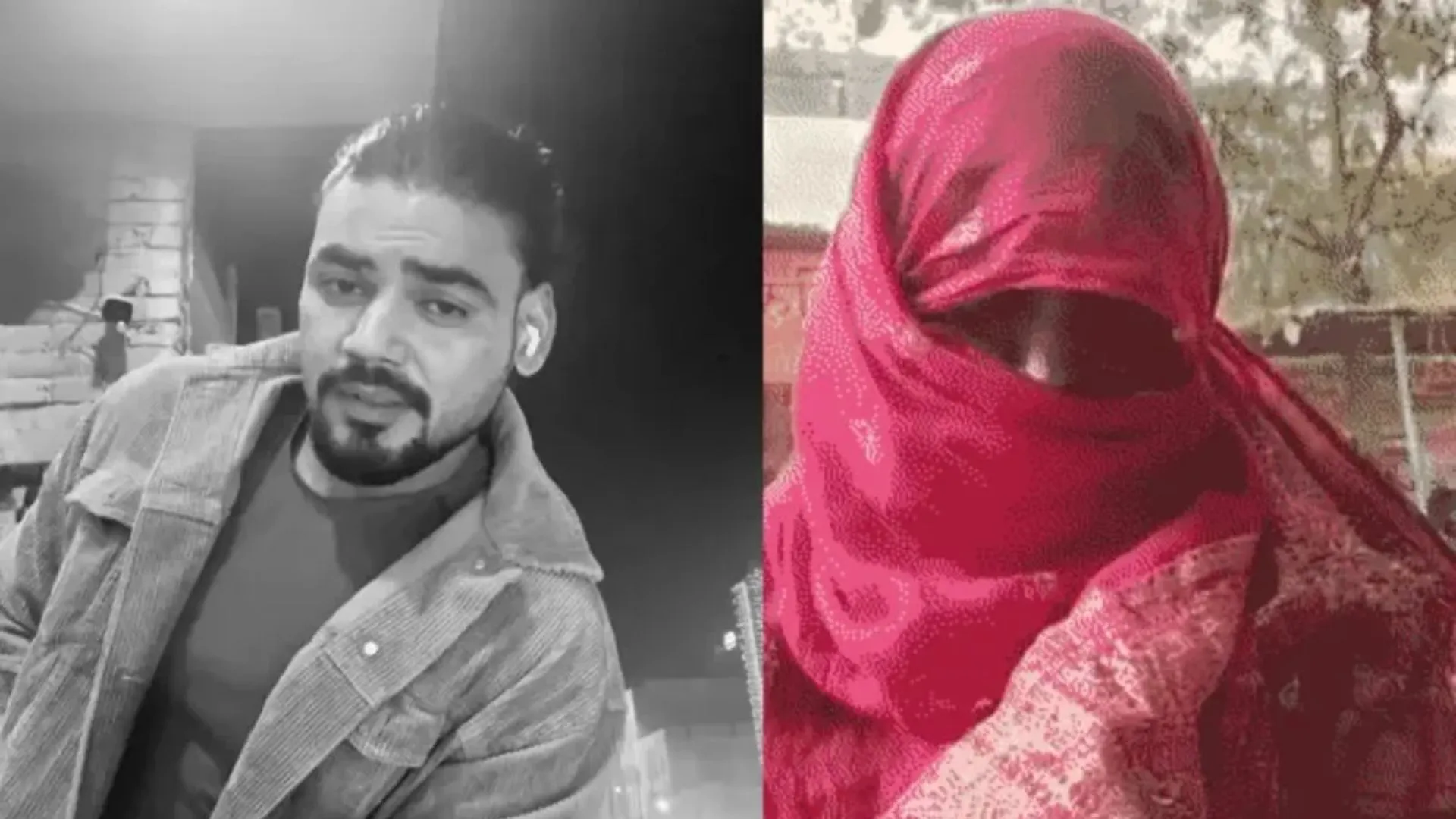
Case Summary
In Varanasi, Uttar Pradesh, a Dalit Hindu woman was deceived, assaulted and exploited by a Muslim man impersonating as a Hindu. As per reports, the accused, named Saud, who sold biryani in the Nadesar area, concealed his religious identity and befriended a Hindu woman by presenting himself as a Hindu. The Hindu victim explained that she often purchased food from Saud’s shop, and through these interactions, he introduced himself as Shaan Singh. Over time, their conversations increased, and he gained her confidence. She stated that he had also targeted other Hindu women in similar ways, using deception to establish relationships. After some time, the victim learned that the man she thought was Shaan was actually Saud, and he had used the false identity to entrap her. He had affairs with several other women. Upon further investigation, the victim revealed all the details. She then cautiously began distancing herself from the accused, Saud. On the other hand, angered by this, Saud began defaming the victim in the neighbourhood. The victim tried to reason with him and warned him against doing so and to file a police complaint. After which, Saud, along with six or seven of his friends, entered the girl's house late at night and assaulted her. The victim approached the police to file a complaint. The case was registered under multiple sections of the Bharatiya Nyaya Sanhita, including 191(2), 115(2), 352, 351(3), 69, as well as provisions of the SC-ST Act such as 3(1)(d), 3(1)(h), 3(2)(v), and 3(2)(va).
Why it is Hate Crime ?
This case has been added to the tracker under the primary category- Crimes against women in relationships and other sexual crimes. The subcategory selected is- Man pretends to be Hindu. The tertiary categories selected are- Name Changed and Pattern of targeting Hindu women. When a non-Hindu man pretends to be a Hindu to deceive a Hindu woman into a relationship, the act is seen as triggered by malicious intentions. In some cases, the woman eventually accepts the man’s original religious identity and converts after the man’s identity is revealed. These cases could be argued as cases of religious brainwashing and a result of the pressure a woman feels after getting into a relationship with a man. The woman, it can be argued, also changed her religious identity because of the stigma she believes she might face if she chooses to walk out of a deceptive relationship. However, for the purpose of documenting hate crimes, the cases in this subcategory are limited to those where there is explicit violence aimed at religious conversion against the wishes of the victim (force-feeding beef, blackmailing with intimate videos, rape on refusal to convert, etc), or if the woman herself complains of the man’s religious deception. In such cases, it is established that the deception of the non-Hindu man had a specific aim of religious conversion or targeting of the victim due to her Hindu religious identity, therefore, making it a religiously motivated hate crime. This case constituted a clear instance of a religiously motivated hate crime in which a Hindu woman was deliberately targeted, deceived and assaulted by a Muslim man who concealed his religious identity to initiate a relationship with her. The accused introduced himself under a Hindu name, Shaan Singh, despite being identified as Saud. This concealment was not incidental. It functioned as a calculated method to gain the trust of a Hindu woman who would likely have refused any relationship had his real identity been disclosed. By assuming a Hindu identity, he exploited the victim’s cultural and religious trust, demonstrating premeditated targeting based specifically on her Hindu background. The deception formed the foundation of the entire crime. The accused sustained the false Hindu identity long enough to manipulate the victim emotionally and socially, drawing her into a relationship built entirely on fraudulent religious representation. Such impersonation was not merely personal deceit; it reflected deliberate religious profiling. The accused recognised that concealing his faith would allow him access to a Hindu woman who otherwise would have exercised informed choice. This tactic directly weaponised the victim’s religious identity against her and constituted a calculated strategy rooted in hostility towards Hindu social and religious boundaries. The crime escalated when the victim discovered the deception and confronted the accused. Instead of withdrawing or accepting exposure, the accused responded with violence and intimidation. His reaction revealed that the relationship had never been grounded in genuine consent but in control built through deception. The violence that followed the exposure of his fabricated identity demonstrated that the accused was determined to maintain domination over the victim even after his manipulation was uncovered. When his carefully constructed deception collapsed, the accused shifted to another instrument of control—collective intimidation and physical force. He arrived with five to seven other men in an apparent attempt to silence the victim and prevent her from pursuing legal action. The presence of a group transformed the confrontation into a clear act of intimidation. The accused and his associates manhandled the victim and pressured her to remain silent about the deception and exploitation. Violence was thus used not merely as retaliation but as a calculated tool to suppress the victim’s voice and obstruct her attempt to seek justice. This escalation exposed the systematic nature of the crime. The accused had first relied on religious impersonation to manipulate the victim. When that strategy failed, he confidently attempted to push his plan further by resorting to coercion and physical aggression. Such conduct demonstrated that the objective was not simply to escape accountability but to force the victim into submission through fear. The manhandling and intimidation were intended to break her resolve, discourage her from approaching authorities, and ensure that the deception remained hidden. Evidence emerging in the case further revealed that the accused remained in contact with several other girls, suggesting that the deception was not an isolated act but part of a broader pattern of targeting Hindu women. When an individual repeatedly conceals religious identity to approach women belonging to a particular faith community, it demonstrates systematic profiling rather than coincidence. Such conduct establishes a pattern where Hindu women are singled out through religious disguise and manipulation, exposing a deliberate strategy of exploitation directed at a specific religious group. The victim’s vulnerability was further aggravated by the intersection of her gender and religious identity. By posing as a Hindu man and exploiting social trust within the Hindu community, the accused gained access to the victim in a manner that bypassed the natural caution that would arise from religious differences. When the deception collapsed, the violence and intimidation that followed underscored the coercive nature of the relationship and the hostility directed at the victim’s autonomy. Taken together, the deliberate concealment of religious identity, the targeted approach towards a Hindu woman, the collective intimidation used to silence her, and the indications that the accused maintained contact with other girls established a clear pattern of predatory behaviour directed at Hindu women. The victim was not targeted randomly; she was selected, manipulated, and violently pressured because she belonged to a particular religious community. Such actions demonstrated hostility towards Hindu identity and justified the documentation of this incident as a religiously motivated hate crime. Disclaimer: Hinduphobia tracker records the date when the ordeal began rather than when it was published. Since the report did not specify the exact date when the woman’s ordeal began, the Hinduphobia Tracker has considered the date of publication, 9 March 2026, as the incident date. It has been stated that the accused was in contact with several other women, but since in the complaint only one Hindu woman was specified, the victim count has been recorded as one (1). This is an indicative figure; the real victim could be higher.
Victim Details
Total Victim
1
Deceased
0
Gender
- Male 0
- Female 1
- Third Gender 0
- Unknown 0
Caste
- SC/ST 0
- OBC 0
- General 0
- Unknown 1
Age Group
- Minor 0
- Adult 1
- Senior Citizen 0
- Unknown 0


Case Status
Complaint filed


Perpetrators Details
Perpetrators
Muslim Extremists
Perpetrators Range
One Person
Perpetrators Gender
male
 Sources




